Who might use one?

Coffee-water experimenters

If you notice differences between brews, you may want to measure both tap and treated water before choosing a filter. The Speciality Coffee Association of Europe identifies hardness, alkalinity and pH as central measures for coffee water; a purifier’s total dissolved solids (TDS) display does not tell you all three.

Fast afternoon-cup drinkers

If you usually make one coffee at a time, preset temperature and serving volume may matter more to your routine than extensive water treatment. Check that the tank and smallest dispensing setting suit the cup you use.

Consumers managing limescale

If taste and scale are your main concerns, a conventional filter may be worth considering before RO. For example, Aqua Optima describes its carbon and ion-exchange filtration as intended to reduce chlorine and limescale; the result still depends on your starting water.

What matters when choosing?

Conventionally filtered hot-water dispenser

Choose it when: A quick, measured coffee serving and filtration aimed at chlorine taste or limescale matter more than substantially reducing dissolved solids.

Allow for: The treated water retains a different mineral profile from RO water, so check whether its hardness and alkalinity suit your brew.

Hot-water countertop RO purifier

Choose it when: Reducing dissolved solids is a primary aim alongside dispensing hot water at the counter.

Allow for: RO also removes minerals, and the appliance may need wastewater handling. A mineral stage is not proof that the finished water suits coffee.

ConcernWhat to checkWho this matters to
Coffee-water composition Compare incoming and treated-water hardness and alkalinity; do not choose by TDS alone. If flavour consistency drives my purchase, I want to know how filtration changes the water I brew with. Around 36% of consumers would put coffee-water composition first.
One-cup convenience Check temperature choices, the smallest useful serving volume and tank capacity. When I only want one afternoon cup, repeated refills or an unsuitable serving size would interrupt the break. For roughly 29% of consumers, cup-by-cup convenience is the primary concern.
Maintenance Identify the replacement cartridge and its stated life; check cleaning and, for RO, wastewater steps. I need a filter I can keep replacing and a cleaning routine I can manage. Maintenance would come first for around 21% of consumers.
Other drinks Check whether the exact model dispenses the other temperatures and volumes you need. If the appliance will serve the household beyond coffee, I care about those additional drinks as well. Around 14% of consumers would primarily seek that flexibility.

Common buying mistakes

  • Assuming lower TDS means better coffee

    RO reduces minerals as well as other dissolved material. The Speciality Coffee Association of Europe assesses coffee water using hardness, alkalinity and pH, which a TDS reading alone cannot establish.

    Check your incoming water and measure the treated water if flavour consistency is the reason for buying. Assess any mineral stage by the finished water, not its label.

  • Forgetting proprietary filters

    An appliance remains practical only if you can obtain the correct replacement cartridge and follow its replacement schedule.

    Identify the exact filter model, its stated life and a suitable replacement route before choosing the dispenser.

  • Overlooking refills and cleaning

    Plug-and-fill avoids plumbing, not tank maintenance. An RO model may also require wastewater collection; Waterdrop specifies separate 4 L feed and 1.5 L waste tanks for its M6HG.

    Check the exact model’s tank arrangement, emptying steps and descaling instructions against your daily routine.

  • Treating an unusual tap-water smell or appearance as a filter-choice problem

    GOV.UK advises that drinking water should be clear and should not smell. An appliance should not replace investigation of an unusual change.

    Contact your water supplier about a public supply, or your local council about a private supply, before relying on filtration.

Brands to consider

Waterdrop

Countertop RO models in the UK range include instant-hot and mineral-stage options.

  • Waterdrop describes the K19-H as a no-plumbing hot-water RO model and the M6HG as having separate feed and waste tanks.
  • For coffee, check the treated water’s hardness and alkalinity as well as the exact model’s filter and wastewater routine.

Philips

Its countertop range includes instant-heating filtration and RO models with several dispensing options.

  • Philips specifies 150–500 mL settings plus continuous dispensing for the ADD5910M/05; the RO ADD6921DG/10 offers hot and chilled output.
  • Check the manual, tank routine and filtration type for the particular model rather than assuming these functions apply across the range.

Aqua Optima

Aurora dispensers offer plug-and-fill hot-water options using conventional rather than RO filtration.

  • Aqua Optima describes Aurora filtration as intended to reduce chlorine and limescale.
  • Its stated Evolve+ cartridge limit is 100 L or 30 days; check how that replacement routine fits your use.

Frizzlife

The WB99-H is a countertop RO option with heating and a stated mineral stage.

  • Frizzlife specifies temperature settings from 45°C to 100°C for the WB99-H.
  • Confirm cartridge availability and assess the finished water for coffee rather than assuming its alkaline-stage label establishes a suitable composition.

Joybuy product choices

These countertop choices include a filtered hot-water dispenser and two hot-water RO purifiers. Compare their dispensing controls and upkeep with the water-treatment route you actually need for coffee.

Caso Design HW 770 Turbo filtered hot-water dispenser

Caso Design HW 770 Turbo filtered hot-water dispenser, 01889

Consider this model if a filtered, measured hot-water serving matters more to you than RO treatment. Its named configuration includes a 2.7 L tank and 13 temperature settings with a memory function.

Check the replacement filter and compare incoming and treated-water hardness and alkalinity if coffee flavour is your priority.

View on Joybuy
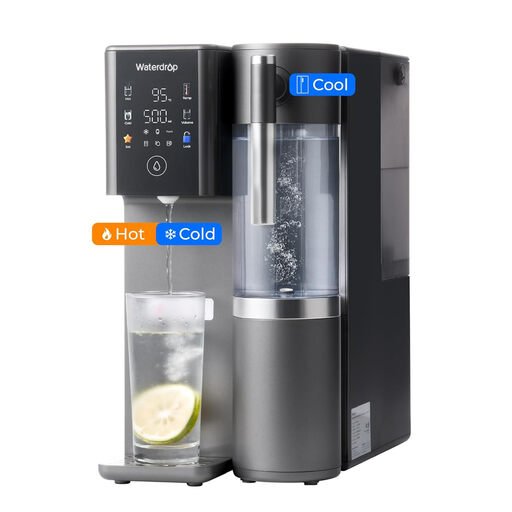
Waterdrop WD-A2 countertop reverse-osmosis system

Waterdrop WD-A2 countertop reverse-osmosis system

Consider this model when RO treatment and countertop hot-water dispensing are both priorities. Its named configuration has six temperature settings.

Confirm the exact temperature range, serving volumes, wastewater arrangement and finished-water composition against your coffee routine.

View on Joybuy
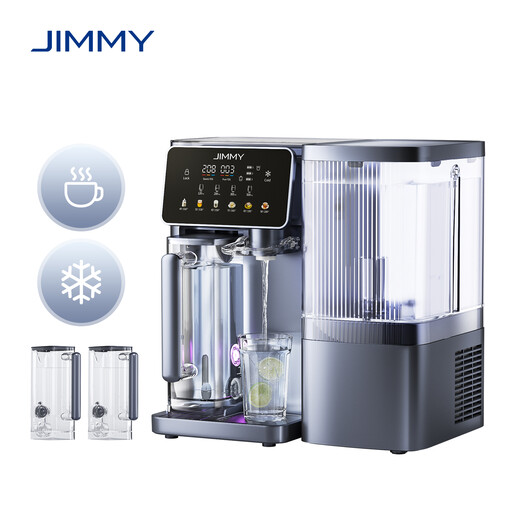
JIMMY R9 Pro countertop reverse-osmosis purifier

JIMMY R9 Pro countertop RO purifier, 5.5 L tank and two 1 L pitchers

Consider this model if you want countertop RO treatment with both hot- and cold-water dispensing. Its named configuration includes a 5.5 L tank, two 1 L pitchers and seven-stage filtration.

Check its temperature and serving-volume controls, filter requirements and the hardness and alkalinity of the finished water before choosing it for coffee.

View on Joybuy

Questions about coffee water

Do I need a purifier to make safe coffee water?

Not usually for a normal public supply in England or Wales: the Drinking Water Inspectorate says those supplies are regularly tested and safe to drink. A countertop appliance can instead be a choice about taste, scale or dispensing convenience. If your water changes appearance or smells unusual, contact your water supplier; ask your local council about a private supply.

Will lower TDS make my coffee taste better?

Not automatically. The Speciality Coffee Association of Europe assesses coffee water using hardness, alkalinity and pH, while RO can remove minerals along with other dissolved material. Measure the treated water if controlling coffee flavour is your aim.

Can I use a countertop purifier in a rented kitchen?

A plug-and-fill model may avoid plumbing changes: Waterdrop describes its K19-H and M6HG that way, as does Aqua Optima for Aurora. Check the exact appliance’s plug, electrical requirements and clearances, alongside any applicable landlord rules.

What maintenance does a countertop water dispenser need?

Plan for filter replacement and tank cleaning, plus any descaling, flushing or wastewater emptying required by the exact model. For scale, Aqua Optima states a maximum Evolve+ cartridge life of 100 L or 30 days, while Waterdrop states 12 months or 1,100 gallons for its K19RF filter; follow the instructions for the appliance you choose.