Guests watching their portion
A measured serving makes it easier to have a smoothie alongside breakfast without treating a large bottle as one portion. The NHS advises a combined daily limit of 150ml for fruit juice and smoothies.


A clearly labelled fruit smoothie can work at a hotel breakfast buffet when staff can control the serving size and provide ingredient and allergen information. The NHS advises limiting fruit juice and smoothies to a combined 150ml a day; a larger bottle needs a measured serving if the buffet is to reflect that guidance. Choose a no-added-sugar recipe only when that is the intended claim, and do not describe it as sugar-free without checking the product’s nutrition information.
A measured serving makes it easier to have a smoothie alongside breakfast without treating a large bottle as one portion. The NHS advises a combined daily limit of 150ml for fruit juice and smoothies.
They need wording that distinguishes added ingredients from sugars naturally present in fruit. Waitrose & Partners lists an innocent no-added-sugar smoothie with 10g sugars per 100ml.
They need information for the exact drink served, including any mix-ins or made-to-order recipe. Fruit-and-vegetable blends are not automatically free from allergens: Marks & Spencer lists oat beta-glucan containing gluten in its Green Smoothie Mix.
Choose the serving method and the exact recipe together: a suitable flavour or pack size does not settle the portion, sugar or allergen questions.
| Priority | What to check | Your needs |
|---|---|---|
| Portion size | Check the pack volume and the amount a cup or dispenser delivers. The NHS advises no more than a combined 150ml of fruit juice and smoothies a day; a retail bottle may contain more than that. | I’d like a serving I can judge at the buffet, rather than having to guess how much to pour from a large bottle. |
| Sugar wording | Read the ingredient list for added sugars and compare the declared sugars per 100ml on the nutrition label. Keep “no added sugar” distinct from “sugar-free”. | If I’m choosing a no-added-sugar drink, I still want to know how much sugar the finished smoothie contains. |
| Allergens and dietary labels | Check the current label or full recipe, including yoghurt, oat ingredients and toppings. For a made-to-order drink, check preparation and cross-contact arrangements as well as ingredients. | I need clear information about the smoothie actually being served, especially if it is mixed or topped at the buffet. |
| Drink format | Decide whether the service calls for a bottled fruit drink, a fruit-and-vegetable blend or a prepared mix. Check the recipe and storage instructions for the chosen product; vegetable content alone does not establish its sugar or allergen profile. | A ready-to-pour drink may suit one breakfast service, while a made-to-order blend needs staff to manage its recipe and serving size. |
“No added sugar” describes what has not been added to the recipe, not the smoothie’s total sugar content. Waitrose & Partners lists 10g sugars per 100ml for its innocent mango, passionfruit and apple no-added-sugar smoothie.
Use the product’s exact claim on buffet signage and check its current nutrition label before making any statement about total sugars.
A 250ml bottle, for example, contains more than the NHS’s recommended combined daily 150ml limit for fruit juice and smoothies.
If the buffet follows that guidance, provide a measured 150ml serving and make the intended portion clear beside larger bottles or dispensers.
Smoothies can contain ingredients beyond fruit. Marks & Spencer’s Green Smoothie Mix, for example, lists oat beta-glucan containing gluten.
Check the current declaration for every product and prepared recipe, including additions made at the buffet, before giving guests allergen information.
A listing for a bottled drink does not describe toppings, substitutions or preparation at the hotel. Those details can change the information guests need.
Keep an up-to-date ingredient and allergen record for each drink as served, and check it against the current product label when supplies change.
These examples illustrate formats and label checks for a UK buffet; a retailer listing does not establish suitability for a particular hotel service.
A bottled fruit-smoothie example for comparing a no-added-sugar claim with serving size and declared sugars.
An own-label and multi-brand retail reference for comparing smoothie formats.
A range with fruit and differently positioned smoothie variants listed by Tesco Groceries.
A reference for both ready-made bottles and a frozen mix that could be prepared to order.
A retailer product-information reference for an individual bottled smoothie, rather than a separate smoothie recipe.
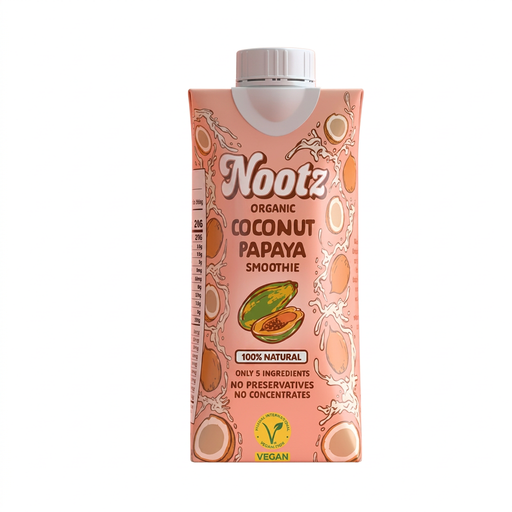
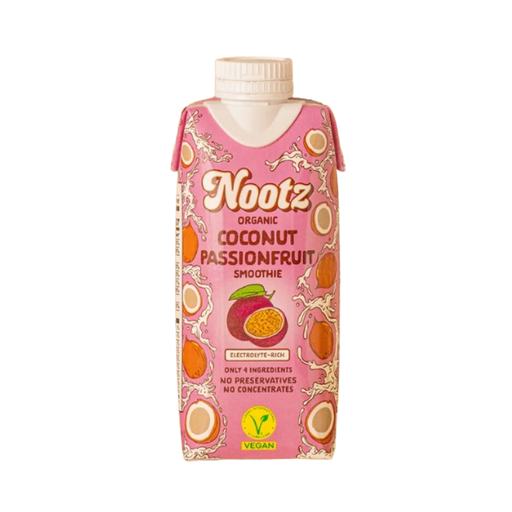
These two Nootz fruit-and-coconut smoothies offer different bottle sizes for a breakfast buffet. Both need portion planning against the NHS’s combined 150ml daily guidance for juice and smoothies; check the current ingredient and allergen information before serving either one.
 No image available
The 180ml pack gives staff a defined quantity for a fruit-and-coconut buffet option, though a measured serving would be needed to reflect the NHS’s combined 150ml daily guidance for juice and smoothies.
Its listed ingredients include cane sugar, so do not present it as a no-added-sugar choice. Check the current allergen declaration before service.
 No image available
The 325ml bottle is a fruit-and-coconut option for a buffet that can measure servings rather than offering the full bottle as one portion.
Its listed ingredients include coconut sugar, so it is not a no-added-sugar choice. Check the current nutrition and allergen information before preparing buffet labels.
No. Waitrose & Partners lists naturally occurring fruit sugars and 10g sugars per 100ml for its innocent no-added-sugar mango, passionfruit and apple smoothie. Use “no added sugar” only for a product that carries that claim, and check its nutrition label rather than calling it zero-sugar.
The NHS advises limiting fruit juice and smoothies to a combined total of 150ml a day; 150ml can count once towards 5 A Day. A hotel that wants its buffet service to reflect that guidance can use measured cups or a dispenser set for a 150ml serving.
The Food Standards Agency says UK retail and catering food businesses must provide allergen information for prepacked and non-prepacked food and drink. For a buffet smoothie, keep information for the current product or full prepared recipe accessible, including any ingredients added during service.
No. A green or vegetable-containing name does not establish either property. Marks & Spencer lists oat beta-glucan containing gluten in its Green Smoothie Mix; check the exact mix’s allergen declaration and nutrition label before making either claim.