Managers serving a mixed breakfast crowd
A plain naan can form the general offering if the kitchen can heat and replenish it in line with its pack instructions. Its wheat content does not, on its own, justify calling it brown or wholegrain.


For a hotel breakfast buffet, choose plain naan for a general wheat-based offering, or mini naan when individual portions are more useful. Offer a separately managed free-from product if guests need one and staff can keep its allergen information and service arrangements accurate. Do not describe an ordinary wheat-flour naan as brown, wholegrain or a white-and-brown blend without checking the exact product’s ingredients and fibre declaration.
A plain naan can form the general offering if the kitchen can heat and replenish it in line with its pack instructions. Its wheat content does not, on its own, justify calling it brown or wholegrain.
Mini naans provide pre-sized pieces for self-service instead of requiring staff or guests to cut a full-size bread. Tesco and M&S each list a four-pack of mini plain naans.
A separately identified product and controlled service matter when guests avoid particular ingredients. Asda labels its Free From Plain Naans free from gluten, milk and egg; that declaration applies to that product, not to naan generally.
Decide on the serving format first, then check the exact pack for ingredients, heating instructions and any brown-bread or fibre description you intend to use.
| Priority | What to check | Your needs |
|---|---|---|
| Portion format | Compare the size of each naan and the number in a pack. Tesco and M&S list mini plain naans in four-packs of 188g; check whether the portion fits the way breakfast is served. | I would rather put out individual pieces than cut full-size naans during a busy self-service period. |
| Warm service | Read the heating and reheating instructions for the chosen product. Tesco gives its plain naan an ambient oven time of 3–4 minutes; Sainsbury’s Indian Plain Naan says to serve warm and not reheat. | Guests should be able to take warm naan without the kitchen preparing the entire service quantity at once. |
| Hot display | Plan suitable equipment and a time-and-temperature process if the naan will be held hot. Food Standards Agency caterer guidance says hot food must be kept at 63°C or above, subject to its stated exceptions. | If I put hot naan on the buffet, staff need a workable way to hold or replenish it rather than leaving it there without temperature control. |
| Allergens | Check each delivered pack’s ingredient and allergen information, then keep the serving arrangements consistent with it. Asda’s Free From Plain Naans are labelled free from gluten, milk and egg; ordinary wheat-based naan is a different product. | I need guests and staff to be able to distinguish a separately managed free-from portion from the general naan offering. |
| Brown-bread description | Check the exact ingredient list before using “brown”, “wholegrain” or “white-and-brown blend”. Compare declared fibre values on the same per-100g basis. NHS advice identifies wholemeal, granary and higher-fibre white bread as bread choices for increasing fibre. | If the breakfast menu promises a brown or wholegrain choice, I need a product that supports that description, whether it is naan or a separate bread. |
| Flavour and storage | Check whether the product is plain or flavoured, and follow its own storage instructions. Marks & Spencer lists its mini plain naans as suitable for freezing. | A plain bread may work across more breakfast dishes; a flavoured naan would be a deliberate additional choice. |
Wheat flour in an ingredient list does not establish that a naan is wholemeal or a white-and-brown blend. The wording could give guests the wrong impression about the bread being offered.
Use the exact product description, ingredients and declared fibre value. If a wholegrain bread is required, obtain a suitable product specification rather than relying on the naan’s colour.
Asda’s gluten-, milk- and egg-free declaration is specific to its Free From Plain Naans. Ordinary wheat-based naan has a different allergen profile, and shared handling can undermine a clearly identified offering.
Check the current packs, label the servings accurately and use the hotel’s allergen-management process when preparing and replenishing them.
Pack instructions differ, and some products say to serve warm and not reheat. Hot display also needs a suitable food-safety process: Food Standards Agency caterer guidance specifies hot holding at 63°C or above, subject to its stated exceptions.
Plan batches around the expected service flow and follow both the product instructions and the site’s food-safety procedures.
A four-pack of mini naans and a pack of full-size naans do not represent the same portion format. Pack count also says nothing about allergens, heating instructions or a wholegrain description.
Compare portion size, ingredients, declared nutrition per 100g or per serving, storage and the number of pieces staff expect to serve.
These retailer examples show why the exact product matters: formats, ingredients and instructions vary within the naan category.
Asda lists a distinct Free From Plain Naan alongside its standard plain naan offering.
Tesco lists both full-size and mini plain naan formats.
Sainsbury's lists Indian Plain Naan in a two-naan, 260g pack.
M&S lists mini plain naan as well as other naan flavours and formats.
Waitrose lists a two-pack of flame-baked plain naans.
These Joybuy options are plain and flavoured Humza naan for the general buffet offering. Check their packs against the hotel’s portion, allergen and bread-description requirements before choosing.
 No image available
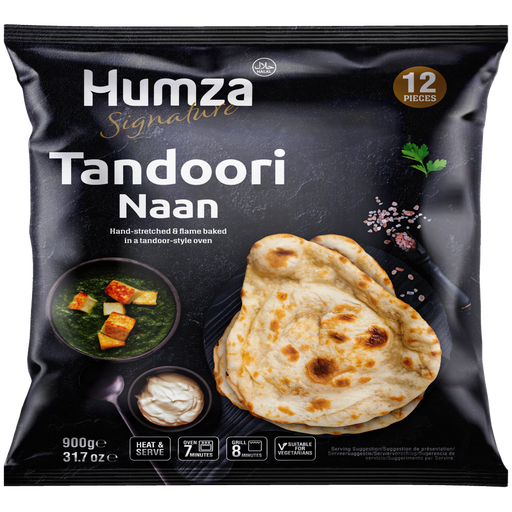
The 12-piece plain pack is an option when staff plan to heat and replenish naan in batches. This wheat-containing product is not a brown or wholemeal choice on the information given; check the pack’s heating instructions and fibre declaration if those affect the menu.
 No image available
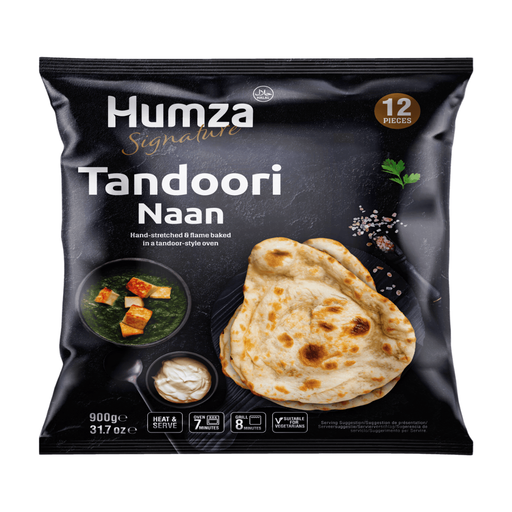
This four-piece plain pack offers another format for serving warm naan in batches. It contains wheat and should not be labelled brown or wholemeal without product-specific evidence; use the current pack for heating and nutrition details.
 No image available
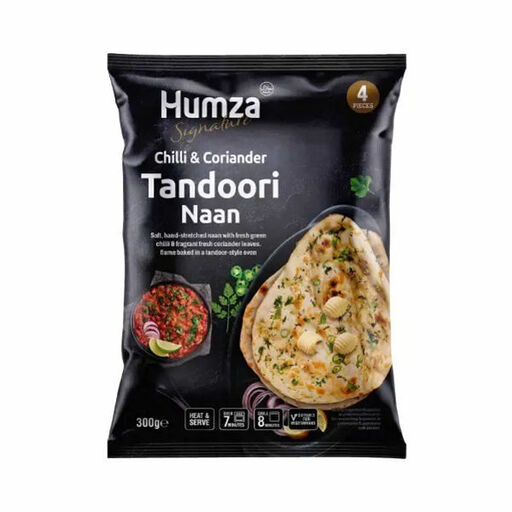
The garlic and coriander flavour makes this a distinct choice alongside a plain buffet naan. The four-piece, 300g pack contains wheat; check the current pack’s heating instructions and allergen information before service.
Not on the basis of wheat flour alone. Check the exact naan’s ingredients before making that description, and compare declared fibre on a per-100g basis. NHS advice names wholemeal, granary and higher-fibre white bread as bread choices for increasing fibre; it does not establish that an ordinary plain naan is one of them.
Follow the product’s heating and reheating instructions and use a planned hot-holding or replenishment process. Food Standards Agency caterer guidance says hot food must be held at 63°C or above, subject to its stated exceptions, and calls for suitable equipment for hot buffet display. Check the requirements that apply to the hotel’s location and food-safety procedures; the cited statutory hot-holding provision is specifically for England.
Only with arrangements that keep the product clearly identified and its allergen information accurate through service. Asda labels its Free From Plain Naans free from gluten, milk and egg, while ordinary wheat-based naan is different. Check the current packaging and manage preparation, utensils and replenishment accordingly.
Check the delivered pack against the intended menu description, especially its ingredients, allergens, portion size, storage and heating instructions. Where a fibre or wholegrain description matters, use the exact product’s declaration rather than assuming that a previously selected format has the same specification.