Guests checking sugar content
A ready-to-drink black coffee can avoid the need for hotel-room sweeteners or milk portions, but “diet” wording is no substitute for the sugars line on the exact product’s nutrition panel.


For a hotel room without dependable mixing facilities, a ready-to-drink black cold brew is the simpler choice if its label also meets your sugar and dietary requirements: Coffee Friend UK lists the 200ml Sandows drink as sugar-free and dairy-free, with coffee and filtered water as its ingredients. A concentrate or coffee powder needs water and a cup, while a latte-style can may contain sugar or milk; check the exact label rather than assuming that “unsweetened”, “oat” or “cold brew” settles those questions.
The useful choice depends on what you want to avoid and what you can prepare once you reach your room.
A ready-to-drink black coffee can avoid the need for hotel-room sweeteners or milk portions, but “diet” wording is no substitute for the sugars line on the exact product’s nutrition panel.
Black cold brew and oat-based lattes offer different flavours and ingredients. If wheat or coeliac suitability also matters, check the oat drink’s full allergen statement: M&S marks its Oat Latte Cold Brew Coffee as unsuitable for people with coeliac disease or a wheat allergy.
A cold drink can still contain caffeine. NHS Every Mind Matters notes that caffeine in coffee can make you feel more awake, so the amount in the serving matters when deciding whether to drink it near bedtime.
Start with the nutrition and ingredient labels, then match the drink’s preparation and storage instructions to the facilities in your room.
| Priority | What to check | Your needs |
|---|---|---|
| Sugars | Read sugars per 100ml or per 100g and the serving size. Compare figures on the same basis; for a concentrate, check whether the figure describes the concentrate or the prepared drink. | I want to know whether my actual drink has 0g sugars, rather than relying on “diet” or “unsweetened” in its name. Coffee Friend UK lists 0g sugars per 100ml for Sandows black cold brew; M&S lists 1.5g per 100g for its Oat Latte and 3.8g per 100g for its Classic Latte. |
| Ingredients and allergens | Check for milk and other relevant ingredients, then read the exact product’s allergen and precautionary statements. Do not treat “dairy-free” as a statement about wheat or coeliac suitability. | If I avoid dairy, an oat latte may suit that requirement, but I also need to check my other dietary requirements. M&S describes its Oat Latte as dairy-free while marking it unsuitable for people with coeliac disease or a wheat allergy. |
| Room facilities | Check whether the drink is ready to consume or needs dilution, a cup and a mixing liquid. For a multi-serve concentrate, read the after-opening storage instructions. | With no glass or fridge confirmed, I would choose a sealed ready-to-drink serving over a multi-serve concentrate. Waitrose & Partners instructs shoppers to mix its Nescafé concentrated iced coffee with a liquid and refrigerate it after opening. |
| Caffeine | Look for caffeine per serving or per 100ml, and account for the amount you intend to drink. A product’s sugar content does not tell you its caffeine content. | For coffee near bedtime, I need to consider the full serving, not just whether it is cold or unsweetened. NHS Every Mind Matters says caffeine in coffee can make you feel more awake. |
Names do not provide a like-for-like nutrition comparison. The researched black cold brew and M&S latte products list sugars on different per-100ml and per-100g bases.
Read the current sugars line and serving size. Use a 0g-sugars description only when the product’s nutrition information supports it.
A concentrate is not a ready-to-drink serving. The Nescafé concentrated iced coffee listed by Waitrose & Partners needs mixing and must be refrigerated after opening.
Before choosing a multi-serve bottle, confirm that you will have a suitable liquid, a glass and any storage the label requires. Otherwise, consider a sealed ready-to-drink serving.
M&S describes its Oat Latte Cold Brew Coffee as dairy-free but also marks it unsuitable for people with coeliac disease or a wheat allergy.
Check the current ingredients, allergen declaration and precautionary statements for the exact drink you buy.
Neither serving temperature nor sugar content establishes how much caffeine a coffee contains. NHS Every Mind Matters notes that coffee’s caffeine can make you feel more awake.
Check the amount per serving where it is declared, particularly if you plan to drink the coffee near bedtime or are limiting caffeine.
These examples illustrate different drink formats and label details; a retailer’s wider range does not make every product within it suitable for the same dietary need.
Sandows makes cold brew in London. Coffee Friend UK lists a 200ml ready-to-drink black coffee made with fresh coffee and filtered water.
M&S lists both oat-based and milk-based ready-to-drink cold-brew lattes, so the variant matters as much as the brand.
Tesco Groceries lists a 500ml Tesco Finest Unsweetened Cold Brew Coffee Concentrate among its iced coffees.
Waitrose & Partners lists ready-to-drink iced coffees as well as concentrates, which call for different levels of preparation.
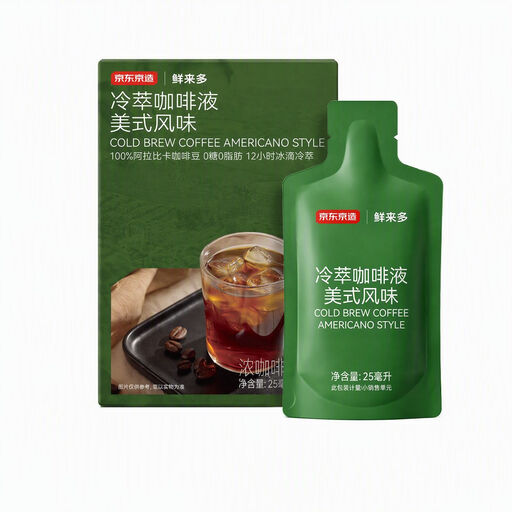
These are cold-brew liquid and coffee-powder options to mix with water in a hotel room. Both require a cup rather than offering a ready-to-drink bottle.
 No image available
The individual liquid pouches suit a room where you can supply water and a cup; they are not ready-to-drink servings.
If 0g sugars is essential, check the current nutrition panel rather than relying on the name. Check caffeine per prepared serving if you plan to drink it late.
 No image available
This 18g cold-brew coffee powder is an option when you have water and a cup and want to prepare the drink in your room.
For a zero-sugar requirement, check the current label and the amount in a prepared serving; a sugars figure for dry powder is not a ready-to-drink figure. Check caffeine if you plan to drink it late.
No: check the sugars line on the exact product’s nutrition panel. Coffee Friend UK lists 0g sugars per 100ml for its Sandows cold brew, while the name Tesco Finest Unsweetened Cold Brew Coffee Concentrate does not, by itself, give a sugars figure.
A sealed ready-to-drink serving needs less preparation if you cannot count on having a glass or mixing liquid. A concentrate lets you prepare the drink yourself, but check its mixing directions and storage instructions; the Nescafé concentrate listed by Waitrose & Partners must be refrigerated after opening.
No. M&S describes its Oat Latte Cold Brew Coffee as dairy-free but marks it unsuitable for people with coeliac disease or a wheat allergy. Read the exact product’s current ingredients and allergen statements for your requirements.
It can: sugar and caffeine are separate things to check. NHS Every Mind Matters says caffeine in coffee can make you feel more awake, so look at the caffeine amount for the serving you intend to drink, especially near bedtime.