Teams serving tuna on a visible cold buffet
When tuna is presented in salads, bowls or on a self-serve counter, the shape of the pieces matters. Check how a candidate product looks in the finished dish rather than judging it by its label alone.


Choose tuna steaks when guests will see the pieces in a salad or cold buffet dish; chunks can suit a mixed filling where piece shape matters less. No-drain or drained packs may make small top-ups simpler, but compare pack size and preparation work before treating them as an upgrade. Whichever format you choose, plan allergen information and chilled handling for the dish as served.
When tuna is presented in salads, bowls or on a self-serve counter, the shape of the pieces matters. Check how a candidate product looks in the finished dish rather than judging it by its label alone.
No-drain or drained packs are worth considering when staff need quick top-ups. Balance the preparation saved against the number of packs that must be opened during service.
A buffet dish needs accurate information about the tuna and anything added to it, plus a clear way for staff to answer questions. The Food Standards Agency’s guidance covers allergen information for non-prepacked food.
Start with how the tuna will be served, then compare the handling and sourcing details of the exact pack.
| Priority | What to check | Your needs |
|---|---|---|
| Piece format | Check whether the product is sold as steaks or chunks, then assess its appearance in the finished dish. Keep the serving method in mind. | I want recognisable pieces in a visible salad or cold display. For a mixed filling, intact steak pieces matter less. |
| Replenishment | Check whether the exact pack needs draining, its size and how many packs a service would use. John West describes its spring-water no-drain steak as ready to serve without draining; Princes describes its drained range as ready to use. | Quick, small top-ups matter to me, but I also need to know whether opening multiple packs will suit a busy breakfast. |
| Sourcing claims | Check the purchased SKU’s current species, catch-method and certification statements. Sainsbury’s describes its cited spring-water steak as pole-and-line caught and from an MSC-certified fishery; do not transfer that claim to a substitute. | If I describe the tuna’s provenance to guests, the wording needs to match the product actually served. |
| Recipe fit | Compare spring-water and oil-packed products as separate recipes. Read ingredients and nutrition per 100 g on the exact labels, including salt, before adding a dressing. | I need a tuna base that works with the buffet dish we intend to make, rather than choosing by pack description alone. |
| Buffet controls | Check the current label, ingredients added in-house and the service method. Food Standards Agency guidance addresses allergen information for non-prepacked food and facilities for refrigeration and temperature monitoring where necessary. | Guests need an accurate answer about the served dish, and staff need a practical plan for holding and replenishing it. |
Chunks can work in a mixed dish, but they may not give a visible cold display the piece shape intended for it.
Decide on the serving method first, then trial the tuna in the actual salad or buffet pan.
Skipping draining can help with a small top-up. A busy service may still require staff to open and dispose of numerous individual packs.
Compare usable portions, packs opened, preparation time and waste using the hotel’s actual service pattern.
Smaller packs can add opening and packaging work during replenishment.
Certification and catch-method statements may refer to a particular SKU, fishery or company commitment. A substituted pack may carry different wording.
Confirm the delivered product’s current specification before using MSC or pole-and-line wording on a menu or buffet sign.
The served dish may also contain dressing or garnishes, while shared utensils need to be considered. The Food Standards Agency’s allergen guidance covers non-prepacked food as well as prepacked products.
Keep information for the final dish current, give staff an answer process and include its handling in the hotel’s food-safety controls.
Its 800 g Tuna Steak in Spring Water is a larger-format example to assess for a visible buffet dish.
Its spring-water no-drain tuna steak offers a format to consider for small-batch replenishment.
Its drained tuna range provides a ready-to-use steak route.
Its listed 3 x 120 g spring-water tuna steaks provide a product-specific sourcing example.
Its 110 g tuna steaks with a little spring water are an own-label drained option.
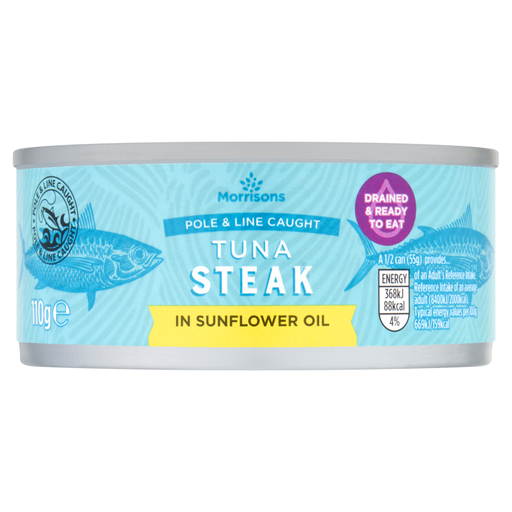
These sunflower-oil tuna steaks offer pieces for a visible cold dish. Compare their oil-packed recipe with spring-water options if the hotel intends to add its own dressing.
 No image available
The steak format is relevant when pieces will be visible in a cold buffet dish. It is packed in sunflower oil; check that this suits the intended dressing, and confirm the current pack and sourcing details before planning service or making a sourcing claim.
 No image available
The 110 g steak pack is an option for a dish where the pieces remain visible. Its title identifies sunflower oil, but the handling descriptions conflict on whether it is drained or no-drain; check the delivered label and post-opening instructions before building a replenishment routine around it.
Choose steaks when the tuna will be visible and intact pieces matter to the dish. Chunks can suit a mixed filling where their shape is less noticeable. Trial either format in the finished serving arrangement before committing to a recurring order.
Choose according to the finished recipe: spring water leaves the hotel to add its own dressing, while sunflower oil is already part of the packed product. Compare the exact ingredients and nutrition per 100 g rather than assuming different brands or pack formats have the same values.
The Food Standards Agency states that catering businesses must provide allergen information for non-prepacked food. Tuna contains fish, so keep information for the dish as served accurate and accessible, including ingredients added in-house, and give staff a clear process for guest enquiries.
A ready-to-use description does not replace controls for the opened dish. Follow the exact pack’s instructions and use a service plan covering clean utensils, replenishment and appropriate refrigeration and temperature monitoring; these facilities are addressed in Food Standards Agency MyHACCP guidance.
No: check the claim against the exact product purchased and its current label. Sainsbury’s makes both statements for its cited spring-water steak listing, while other product listings and company statements have their own scope. Confirm any substitute before repeating a claim to guests.