Single-mug tea drinkers
If your afternoon break usually means one mug, a repeatable portion and the right water temperature may matter more than a large reservoir.


For one regular mug of tea made with boiling water, start with a dispenser that offers a suitable measured portion and reaches the temperature you need. If you make different teas or several drinks in a break, compare temperature settings, filtration and tank capacity instead; those features also make cleaning requirements and worktop space more important to check.
If your afternoon break usually means one mug, a repeatable portion and the right water temperature may matter more than a large reservoir.
If you regularly make tea for others, compare tank capacity and selectable serving volumes with the number of mugs you normally prepare.
If filtration or upkeep affects your choice, check the cartridge used by the exact model and how its instructions tell you to descale it.
Consider it: Your usual afternoon drink is one mug made with boiling water.
Trade-off: A one-cup format does not necessarily offer lower temperature settings or filtration.
Consider it: Tea type or water taste makes temperature choice and filtration important to you.
Trade-off: Filter changes add upkeep, and some models do not reach 100°C; BRITA specifies up to 95°C for the YOURCE cool +2.
Consider it: You often prepare several drinks in succession and want fewer refills.
Trade-off: Allow room for the appliance and check its controls separately; tank size alone does not tell you which temperatures or portions it dispenses.
| Concern | What to check | Who this matters to |
|---|---|---|
| One measured mug | Compare the stated water temperature and selectable serving volumes with your usual mug. | When I have time for one mug, I want the right amount of water without preparing a larger serving. Around 33% of consumers put a quick, measured single mug first. |
| Several cups | Check tank capacity, available serving volumes and whether the tank fits your worktop. | Making tea for several people means I would rather refill less often. Roughly 27% of consumers make repeated servings their primary concern. |
| Taste and limescale upkeep | Check the cartridge type, replacement options and the model’s descaling instructions. | If water taste or limescale drives my choice, I need to be comfortable with the continuing upkeep. About 20% of consumers put filtration and limescale management first. |
| Temperature and controls | Check the documented temperature settings and any stop or lock controls relevant to your household. | For teas I prepare below boiling point, I want a setting that matches the drink, along with controls that suit my household. Around 20% of consumers prioritise temperature and operational controls. |
Temperature capability depends on the model: Breville states that the VKJ367 dispenses at 100°C, while BRITA specifies hot water up to 95°C for the YOURCE cool +2.
Match the stated maximum and available settings to the teas you make, rather than relying on the term hot water.
A filtered model still needs the upkeep specified for that appliance. Breville’s help guidance identifies excessive scale as one possible cause of a HotCup failing to dispense boiling water.
Check the exact cartridge and follow the model’s descaling instructions.
Replacement cartridges and time spent cleaning are continuing ownership burdens where applicable.
A reservoir figure does not tell you the available portion sizes or how closely they match your mugs.
Compare the tank and serving-volume specifications with the number and size of drinks you usually make in one break.
The exact model and the offer available for your delivery region matter as much as a search-result title.
Before ordering, check the full model number, current availability, delivery eligibility and applicable product marking on the product-detail page.
Breville’s HotCup range is relevant if you want a selected cup portion for a short tea break.
BRITA’s YOURCE cool +2 is a filtered option for tea drinkers who also want selectable temperatures and portions.
CASO Design has dispenser models worth comparing if several servings and adjustable controls are priorities.
These dispensers cover temperature selection and larger tanks for afternoon tea. Compare each model’s stated settings with the water temperature and number of servings you need.
 No image available
Consider this model if you want temperature choice for different afternoon drinks. Its title specifies 13 temperature settings, a 2.7 L tank, a water filter and a memory function; check the filter upkeep and the space it needs on your worktop.
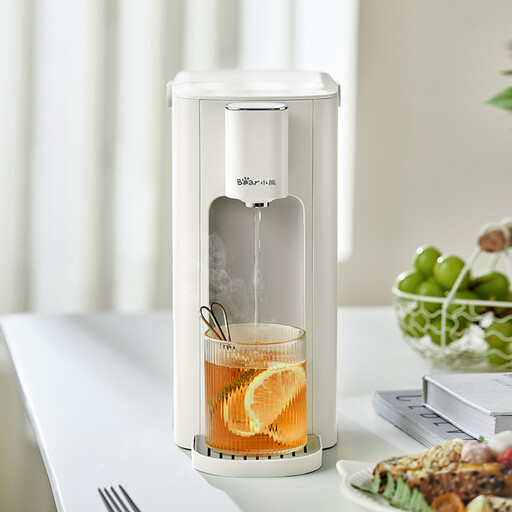 No image available
Consider the 3 L tank if you often make several servings. The product title lists six temperature settings; check that they suit your tea, particularly if you need boiling water, and confirm the appliance’s dimensions against your available space.
 No image available
Consider its stated 4 L capacity when several people want tea during the same break. The title identifies a water filter; check the precise temperature and portion settings, cartridge requirements and available worktop space before choosing it.
Choose one that reaches 100°C if you normally prepare your tea with boiling water: Breville says its VKJ367 dispenses once water reaches that temperature. If you regularly prepare tea below boiling point, compare documented settings; BRITA specifies a maximum hot-water temperature of 95°C for the YOURCE cool +2.
No: follow the descaling instructions for the dispenser you own, even if it has a filter. Breville’s help guidance says excessive scale may contribute to a HotCup failing to dispense boiling water.
A larger tank is useful chiefly when you make enough drinks to value fewer refills. It does not establish which temperatures or serving volumes a dispenser offers, so compare those settings and the appliance’s worktop dimensions separately.
Check the electrical-equipment marking requirements for your delivery region and the particular product offered. The Department for Business and Trade’s guidance dated 31 March 2026 lists Great Britain and Northern Ireland separately, so do not assume the marking information for one applies unchanged to the other.