
24/7 Customer Support

Free returns

Same-day & Next-day Delivery

Quality Guaranteed

Unlock Your Welcome Offers: FREE Delivery | Up to 80% OFF | Free 30-day JoyPlus trial
Download the APP
Buying household appliances and home essentials can quickly become expensive when product pages focus on headline features rather than everyday usability. A compact heater may be convenient but costly to run, a small fridge freezer may fit the room but lack useful storage, and a portable appliance may not suit UK sockets or safety requirements.
This guide highlights common purchasing traps, the specifications worth checking and a selection of practical products for different household needs.
A higher wattage does not automatically mean better results. For example, a 1500W portable space heater may warm a personal area quickly, but it can also consume more electricity at full power than a lower setting. Similarly, a powerful electric sander may be difficult to control if it is bulky or lacks effective dust collection.
Look for the combination of power, controls, operating area and safety features, rather than focusing on one number.
Small appliances are useful for flats, student accommodation, caravans and home offices, but dimensions alone do not show whether an item will work in your space. Check:
A compact fridge freezer with separate fridge and freezer sections may be more useful than a mini fridge, even if it occupies slightly more floor space.
Energy-efficient appliances can reduce electricity use, but only when installed and maintained correctly. A tumble dryer with a blocked lint filter, or a drinks refrigerator placed beside a radiator, may use more energy than expected.
Before purchasing, check the energy label, filter-cleaning requirements, water drainage method, defrosting needs and warranty conditions. Also consider whether replacement accessories are readily available.
For appliances used in British homes, confirm the voltage and plug arrangement before ordering. Many products list 220–240V and 50Hz, which is broadly suitable for UK domestic electricity, but the supplied plug and instructions should still be checked.
Look for appropriate UKCA or CE markings, clear manufacturer information and safety instructions. High-load items such as heaters and tumble dryers should be connected to a suitable wall socket. Avoid using extension leads unless the manufacturer specifically permits this, and never cover a heater or use it near curtains, bedding or water.
Capacity should match your real use. A 9kg tumble dryer may suit a family, while a smaller household may prefer a more compact machine if space and electricity consumption are priorities. For refrigeration, separate net capacities for the fridge and freezer are more informative than a general litre figure.
Measure the installation area before ordering and allow ventilation space. Freestanding appliances should sit on a stable, level surface, while doors and drawers need enough room to open fully.
UK energy labels use an A to G scale, so compare the class and the stated annual consumption where available. To estimate running cost:
Annual electricity cost = annual kWh consumption × your electricity tariff
For portable heaters, the calculation can be based on wattage and usage time. A 1500W heater uses 1.5kWh for every hour operated at full power, although thermostatic control and lower settings may reduce actual consumption.
Heat pump tumble dryers, adjustable thermostats and lower-power settings can support more controlled use. However, the most suitable energy-efficient appliance is one that matches your household’s capacity needs and operating pattern.

Why This Fits Their Persona: Its foldable handheld format is practical for renters, students, office workers and travellers who need a portable home appliance without allocating space for a full ironing board.
The compact design addresses storage concerns, while the integrated anti-leak water tank helps reduce spills during use. Check fabric-care instructions before steaming delicate materials.
Foldable body, one-button operation and a portable form suited to home, office or travel use.
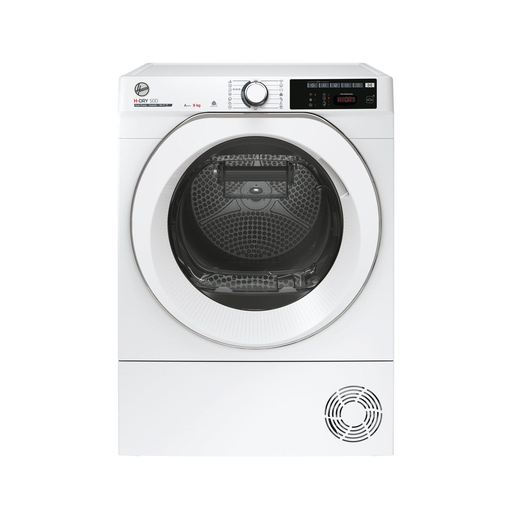
Why This Fits Their Persona: This freestanding dryer offers 9kg capacity, heat pump technology and app connectivity for households wanting more control over larger laundry loads.
Its sensor-dry options are designed to stop at selected dryness levels, helping avoid unnecessarily long cycles. Users still need to clean the lint filter before every cycle.
A++ energy-efficiency class, heat pump drying, four sensor-dry levels and Wi-Fi/Bluetooth control through the hOn app.
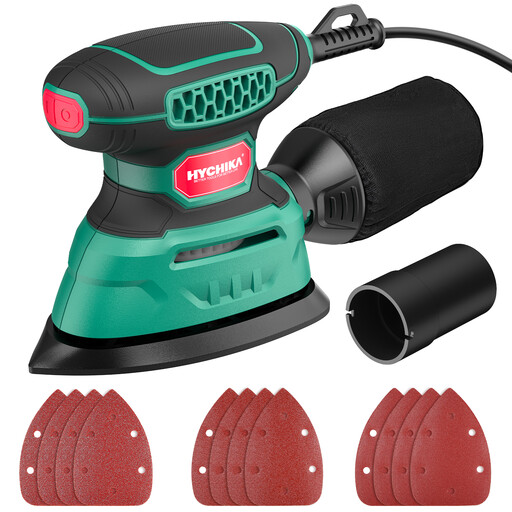
Why This Fits Their Persona: Suitable for DIY users working on wood, metal or plastic, particularly where detailed sanding and access to tight spaces matter.
The six-hole sanding sheets, dust bag and vacuum-cleaner adapter address the common problem of uncontrolled sanding dust. Wear suitable eye and respiratory protection.
140W motor, 13,000 OPM operation, ergonomic rubber palm rest and 12 sanding sheets in P80, P120 and P240 grades.
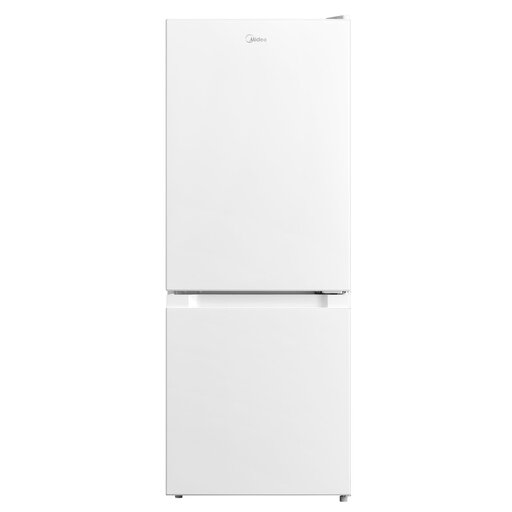
Why This Fits Their Persona: Its 123.5cm height and 50cm width suit studios, attic rooms, student accommodation and kitchens where a full-height fridge freezer will not fit.
The 153-litre total capacity provides separate chilled and frozen storage without relying on external dimensions alone. Low Frost reduces ice build-up, though periodic defrosting remains necessary.
99-litre fridge section, 54-litre freezer section, reversible door and E energy-efficiency class.
We have compiled a complete, real-time list of products that fully satisfy these strict selection criteria and UK safety regulations.
A drinks refrigerator is useful when you need dedicated beverage storage rather than a full food fridge. The Comfee RCW49BG1UK(E), for example, has a 44-litre capacity, adjustable temperature from 0°C to 16°C and a reversible door. Leave this type of appliance upright for the manufacturer’s recommended period before switching it on.
For personal warmth, compare a ceramic heater with a halogen heater. Ceramic models typically offer thermostat control and overheat protection, while halogen models can provide several heat settings and oscillation. Both should stand on a hard, level, non-flammable surface and be unplugged when unattended.
Non-appliance essentials also require label-led decisions. Herbal slimming tea containing senna should not be treated as a guaranteed weight-management solution. Follow the packaging directions, consume in moderation and consider advice from a healthcare professional if you have concerns or take medication.
Often, but the actual cost depends on the appliance’s rated consumption, usage time, household tariff and maintenance. Compare annual kWh figures where available and use lower settings or sensor controls when appropriate.
Lifespan varies by appliance type, construction, frequency of use and maintenance. Keeping filters clear, avoiding overloading, maintaining ventilation and following the instruction manual can help preserve performance. Check the warranty length and whether registration is required.
Confirm the voltage, plug, surface requirements, clearance and ventilation needs. Keep heaters away from water and flammable materials, and place cooling appliances away from direct sunlight or other heat sources. Always read the supplied safety instructions before first use.