
24/7 Customer Support

Free returns

Same-day & Next-day Delivery

Quality Guaranteed

Unlock Your Welcome Offers: FREE Delivery | Up to 80% OFF | Free 30-day JoyPlus trial
Download the APP
Household cleaning gloves can protect hands from hot water, detergents, moisture and everyday dirt, but choosing the wrong type often leads to wasted money. A pair may look thick in the packaging yet split at the fingertips, slide down during washing up or leave hands clammy after a few minutes.
Before buying rubber cleaning gloves, reusable household gloves or disposable latex gloves, check the construction, material, sizing and intended use. The right choice depends on whether you are washing dishes, cleaning bathrooms, preparing food, gardening, handling pets or completing repeated workplace tasks.
Thickness can improve resistance to everyday wear, but it does not make a glove suitable for concentrated bleach, solvents, acids or industrial chemicals. Natural rubber latex and other materials can degrade when exposed to incompatible substances.
For chemical-related work, read the product label and safety data for the cleaning agent. If you need chemical-resistant household gloves for professional or hazardous work, look for the relevant CE or UKCA marking, protection information and applicable standards, such as EN ISO 374 where stated. Ordinary household gloves are generally intended for routine domestic products, not unrestricted chemical protection.
A loose glove lets water enter at the cuff and reduces control over wet dishes. A tight glove can restrict movement, stretch the material and cause discomfort. Product labels may use Small, Medium, Large or Extra Large, but sizing is not identical across every range.
Compare the manufacturer’s size information where available, and consider finger length, palm width and cuff coverage. If you are between sizes, the best option depends on whether you prioritise dexterity or extra room.
Reusable washing-up gloves are designed to be rinsed, dried and used repeatedly. Disposable gloves are intended for quick changes where hygiene or contamination control matters. Reusing single-use gloves can transfer dirt and weaken the material, while using thin disposable gloves for prolonged immersion may result in leaks or tears.
Natural rubber latex is flexible and offers a close-fitting feel, which can help with grip and dexterity. However, latex may cause an allergic reaction in sensitive users. Anyone with a known latex sensitivity should consider latex-free cleaning gloves made from nitrile or another synthetic material.
Nitrile-coated gloves can offer useful resistance for routine household cleaning, but the exact performance depends on the coating and product instructions. PVC gloves are commonly used for washing up and general wet tasks. Disposable synthetic gloves are convenient for food preparation, cleaning, pet care and light DIY, but should not be treated as protection against strong solvents or prolonged immersion unless the label specifically allows it.
A cotton-lined or flock-lined interior can make reusable gloves more comfortable during longer cleaning sessions. It may absorb perspiration and reduce the clammy feeling associated with warm water and extended wear. Check that the lining is fully dry before storage, as damp interiors can become unpleasant and may affect the material over time.
A non-slip cleaning glove should have textured palms or fingers to help handle wet bottles, plates and cleaning tools. A rolled or beaded cuff can help the glove stay up and reduce water running towards the wrist, although it is not a guarantee of a completely watertight seal.
For regular washing-up, medium thickness may balance flexibility and protection. Heavy-duty cleaning gloves with thicker construction are more suitable for frequent scrubbing, gardening and general maintenance, but may feel less precise for delicate tasks.
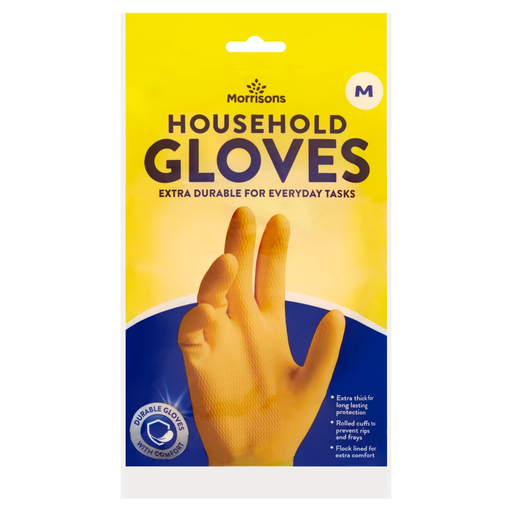
Why This Fits Their Persona: A practical medium-size option for everyday washing up, bathroom cleaning and general household chores in a typical UK home.
The listed extra-thick construction, reinforced rolled cuffs and textured surfaces address common problems such as early tearing, slipping and poor grip.
Flock lining for comfort; available in Small, Medium and Large sizes.
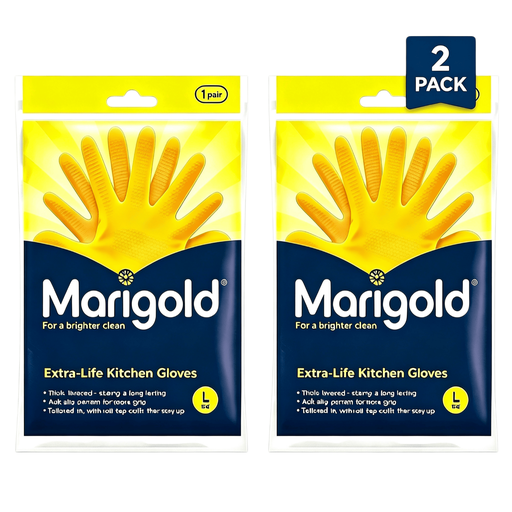
Why This Fits Their Persona: Suitable for users who want reusable gloves with comfort features for frequent kitchen and bathroom cleaning.
The product description specifies a triple-layer design, cotton lining and roll-top cuffs rather than relying only on a “strong” label.
Cotton-lined interior; textured anti-slip pattern; supplied as a two-pack.
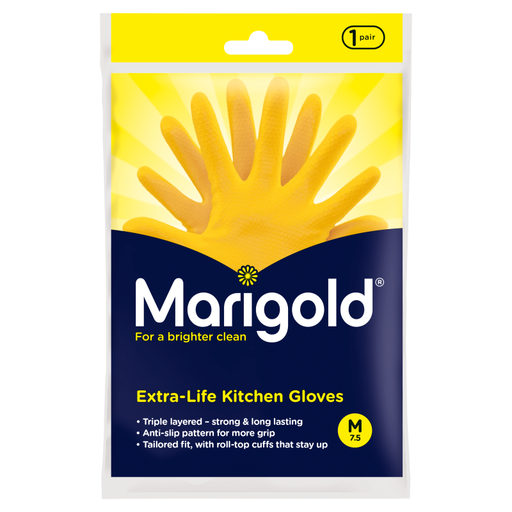
Why This Fits Their Persona: A medium-size reusable option for repeated cleaning routines where grip, cuff stability and hand comfort are priorities.
Its listed beaded roll-top cuff and Safe Hold pattern directly address slipping and water ingress during wet tasks.
Nitrile coating; triple-layer construction; cotton lining for extended wear.
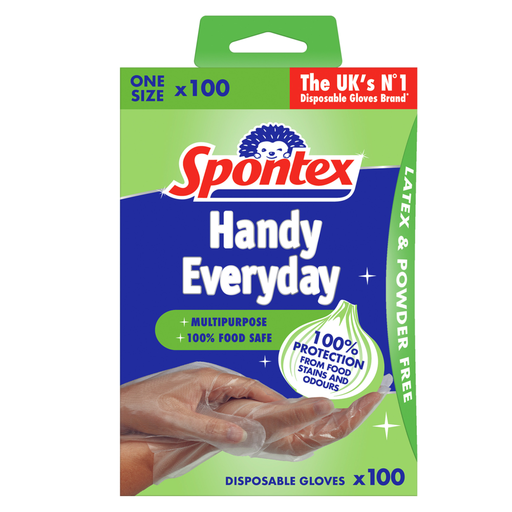
Why This Fits Their Persona: A latex-free, powder-free choice for households, salons, carers and small workplaces that need convenient glove changes.
The stated synthetic, latex-free and powder-free construction avoids the common assumption that all disposable gloves contain natural rubber latex.
100-glove pack; ambidextrous fit; designed for single use and everyday tasks.
Correct care can help reusable household gloves remain usable for longer:
Do not rely on a visibly intact glove if the material has become brittle. For food preparation, follow hygiene guidance and use gloves appropriate for food contact. Disposable gloves should generally be changed between tasks and disposed of responsibly.
We have compiled a complete, real-time list of products that fully satisfy these strict selection criteria and UK safety regulations.
There is no fixed lifespan because usage, cleaning products, heat and storage conditions vary. Replace gloves as soon as they show punctures, cracks, thinning or loss of flexibility. Rinsing and air-drying after each use can help prevent residue and damp storage from shortening their usable life.
No. Natural rubber latex may cause an allergic reaction in sensitive individuals. Check the materials before buying and choose latex-free cleaning gloves if required. Stop using any glove if irritation or a rash develops, and seek appropriate medical advice where necessary.
It depends on how often they are used and whether hygiene requires frequent changes. A 100-pack can be practical for food handling, pet care, light cleaning and workplace tasks, while reusable gloves may create less ongoing waste for repeated washing up. Compare pack quantity, intended use and replacement frequency rather than price alone.