
24/7 Customer Support

Free returns

Same-day & Next-day Delivery

Quality Guaranteed

Unlock Your Welcome Offers: FREE Delivery | Up to 80% OFF | Free 30-day JoyPlus trial
Download the APP
Flies in the kitchen, ants along the skirting board and moths in the wardrobe all require different treatment. Choosing the first household insect killer you see can lead to wasted money, incomplete control and unnecessary exposure to insecticide.
Before buying, check the pest covered, the application method and the product’s approved instructions. A targeted insect killer spray may be suitable for a small, visible problem, while traps, powders or room treatments can be more appropriate for monitoring or treating a wider area.
“Multi-insect” does not necessarily mean one product is suitable for every infestation. A flying insect aerosol is designed for pests such as flies, wasps and mosquitoes. It may not be the right choice for ants, cockroaches, fleas or clothes moth larvae.
Match the label to the pest. Look for specific wording such as flying insect killer, crawling insect killer, flea killer or clothes moth killer, rather than relying only on a broad front-of-pack description.
A spray that kills an insect on contact may not prevent more insects entering or hatching later. Conversely, a residual treatment may be unsuitable for spraying into the air or onto fabrics.
Check whether the product is intended for:
The stated duration also needs careful reading. Any claimed protection period applies only in the conditions and locations described on the label.
Aerosols and powders are biocidal products, not ordinary household cleaners. Do not assume that a low-odour or water-based formula can be used without precautions. Keep children and pets away, remove or cover food and follow the product label for ventilation and re-entry.
Some products are indoor pest control solutions only, while others may also be approved for patios, paths or wasp nests. Using a product outside its stated application can create safety and effectiveness problems.
The active ingredient helps indicate how a product works, but it should not replace the label directions. Common ingredients in the products listed here include pyrethroids such as permethrin, tetramethrin, prallethrin, cyphenothrin and phenothrin. Other products use natural pyrethrins, adhesive coatings or pheromone pads.
For a targeted purchase, check:
A 300ml insecticide aerosol is convenient for spot treatment and occasional use. A 500ml or 600ml trigger spray may offer more product for cracks, crevices or surface application. Powders can be useful along dry insect trails, but they require careful handling and should never be spread near food, water or children’s play areas.
Room-treatment products need a different approach. Follow the stated room size, spray duration, closure period and ventilation instructions. Do not improvise by using extra product.
Long-lasting insect protection varies by product and application area. A moth trap may monitor a wardrobe for a stated number of weeks, while a surface treatment may specify a period of residual control. Adhesive fly traps can provide seasonal monitoring without releasing insecticide, but they need replacing when full or when their stated service period ends.
Treat these periods as label instructions, not guarantees for every home. Dampness, cleaning, ventilation and the level of infestation can affect practical performance.
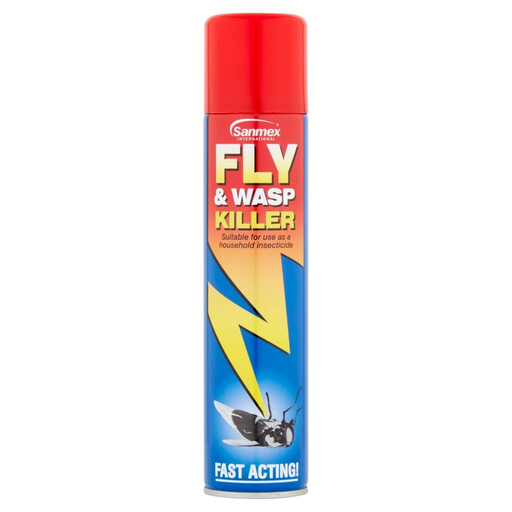
Why This Fits Their Persona: A straightforward option for tenants and homeowners needing occasional control of flies, wasps, midges or mosquitoes in domestic rooms.
Its listed coverage focuses on flying insects, avoiding the assumption that one aerosol is automatically suitable for crawling pests.
300ml aerosol; directions include direct spraying from 3–5 feet and room treatment with a 10–15 minute closure period.
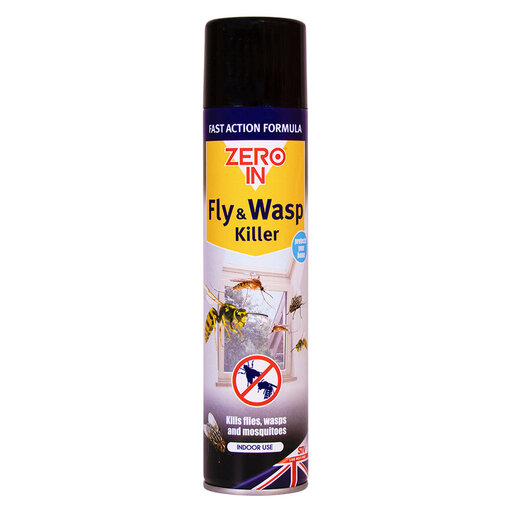
Why This Fits Their Persona: Suitable for shoppers who want a clearly specified flying insect spray for home areas and occasional outdoor use where the label permits it.
The instructions specify a five-second burst for an average 30m³ room and a direct application distance of 60–90cm.
Designed for flies, wasps, mosquitoes and other flying insects; low-odour formulation is listed in the product information.

Why This Fits Their Persona: A practical match for recurring ant, woodlouse or cockroach activity where targeted treatment of cracks and crevices is needed.
It is specified for crawling insects rather than being selected solely because it carries a broad multi-pest description.
600ml trigger format; listed residual action and targeted application for cracks and crevices.
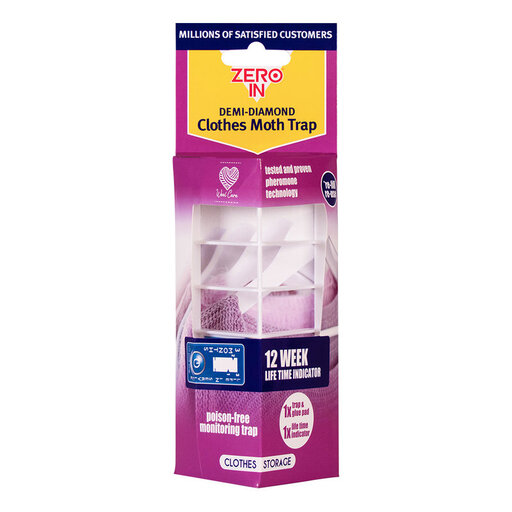
Why This Fits Their Persona: A discreet option for monitoring clothes moth activity in wardrobes and cupboards without using an insecticide aerosol.
It is a monitoring trap, so it does not imply that a pheromone product replaces cleaning, inspection or treatment of an established infestation.
Poison-free adhesive pad; stated monitoring period of up to 12 weeks and a replaceable-life indicator.
We have compiled a complete, real-time list of products that fully satisfy these strict selection criteria and UK safety regulations.
Whichever household pest control product you choose, read the current packaging before use. Keep aerosols away from heat and flames, do not spray near food or aquariums and prevent powder or liquid from entering drains and waterways. Ventilate treated rooms as directed and keep people and animals out until the label permits re-entry.
For larger, persistent or recurring infestations, particularly cockroaches, fleas or bed bugs, DIY treatment may not resolve the source. Consider contacting a qualified pest-control service and follow any landlord or tenancy requirements.
Choose a product specifically labelled for flying insects, such as flies, wasps, midges or mosquitoes. An aerosol can provide direct knockdown, while an adhesive fly trap offers ongoing monitoring without spraying insecticide. Use a fly killer according to its location and replacement instructions.
There is no single lifespan. Some products work mainly on contact, while others specify residual protection for several weeks. Room aerosols generally require ventilation after treatment, whereas traps and surface treatments have separate replacement or reapplication periods. Always use the duration printed on the product label.
No. Products containing natural pyrethrins or other plant-derived ingredients still require label-based handling. “Natural” describes the source of an ingredient, not permission to spray around food, children, pets or aquatic environments without precautions. Use only the stated dose and application method.