
24/7 Customer Support

Free returns

Same-day & Next-day Delivery

Quality Guaranteed

Unlock Your Welcome Offers: FREE Delivery | Up to 80% OFF | Free 30-day JoyPlus trial
Download the APP
A household insect killer spray can be a convenient way to deal with insects indoors, but choosing by can size or phrases such as “professional strength” can lead to wasted money. The right product depends on the pest, the surface being treated and the type of control required.
Before buying, UK households should avoid three common traps:
Start with identification rather than the product name. A bed bug spray should be labelled for bed bugs and suitable for areas such as bed frames, skirting boards or furnishings. A dust mite killer may be designed for mattresses and soft surfaces, but the label should explain exactly how those surfaces should be treated.
Other common matches include:
If you cannot confidently identify the insect, a product covering both flying and crawling insects may be more practical for occasional household use. For a persistent or extensive infestation, consider professional pest control rather than repeatedly applying DIY products.
A spray suitable for hard surfaces is not automatically suitable for mattresses, upholstery or carpets. Confirm whether the label permits use on:
Always test an inconspicuous area first where the instructions recommend it. Fabrics can react differently depending on their dyes, fibres and finishes. Do not spray food, food-contact surfaces, electrical equipment or aquariums unless the packaging expressly allows it.
Long-lasting insect protection refers to the period a treated surface may remain active under the stated conditions. It is not the same as guaranteed prevention of every new insect.
The products below specify different periods of residual action, including over two weeks, up to four weeks, up to 12 weeks or up to three months. These claims are product-specific and depend on correct application, surface type and label instructions. Check the packaging for the current directions before use.
Also look at the active ingredients. Examples in this range include cyphenothrin, prallethrin, permethrin, tetramethrin and cypermethrin. The ingredient list helps you compare products, but it does not remove the need to follow the label, ventilate rooms and observe re-entry instructions.
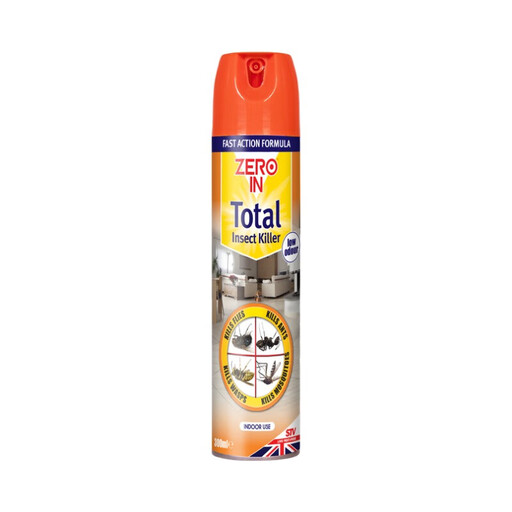
Why This Fits Their Persona: A practical all-in-one option for renters or homeowners dealing with occasional flies, wasps, mosquitoes, ants, cockroaches or woodlice indoors.
It identifies both flying and crawling insects and states a residual period of up to four weeks, rather than relying only on a vague broad-action description.
Combined knockdown and residual treatment; low-odour formulation for indoor living areas.
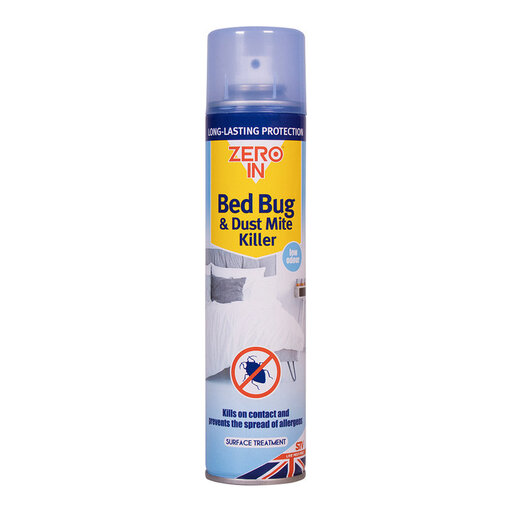
Why This Fits Their Persona: Suitable for households seeking a targeted treatment for bed frames, skirting boards and other hard or soft furnishings.
It is labelled specifically for bed bugs and dust mites, making it more targeted than a general household aerosol.
300ml format; stated protection for over two weeks; contains cyphenothrin and prallethrin.

Why This Fits Their Persona: A larger-format choice for landlords, businesses or households managing fleas, bed bugs, clothes moths and other crawling pests across several rooms.
The stated residual action is up to 12 weeks for emerging eggs and larvae, giving buyers a clearer benchmark than an unspecified “lasting” promise.
600ml capacity; trigger handle for targeted application; suitable for home and commercial use according to the product description.
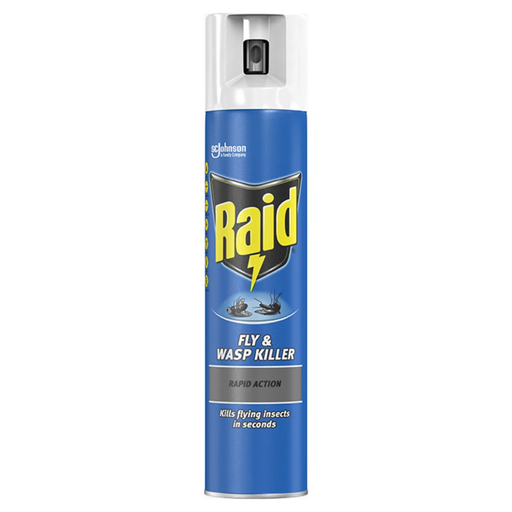
Why This Fits Their Persona: Designed for people who need a flying insect spray for indoor rooms, individual insects and likely entry points around doors and windows.
The directions distinguish between direct application, room treatment and residual treatment near entry points.
300ml aerosol; labelled for flies, mosquitoes, wasps and other flying insects; indoor-use directions are provided.
Before spraying, remove or cover food, utensils and children’s items. Move pets away from the treatment area and follow the label regarding fish tanks, birds and other sensitive animals. Ventilate as instructed and keep people and animals out until the treated area is dry or the stated re-entry period has passed.
For soft furnishings, vacuum first where appropriate, wash removable fabrics at the recommended temperature and treat only surfaces listed on the packaging. Flea control may also require treating the environment repeatedly because eggs and larvae can remain outside the host. Do not use a household insecticide as an animal treatment.
Aerosols are often flammable. Keep cans away from heat, flames and direct sunlight, and dispose of empty containers according to local council guidance. Use biocides safely and always read the label and product information before application.
We have compiled a complete, real-time list of products that fully satisfy these strict selection criteria and UK safety regulations.
It depends on the formula, treated surface and product instructions. The products in this guide state residual periods ranging from over two weeks to up to three months. Cleaning, moisture, sunlight and surface wear may reduce residual activity. Reapply only as directed.
Only if the label specifically allows mattress treatment. Apply the stated amount, keep the room ventilated and wait for the required drying or re-entry period. Laundering bedding and addressing cracks, bed frames and surrounding areas may also be necessary.
It can be used only with careful adherence to the label. Remove pets, food bowls and bedding during treatment, and never spray directly onto an animal unless the product is expressly authorised for that use. Seek veterinary advice for an appropriate flea treatment for cats or dogs.