
24/7 Customer Support

Free returns

Same-day & Next-day Delivery

Quality Guaranteed

Unlock Your Welcome Offers: FREE Delivery | Up to 80% OFF | Free 30-day JoyPlus trial
Download the APP
A sudden trail of ants, fruit flies around the kitchen or signs of moths in a wardrobe can make buying household pest control products feel urgent. However, choosing the first product with a “fast action” label can lead to wasted money, unsuitable treatment or unnecessary exposure to insecticides.
The practical approach is to match the product to the pest, application area and treatment method. A powder designed for cracks and crevices will not replace a trap for fruit flies, while a room treatment may be excessive for a small, localised problem.
A product listing may mention flies, ants, cockroaches and wasps together, but that does not mean one application is suitable for every situation. Check whether the product is intended for flying insects, crawling insects, a specific pest or total-room treatment.
For example, an ant killer powder is generally applied along trails, cracks and crevices. A fruit fly trap is placed near food waste or fruit bowls. These products address different behaviours and should not be treated as interchangeable.
“Long-lasting” protection is only useful if the product covers the required area. Compare the stated square-metre coverage, room volume or replacement interval with your actual space.
A small puffer pack may be suitable for a kitchen perimeter, but not for a large garden boundary. Similarly, a bed bug bomb designed for a stated room volume must be matched to the room size and used according to its label.
Some traps and monitoring devices are poison-free or use plant-based ingredients, but they still need careful placement around children and pets. Insecticidal powders and aerosols require additional precautions, including ventilation and avoiding food, drains, aquariums and watercourses.
Always read the complete UK product label, including the active ingredient, approved use, disposal instructions and re-entry guidance. For persistent or extensive infestations, DIY treatment may not be appropriate.
Start with the insect rather than the brand name:
Check whether the product contains an insecticide such as permethrin, deltamethrin, cyphenothrin, prallethrin or pyrethrins. These ingredients have different label instructions and environmental warnings.
Products containing insecticides should be kept away from children, pets, food and animal feed. Some powders can be harmful if inhaled or swallowed, while aerosols may be flammable and should not be sprayed near ignition sources. Do not apply products to soft furnishings unless the label specifically allows it.
For households prioritising chemical-free pest control, consider glue traps, interceptor traps or UV devices. “Chemical-free” describes the control method; it does not remove the need for sensible hygiene and placement.
Compare the purchase price with the treatment period:
This helps landlords, tenants and pet owners avoid buying a product that appears inexpensive but requires frequent refills or several units.
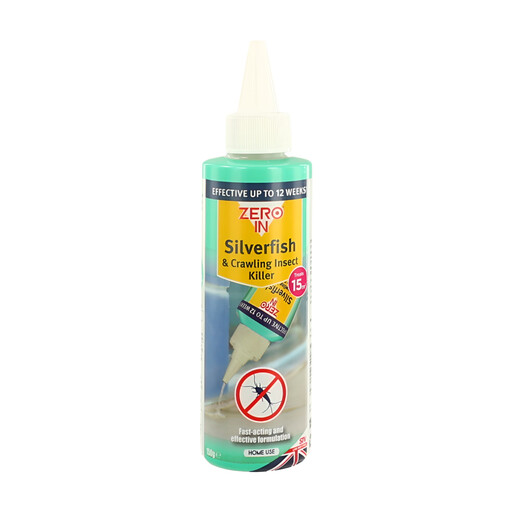
Why This Fits Their Persona: A targeted option for tenants or homeowners dealing with silverfish and crawling insects around skirting boards, cracks and crevices.
Its puffer nozzle supports precise application rather than indiscriminate spreading. Check the label for the permitted surface, coverage and duration before use.
150g format; stated treatment area of up to 15 square metres; intended for crack and crevice application.
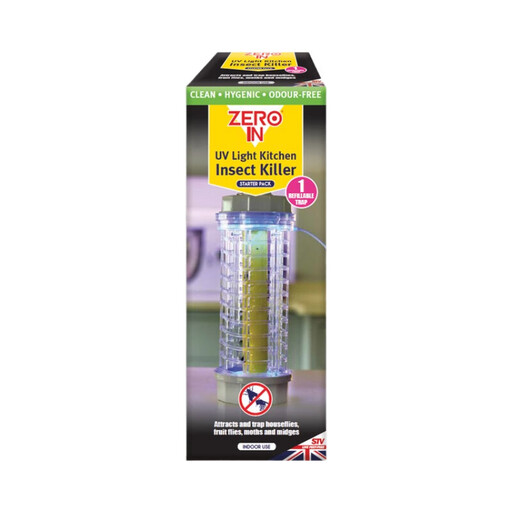
Why This Fits Their Persona: A discreet indoor choice for kitchens and food preparation areas where users prefer ongoing monitoring without sprays.
It uses adhesive trapping rather than an insecticide spray, while the protective cover helps reduce accidental contact. Refills still need budgeting.
Poison-free design; UV LED attraction; adhesive traps can be changed after approximately 21 days of continuous use.
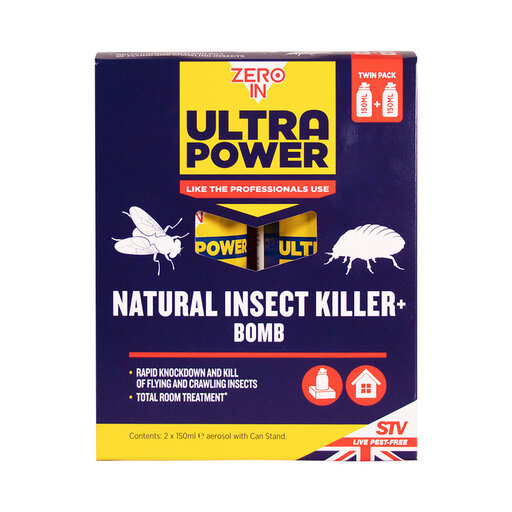
Why This Fits Their Persona: Suited to people considering a total-room treatment for a broad flying and crawling insect problem in an indoor domestic space.
The stated room-treatment capacity makes volume checking essential. Remove people, pets and uncovered food as directed, then ventilate before re-entry.
Twinpack format; stated suitability for a broad range of flying and crawling insects; contains natural pyrethrins.
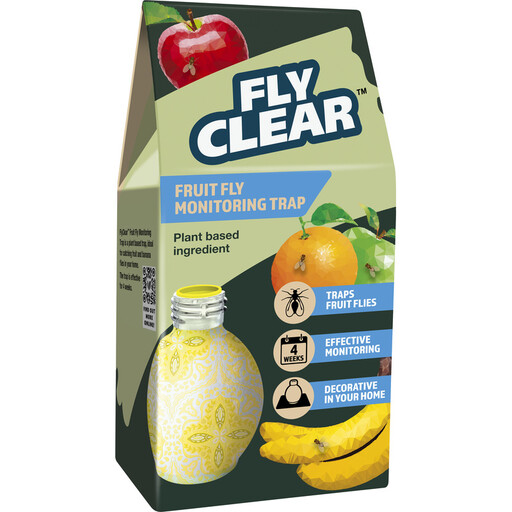
Why This Fits Their Persona: A practical kitchen option for families and pet owners who want to monitor fruit flies near fruit bowls, compost bins or food preparation areas.
It is a monitoring trap rather than a room aerosol, reducing the need to spray around food areas. Keep it out of reach despite the plant-based formulation.
Chemical-free product description; discreet bottle design; stated monitoring period of up to four weeks.
We have compiled a complete, real-time list of products that fully satisfy these strict selection criteria and UK safety regulations.
Before applying any crawling insect killer, bed bug spray, fly and mosquito spray or cockroach killer, check:
For a wasp nest, use a suitable wasp nest destroyer only when the nest can be approached safely. Do not take unnecessary risks with high nests, enclosed spaces or aggressive activity.
Safety depends on the formulation and how it is used. Traps and interceptor devices avoid insecticide exposure, but should still be placed out of reach. Powders and sprays may require people and animals to leave the area during application. Follow the product label rather than relying on general descriptions.
It varies considerably. The CLEAR fruit fly trap is stated to last up to four weeks, while the UV kitchen device uses replaceable adhesive traps. Powders may remain active for several weeks on suitable dry surfaces. Reapply only when the label permits it.
Choose a spray for targeted, immediate treatment where permitted; a powder for dry cracks, crevices and insect runs; and a trap for monitoring or ongoing capture with less reliance on insecticide. Match the method to the pest and the room, then compare coverage and running costs before purchasing.