
24/7 Customer Support

Free returns

Same-day & Next-day Delivery

Quality Guaranteed

Unlock Your Welcome Offers: FREE Delivery | Up to 80% OFF | Free 30-day JoyPlus trial
Download the APP
Discovering unwanted pests in your home or garden can be unsettling. Whether it’s a trail of ants in the kitchen, moths in the wardrobe or something buzzing a little too close for comfort, the immediate reaction is to find a solution—and fast. However, the market for household pest control is crowded with products making bold promises, and it's easy to choose one that is ineffective, unsuitable for your home or simply a waste of money.
As a Joybuy Product Recommendation Officer, my role is to help you navigate these choices. We will look at the common pitfalls that lead to disappointing results and break down the key factors to consider, ensuring you select a product that effectively and appropriately solves your specific pest problem.
Before you buy, be aware of these frequent traps that can lead to frustration and recurring infestations:
To avoid these issues, focus on matching the product to the problem. Here are the core parameters to analyse before making a purchase.
Different pests require different approaches. Understanding the types of treatments available is the first step to effective control.
Your choice between a chemical or non-chemical solution depends on the severity of the problem and your household environment.
To help you choose, we’ve matched some practical solutions to common household scenarios.
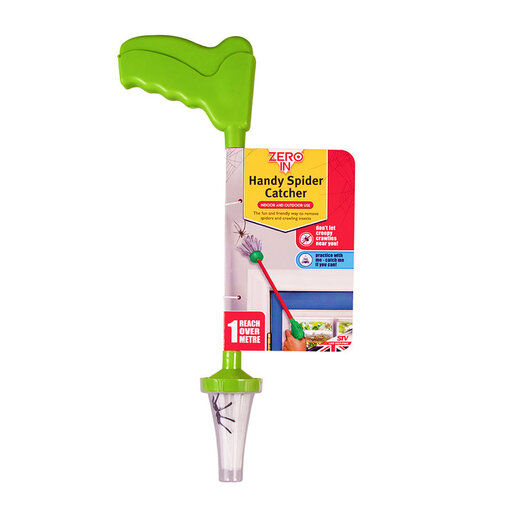
Why This Fits Their Persona: For households with children or pets, spraying chemicals to deal with a single spider is often undesirable. This tool provides a stress-free, humane way to remove spiders and other insects from a distance without any mess or harmful substances.
It directly avoids the "Safety Gamble" pitfall by being a completely mechanical, poison-free solution. There are no chemicals to worry about, making it safe to use in any room at any time.
Its long reach (over 1 metre) keeps you at a comfortable distance, and the gentle bristles catch insects without harming them, allowing for humane release outdoors.
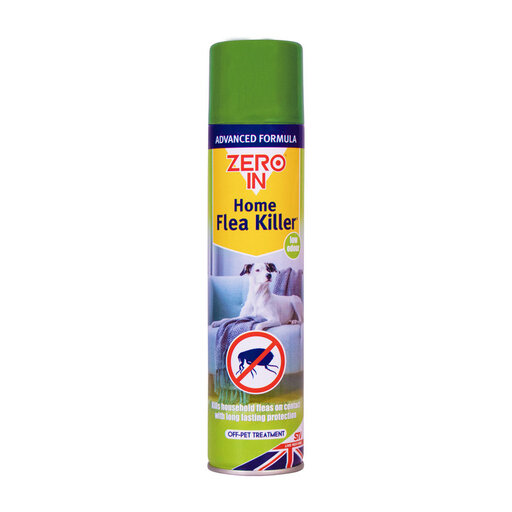
Why This Fits Their Persona: When facing a persistent flea problem, a targeted approach is non-negotiable. This user needs a product specifically designed for home furnishings that tackles the entire flea life cycle to prevent a frustrating re-infestation.
This spray is the antidote to the "Ignoring the Pest Life Cycle" pitfall. Its formula is designed to kill not only adult fleas but also their larvae and eggs, breaking the cycle and stopping the problem at its source.
It provides lasting protection on treated areas like carpets, rugs and pet bedding (not directly on pets). The low-odour formula is approved for use throughout living areas.

Why This Fits Their Persona: Houseplant lovers need to eliminate pests like aphids and whitefly without causing harm to their prized plants. This user requires a solution specifically formulated for use on ornamentals and even edible plants.
This product avoids the "One-Size-Fits-All" trap. Unlike a generic household insecticide that could damage delicate leaves, this is a dedicated houseplant bug killer designed for plant safety and pest effectiveness.
It offers up to 8 weeks of protection and is suitable for a wide range of plants, both indoors and outdoors. The hand spray makes it easy to apply at the first sign of an infestation.
We have compiled a complete, real-time list of products that fully satisfy these strict selection criteria and UK safety regulations.
1. How can I tell if a pest control product is safe to use around my pets? Always check the product label for specific warnings regarding pets. Products containing pyrethroids, for example, can be toxic to cats. The safest approach is to remove pets from the area during application and keep them away until surfaces are completely dry. For maximum safety, consider poison-free pest control options like sticky traps or humane catchers in areas your pets can access.
2. What is the difference between a wasp trap and a wasp deterrent? A wasp trap, like the Zero In Wasp Trap, uses a liquid bait to lure wasps inside, where they become trapped and die. This is an active method for reducing the number of wasps in an area. A wasp deterrent, such as the Zero In Wasps Away, is a visual decoy that mimics an enemy wasp nest. Wasps are territorial and will typically avoid building a new nest near an existing one, making this a humane, preventative measure.
3. My houseplants have tiny flies; what should I use? Those are likely fungus gnats, which thrive in damp soil. A dedicated houseplant bug killer spray can be effective, but a simple and poison-free solution is to use sticky traps. Products like the Zero In Pot Plant Fungus Gnat Sticky Traps are specifically designed with a yellow colour that attracts these pests, trapping them on an adhesive surface without any chemicals.