Choose a backup you can restore, then consider keeping another copy somewhere a single incident cannot affect. A removable drive gives you a local copy, cloud storage offers off-site access, a NAS suits households ready to manage shared storage, and backup software determines what gets saved; none removes the need to plan for account recovery or check how long records must be kept.
Who this guide is for
Household records protectors
If a computer is lost, files are deleted by mistake or an incident affects a copy kept at home, you need another usable place to retrieve important records. The UK National Cyber Security Centre recommends keeping backups in a separate safe location.
Privacy-focused record keepers
If you store sensitive documents, weigh how files are encrypted against how you would regain access if you lost a password or recovery method. Proton’s support guidance explains that resetting an account password may not restore access to existing encrypted files.
Multi-device organisers
If records are spread across computers or phones, check which devices and folders a backup covers and whether you can restore them. Microsoft Support, Apple Support and Synology describe different backup workflows for computers and shared storage.
What to consider when choosing
For household records, decide what must remain recoverable, how you will protect account access and whether the backup covers the devices and folders you actually use.
| Concern |
What to check when buying |
Who this matters to |
| Recoverability after loss |
Identify each copy’s location and test restoring a file; consider whether one incident could affect more than one copy. |
If a device is lost or an incident affects records at home, I want a separate copy I can restore; around 31% of consumers put recovery after loss or damage first. |
| Privacy and account access |
Check what is encrypted, how two-factor authentication works and whether password recovery also restores access to files. |
When records are sensitive, I want to protect them without locking myself out; around 25% of consumers prioritise privacy and access recovery. |
| Device and folder coverage |
Check supported devices, included folders, destination requirements and how to restore a sample file. |
If my records are spread across devices, I need the backup to include the right folders and restore them; around 25% of consumers put coverage and compatibility first. |
| Capacity and ongoing commitment |
Estimate the files to be covered and check storage capacity, version-history settings and any ongoing service terms. |
For a growing collection, I want enough space without overlooking equipment or service commitments; around 19% of consumers focus on capacity and ongoing commitments. |
Backup mistakes to avoid
-
Treating a synced folder or connected copy as the whole recovery plan
A copy that remains connected or in the same location may be affected by the same destructive incident as the original.
Keep copies separated where practical, check whether earlier versions are available and test restoring a file before relying on the setup.
-
Assuming NAS drive redundancy replaces a separate backup
Synology advises backing up to a different destination even when a local multi-version copy is maintained.
Plan where the NAS’s own backup will go as well as how its drives will be arranged.
-
Turning on encryption without planning file recovery
A password reset or lost private key can leave encrypted files inaccessible even when the files themselves remain intact.
Set up and safeguard the relevant recovery method, then check that it restores file access rather than only account sign-in.
-
Choosing on rated SSD speed before checking backup coverage
Samsung says the T7 Shield’s maximum rated speeds depend on the host and cable, while backup applications may omit files outside their configured coverage.
Check the folders, destination and restore process first; consider transfer speed in relation to the workload you need to handle.
Relevant brands to consider
Samsung
The T7 Shield is a portable SSD option for a local copy that may be moved between locations.
- Samsung specifies a 1 TB MU-PE1T0S/EU model with password protection and rated read and write speeds of up to 1,050 MB/s and 1,000 MB/s, respectively.
- Samsung says those maximum speeds depend on a compatible host device and cable; rated speed does not show whether a backup captures all the files you need.
Western Digital
My Passport portable HDDs are a computer-connected local-storage option.
- Western Digital provides product-family support and information about backup software.
- Check the exact model and capacity, along with its connector and compatibility with your chosen backup application.
Synology
The DS223j is a managed shared-storage option for households prepared to set up and maintain a NAS.
- Synology describes cross-device access and PC-folder backup.
- Synology recommends backing up to a different destination because local multi-version copies and RAID do not remove every risk of data loss.
Proton
Proton Drive is an encrypted cloud file-storage option for off-site access to documents.
- Proton describes end-to-end encryption, desktop and mobile apps, and two-factor authentication.
- Proton says an email or SMS password reset may not restore access to existing encrypted files; set up a suitable data-recovery method.
Backblaze
Computer Backup is an online-backup service for files on supported Mac and Windows computers and physically attached drives.
- Backblaze describes computer and attached-drive backup and offers an optional private encryption key.
- Backblaze says Computer Backup excludes network-mounted and NAS drives and defaults to 30-day version history. It also says files cannot be restored if the private encryption key is lost.
Joybuy product choices
These Joybuy listings cover local backup hardware, from portable drives to a managed NAS. Choose by how much storage you need, where you want the copy kept and whether you are ready to maintain shared network storage.
 No image available
Synology DS225+ 2-Bay Diskless NAS
Consider this NAS if you want managed shared storage for household files across devices.
It is a 2-bay diskless NAS; drives are not included.
The product description states that it supports automated backups to cloud services, external drives and remote NAS devices.
View on Joybuy
 No image available
Samsung MU-PE1T0S 1TB External SSD
Consider this portable local drive if you want to keep a copy of household files separately from a computer.
1 TB capacity; USB Type-C, USB 3.2 Gen 2 connectivity.
Check that your device and backup software support the connection and intended destination.
View on Joybuy
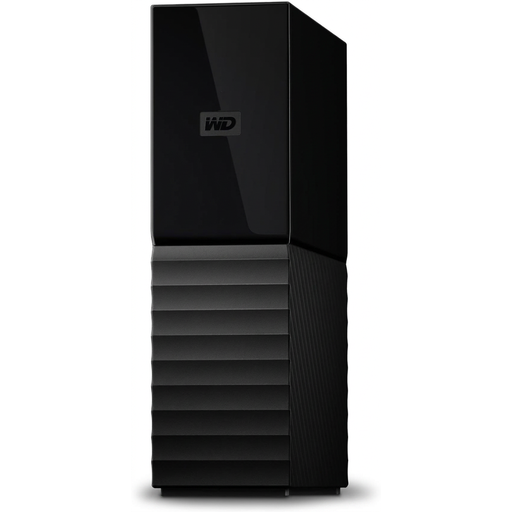 No image available
Western Digital My Book 22TB External Desktop Hard Drive
Consider this desktop drive if you want a high-capacity local copy for computer-connected storage.
22 TB capacity; USB 3.0; the product name specifies PC and Mac compatibility, password protection and hardware encryption.
View on Joybuy
 No image available
SanDisk Portable SSD 2TB
Consider this portable SSD if you want a local copy that can be moved separately from your computer.
2 TB capacity. The product description states read speeds of up to 800 MB/s and drop protection of up to 2 metres.
View on Joybuy
 No image available
Western Digital Elements Portable External Hard Drive 4TB
Consider this portable HDD if you want a computer-connected local copy of documents and other household files.
4 TB capacity. The product description says reformatting may be required for Mac or other operating systems.
View on Joybuy
Household backup questions
Should I delete a digital tax record after a standard number of years?
There is no single retention period for every household record; the applicable period depends on the record and circumstances. HM Revenue & Customs says personal Self Assessment records for an on-time return should be kept for at least 22 months after the end of the tax year, and records for a late return for at least 15 months after it was sent. Self-employed business records generally need to be kept for at least five years after the relevant 31 January submission deadline. Check which requirement applies before setting a deletion date; this is not individual tax advice.
Do UK data-protection rules require me to register just to back up household records?
The Information Commissioner’s Office says UK GDPR does not apply to processing carried out by individuals purely for personal or household activities. That conclusion does not extend to records handled for a business or another organisation.
Will a Mac or Windows backup automatically include every household folder?
Not necessarily; check the folders and destination used by the specific backup. Microsoft Support explains how File History handles included libraries and how to add other folders, while Apple Support describes Time Machine setup and supported destinations. Restore a sample record before relying on the setup.
If I forget my encrypted-cloud password, will resetting it restore my documents?
Not necessarily. Proton says an email or SMS password reset may restore sign-in without restoring access to existing encrypted Drive files if you do not have a configured data-recovery method or the previous password. Check both account recovery and file recovery for your setup.
What should I check before relying on online computer backup?
Check which drives are covered and how long changed or deleted files remain available. Backblaze says Computer Backup excludes network-mounted and NAS drives and defaults to 30-day version history; compare those conditions with the files and recovery period you need.


