Household record keepers
If a device is lost, damaged or fails, you need a way to recover documents and photos. The UK National Cyber Security Centre advises considering copies in more than one place.


For household records, an external drive gives you a local copy, a dedicated cloud-backup service can copy supported files off-site, and file sync makes selected files accessible across devices but can also synchronise changes and deletions. The UK National Cyber Security Centre advises considering both an online copy and a storage device; if you need protection from loss at home as well as convenient local restoration, keep separate local and off-site copies and test that you can restore a file.
If a device is lost, damaged or fails, you need a way to recover documents and photos. The UK National Cyber Security Centre advises considering copies in more than one place.
You want new files copied with little manual effort and selected files available on supported devices. Microsoft Support explains that OneDrive sync carries changes and deletions between locations, so sync and independent backup are not the same thing.
You need to weigh privacy, usable capacity, recovery periods and the ongoing cost of access. GOV.UK sets different retention guidance for different tax records, so check the rule for the specific records you keep.
Start by deciding whether you need local restoration, off-site protection or files available across devices: sync is not the same as an independent backup. If losing equipment at home is also a concern, plan for separate local and off-site copies.
| Concern | What to check when buying | Who this matters to |
|---|---|---|
| Recoverable copies | Check where each copy is stored, whether it can be overwritten and how to restore a sample file. | If a device or a copy at home is lost, I want another route to get my records back. Around 28% of consumers put recoverable copies in separate places first. |
| Automatic coverage | Check which folders and devices are included and how often copying runs. | When my files change often, I want copies made without relying on memory. About 22% of consumers put automatic coverage and frequency first. |
| Privacy and access | Check encryption options, account protections and how you will keep recovery credentials available. | For sensitive household or tax records, I want to limit access without locking myself out. Approximately 17% of consumers prioritise privacy and continued access. |
| Capacity and compatibility | Check current file sizes, expected growth, available computer ports and operating-system compatibility. | If my photos and folders are growing, I need enough usable space and a connection that fits my devices. Around 17% of consumers put capacity and compatibility first. |
| Ongoing cost and exit | Check renewal terms, storage limits after cancellation or downgrade, and how you can export files. | I want a sustainable way to keep access and move my files if I leave a service. Roughly 16% of consumers prioritise continuing cost and a workable exit. |
Sync can carry deletions as well as additions and changes. Microsoft Support describes this behaviour for OneDrive, and Apple says a photo deleted while iCloud Photos is in use is deleted on participating devices too.
Check each service's recovery rules and keep a separately controlled copy of records you cannot afford to lose.
A drive does not automatically copy new files simply because it is connected. Seagate describes drag-and-drop transfers for its Expansion Portable drive.
Choose a supported automatic tool or set a repeatable manual schedule, then check which folders it actually includes.
Backblaze states that its default version history keeps changed or deleted files for 30 days.
Match the retention period to how quickly you are likely to notice a missing file, especially for records you rarely open.
Keeping older versions for longer may require a longer-history option or a separately retained archive.
A local drive needs a backup routine, while a cloud service has ongoing terms and may require an export plan if you leave.
Compare the intended period of use, check cancellation and storage-limit rules, and verify exported files before relying on them.
Leaving a service can take time and may require enough separate storage for the files you export.
The My Passport portable HDD line is a local-copy option; the documented black 2TB variant is WDBYVG0020BBK-WESN.
Expansion Portable STKM2000400 is a 2TB local-storage option for someone prepared to establish a copying routine.
The T7 Shield MU-PE1T0S/EU is a 1TB portable SSD to consider when you need to move a local copy between places.
Personal Computer Backup is a dedicated off-site computer-file backup route, rather than a shared working folder.
OneDrive is for selected files needed across devices; Windows File History is a separate local-backup facility.
Time Machine provides local Mac backups; iCloud+ adds paid online storage for an Apple-centred household.
These Joybuy choices are external drives and SSDs for keeping a local copy of household files. A local drive is not an off-site copy, so consider a separate destination if you also need protection from loss at home.
 No image available
A portable local-storage option for a copy you may need to carry between locations.
1TB capacity; USB Type-C; USB 3.2 Gen 2 (3.1 Gen 2).
A single local drive is not an off-site copy.
 No image available
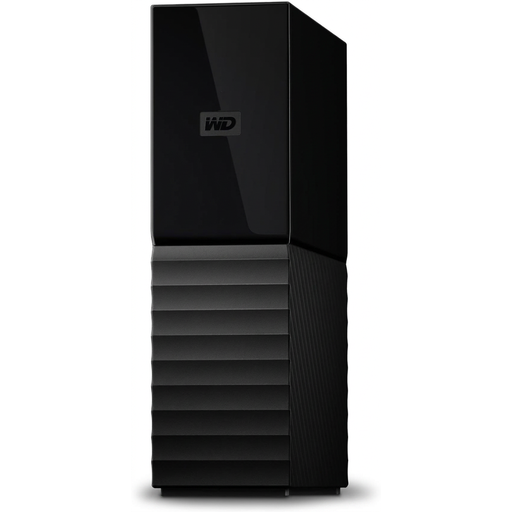
A desktop option for keeping a large household archive in one local destination.
22TB capacity; USB 3.0; password protection and hardware encryption.
A single local drive is not an off-site copy.
 No image available
A portable local copy for personal files and photos that you may want to carry between locations.
2TB capacity; stated read speeds of up to 800 MB/s.
A single local drive is not an off-site copy.
 No image available
A portable local-copy option for a sizeable collection of household files.
4TB capacity; the product description says its backup software can be set to a schedule.
A single local drive is not an off-site copy.
 No image available
A local-storage option for household documents, photos and videos.
4TB capacity; USB 3.0; the product description says files can be transferred by drag and drop.
The product description says reformatting may be required for Mac or other operating systems. A single local drive is not an off-site copy.
Not necessarily. Microsoft Support says additions, changes and deletions in a synced OneDrive folder also occur on the OneDrive website. Personal accounts have a stated 30-day deleted-file recovery period, subject to the file not being permanently deleted; keep a separately controlled copy if you need protection beyond those conditions.
Choose the folders to preserve, configure a suitable local backup destination and a separate off-site copy, then restore a sample from each. On a Mac, Time Machine can back up automatically to a configured external disk; on Windows, File History covers its included libraries and folders. Keep a removable drive secure and disconnected when it is not needed.
Export and verify the files you still need, then check the provider's current cancellation and lower-quota rules. Google says purchased storage remains available for the subscription term after cancellation; if a Google account reaches its storage limit, it cannot upload or create new files in Drive.
No. GOV.UK gives different rules for different tax records. For example, self-employed business records must generally be kept for at least five years after the relevant 31 January submission deadline, while certain personal Self Assessment pay and tax records should be kept for at least 22 months after the end of the tax year for an on-time return. These conditions do not apply indiscriminately to all household files.
The Information Commissioner's Office says UK GDPR does not apply to processing carried out by individuals purely for personal or household activities. A professional or commercial connection changes that scope assessment, so this is not a blanket exemption for personal-work files. Encryption remains a product choice for protecting sensitive copies, not a universal purchase requirement established by this household scenario.