
24/7 Customer Support

Free returns

Same-day & Next-day Delivery

Quality Guaranteed

Unlock Your Welcome Offers: FREE Delivery | Up to 80% OFF | Free 30-day JoyPlus trial
Download the APP
A household insect killer can be useful for dealing with ants in the kitchen, silverfish in cupboards, moths in wardrobes or flies around windows. However, choosing the wrong format can waste money and leave untreated areas behind.
The main mistake is buying a broad “kills many insects” product without checking whether it suits the pest, surface and room. A flying insect spray is not automatically suitable for carpets, while an insecticide powder may be inappropriate around food, pets or damp areas.
An aerosol may kill an insect on contact, but that does not necessarily deal with eggs, larvae or insects hiding in cracks. For recurring problems, check whether the product is designed for residual treatment, targeted crack-and-crevice use or total-room application.
A flea killer spray for carpets and soft furnishings has a different purpose from an ant killer powder for dry trails and gaps. Similarly, a houseplant bug killer should be labelled for plants, rather than substituted with a general indoor insecticide.
Claims such as “indoor and outdoor pest control” still require careful checking. Some products are indoor-only, some must not be used on fabrics or pet bedding and others are unsuitable for wet-cleaned rooms. Always read the UK product label, check its HSE registration details where applicable and follow the stated ventilation, storage and re-entry instructions.
Start with identification. Useful categories include:
A product designed for one area should not be repurposed on another unless the label specifically permits it.
Coverage helps you compare value more realistically than pack size alone. For example, a 150g powder may treat up to 15 square metres, while a 450g ant powder is listed for up to 45 square metres. A hand spray may be more suitable for individual plants, whereas an insect bomb or fumigator is intended to distribute product throughout a defined room volume.
Look for practical figures such as:
Common active ingredients in the listed products include permethrin, cyphenothrin, prallethrin, tetramethrin, deltamethrin and natural pyrethrins. The ingredient alone does not determine suitability; concentration, application method and label restrictions also matter.
Powders and aerosols may be harmful if inhaled or swallowed and some are highly toxic to aquatic life. Keep children and pets away during treatment, cover aquariums where instructed, prevent contamination of drains and waterways and store products in their original containers. Test sprays on an inconspicuous area first if staining or surface damage is possible.
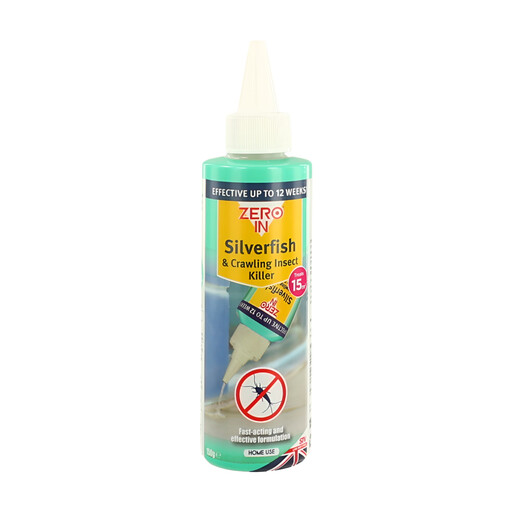
Why This Fits Their Persona: A focused option for renters and homeowners dealing with silverfish around skirting boards, cupboards and other dry cracks.
Its puffer nozzle supports targeted crack-and-crevice application instead of unnecessary room-wide spraying.
Treats up to 15 square metres; the listed formulation contains permethrin and is intended for silverfish and crawling insects.

Why This Fits Their Persona: Suitable for houseplant owners wanting a ready-to-use treatment for indoor plants, conservatories, greenhouses and outdoor ornamentals.
It is formulated specifically as a plant spray, avoiding the mistake of applying a general household aerosol to foliage.
1-litre hand-spray format; listed for aphids, leafhoppers, scale insects and whitefly, with repeat application guidance of 7–10 days if needed.
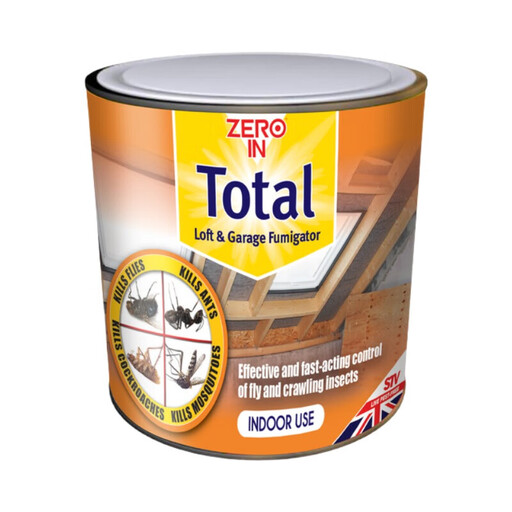
Why This Fits Their Persona: Designed for lofts, garages, attics and indoor storage areas where cracks and inaccessible spaces are difficult to treat manually.
Its stated use is more specific than a general insect bomb: dry indoor storage areas that are not subject to wet cleaning.
Ready-to-use smoke generator; intended to control crawling insects, house flies and mosquitoes across loft and garage spaces.
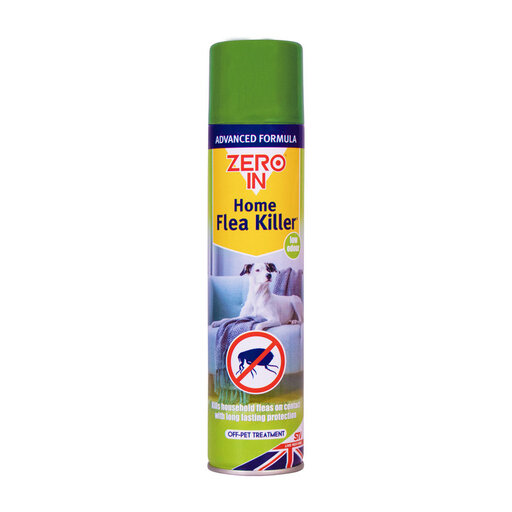
Why This Fits Their Persona: Intended for carpets, rugs, cushions, pet bedding areas and other home furnishings where fleas may be present.
The product information clearly states not to spray directly onto animals, helping separate household treatment from veterinary flea care.
Suitable for listed soft furnishings and pet bedding areas; stated protection can last up to 4 weeks, subject to label directions.
We have compiled a complete, real-time list of products that fully satisfy these strict selection criteria and UK safety regulations.
Before applying any household insect killer:
For a wasp nest killer, follow the product’s timing and distance instructions carefully. For moths and carpet beetles, inspect wardrobes, carpets and stored fabrics alongside any spray or powder treatment. Persistent bed bug or extensive infestation problems may require professional advice rather than repeated DIY applications.
Duration varies by formulation and surface. The listed products range from around two weeks to several months, while some powders state coverage for up to six weeks. Moisture, cleaning and surface type can reduce residual performance. Use the product label as the controlling source.
It may be suitable only when used exactly as directed. Keep pets away during application, prevent access to treated powder and avoid contamination of food, water, bedding and aquariums. Never assume that a product is safe for direct animal use.