
24/7 Customer Support

Free returns

Same-day & Next-day Delivery

Quality Guaranteed

Unlock Your Welcome Offers: FREE Delivery | Up to 80% OFF | Free 30-day JoyPlus trial
Download the APP
With increasing awareness of indoor air quality, from seasonal pollen and city pollution to lingering pet dander, many UK households are considering an air purifier. But with so many models available, choosing the right one can feel overwhelming. This guide is designed to help you understand the key features to look for, so you can select a device that genuinely suits your home and needs.
As the Joybuy Product Recommendation Officer, my role is to provide clear, practical advice to help you make an informed decision. Let's break down what matters most when selecting an air purifier.
Making the right choice comes down to a few core factors. Focusing on these will ensure you get a unit that is effective for your specific environment.
The single most important specification is the Clean Air Delivery Rate (CADR). This figure, usually measured in cubic metres per hour (m?/h), tells you how quickly the purifier can clean the air within a particular sized room. A higher CADR means faster purification.
To find the right fit, check the manufacturer's recommended room size. For a bedroom or home office, a smaller unit will suffice. For a large, open-plan living area, you will need a model with a much higher CADR to effectively circulate and clean the air. Using an underpowered device in a large space will not yield the desired results.
The filter is the heart of any air purifier. The most common and widely recognised standard is the HEPA (High-Efficiency Particulate Air) filter. A True HEPA filter is designed to capture at least 99.97% of airborne particles as small as 0.3 microns. This includes common irritants like pollen, dust mites, mould spores and pet dander, making a HEPA air purifier a popular choice for those with allergies.
Many models also include an activated carbon filter, which works to absorb odours, gases and volatile organic compounds (VOCs) from cooking smells, pets, or smoke.
If you plan to use the device in a bedroom or office, a quiet air purifier is essential. Check the noise level, measured in decibels (dB), especially for the lowest fan setting. A rating of 20-30 dB is comparable to a whisper and is ideal for nighttime use.
Additionally, a smart air purifier can offer significant convenience. Features like app control, automatic modes that adjust fan speed based on real-time air quality sensors and filter life indicators take the guesswork out of operation and maintenance.
Based on their features and suitability for different UK homes, here are some standout models to consider.
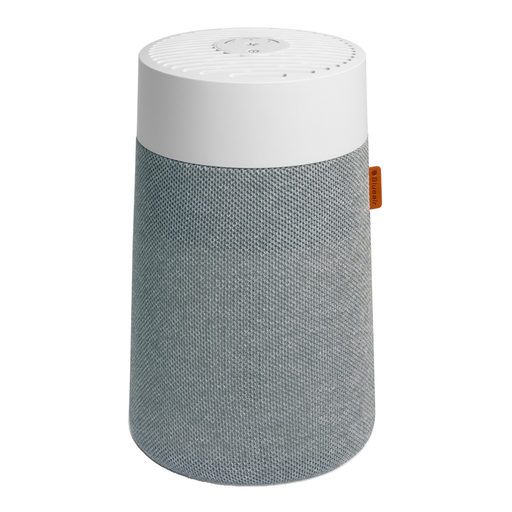
Why It Stands Out: The Blue Pure Mini Max is designed for personal spaces. Its compact, minimalist design fits easily on a bedside table or desk. According to the brand, its HEPASilent technology combines electrostatic and mechanical filtration to capture airborne particles. It’s an excellent entry-level option for improving air quality in smaller rooms without taking up much space.
Pros:
Who is it for? Individuals looking for a compact and quiet bedroom air purifier or a device for a small home office.
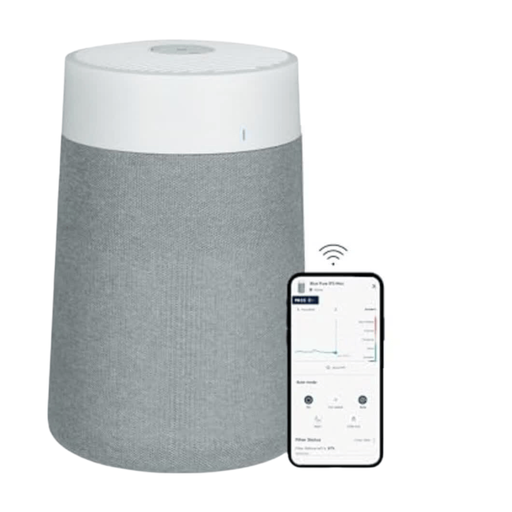
Why It Stands Out: This model offers a great balance of performance and smart functionality for medium-sized rooms. It features app connectivity for remote control and scheduling, while its RealTrack algorithm provides an accurate calculation of the remaining filter life. The inclusion of an auto mode and a quiet night mode makes it a versatile "set and forget" solution for busy households.
Pros:
Who is it for? Those who need an effective purifier for a living room or master bedroom and appreciate the convenience of smart controls and automated operation.
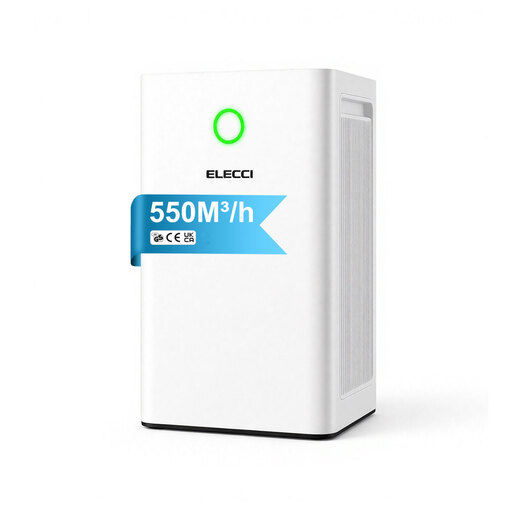
Why It Stands Out: For those with large, open-plan spaces, the ELECCI model delivers serious power. With a very high CADR of 550m?/h, it is built to handle significant air volume, making it a strong candidate for a large room air purifier. Its multi-filter system is designed to tackle a wide range of pollutants, from dust and pollen to smoke and odours from pets. Despite its power, it includes an ultra-quiet sleep mode rated at just 24dB.
Pros:
Who is it for? Homeowners with large living areas, open-plan kitchens, or anyone needing to purify the air in a substantial space quickly and effectively.
These recommendations cover a range of common needs, but every home is different. If you're looking for different sizes, features, or price points, you can find a wider selection to suit your requirements.
Explore our full collection of Hepa air purifiers for rooms to find the ideal match for your space.
This depends on the model and your usage. Most manufacturers recommend replacing the main HEPA filter every 6 to 12 months. Many modern units, especially smart models, will alert you when it's time for a replacement based on actual run time and air quality data. Regularly cleaning the washable pre-filter can also help extend the life of the main filter.
An air purifier for allergies equipped with a HEPA filter is specifically designed to capture airborne allergens such as pollen, dust, mould spores and pet dander. By removing these particles from the air in your home, it can help reduce exposure and alleviate symptoms for many individuals.
For maximum effectiveness, place the air purifier in the room where you spend the most time, such as your bedroom or living room. To ensure proper air circulation, position it with at least a foot of clear space around all sides and avoid placing it in a tight corner or underneath furniture.