
24/7 Customer Support

Free returns

Same-day & Next-day Delivery

Quality Guaranteed

Unlock Your Welcome Offers: FREE Delivery | Up to 80% OFF | Free 30-day JoyPlus trial
Download the APP
As a parent or caregiver in the UK, finding the right tools to comfort your little one can feel like a monumental task. The world of baby soothers, or dummies, is vast, with endless claims and designs. It’s easy to end up with a drawer full of rejected dummies and a still-fussy baby. My role at Joybuy is to help you navigate these choices, focusing on what truly matters for your child's comfort and your peace of mind.
This guide cuts through the marketing clutter to highlight the common purchasing traps and the key features you should actually be looking for.
Before you add anything to your basket, be aware of these frequent pitfalls. A little knowledge beforehand can save you time, money and frustration.
To make a confident choice, focus on these non-negotiable parameters. They are the foundation of a safe and effective soother.
Soothers are not a one-size-fits-all product. They are specifically sized for different developmental stages:
Beyond size, look for an orthodontic soother. This means the teat is designed to support healthy oral development. Symmetrical, flat teats are always positioned correctly in the mouth, while anatomical shapes are contoured to fit the palate. These designs aim to reduce pressure on the gums and developing teeth. Always ensure the product complies with the UK safety standard EN 1400.
The material of the teat is a key decision point. The two most common options are silicone and latex.
Small details can make a big difference in daily use.
Based on these practical criteria, here are a few soothers that are well-suited for different needs and preferences.
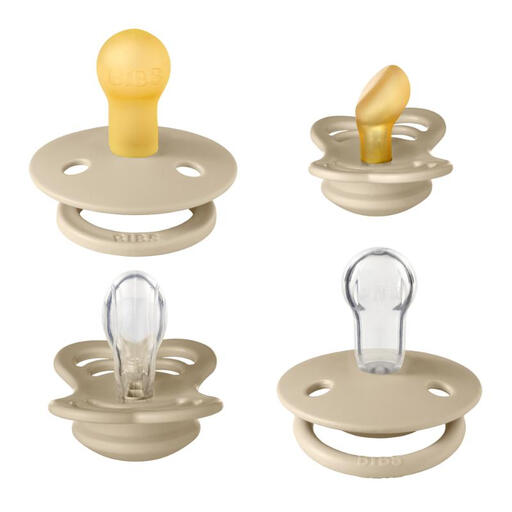
Why This Fits Their Persona: Perfect for new parents who are unsure which soother their newborn will prefer. This collection removes the guesswork by offering four different teat shapes and materials (both silicone and latex) in one pack.
This 'Try-it' pack directly counters the "one-shape-fits-all" myth, preventing you from wasting money on a multi-pack of a single style your baby might reject.
Includes four distinct soother types (round, symmetrical and anatomical) to maximise the chance of finding a successful match for your baby's preference.
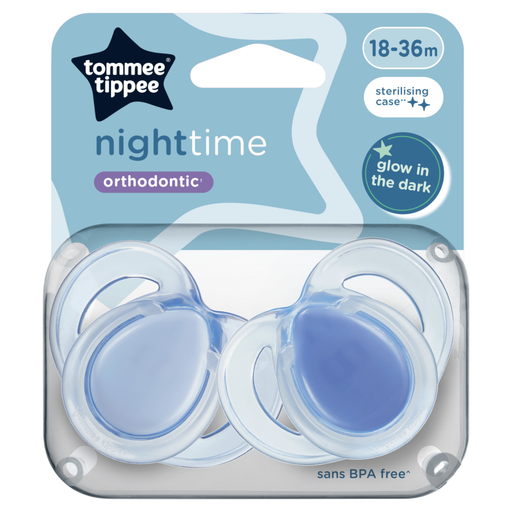
Why This Fits Their Persona: Designed for parents of toddlers who are tired of searching for a lost dummy in the dark. The glow-in-the-dark handle is a simple, practical feature that makes nighttime resettling much easier.
This soother tackles the "hygiene hassles" trap by including a reusable steriliser pod for quick microwave cleaning, combining two convenient features in one product.
The combination of a glow in the dark dummy handle and a self-sterilising pod offers excellent value and convenience for nighttime and on-the-go use.
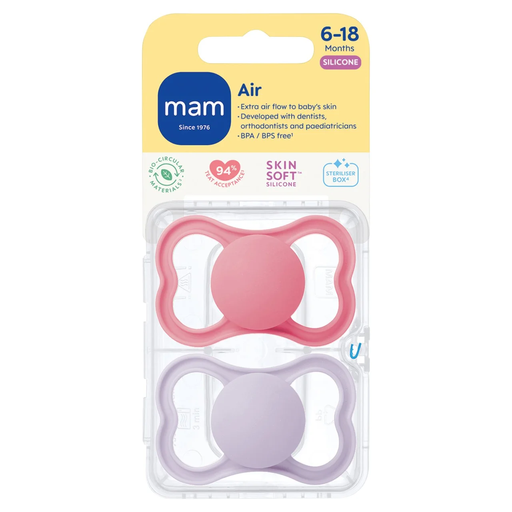
Why This Fits Their Persona: Ideal for parents concerned about skin irritation and sustainability. The shield is designed with extra-large air holes to let skin breathe, and key components are made from sustainable, bio-circular materials.
This soother's primary feature is its open-air shield, directly addressing the "ignoring the shield design" pitfall by prioritising skin health and breathability.
Maximum airflow for sensitive skin, a high-acceptance SkinSoft silicone teat and a self-sterilising travel box made from sustainable materials.
We have compiled a complete, real-time list of products that fully satisfy these strict selection criteria and UK safety regulations.
Here are answers to a few common questions parents ask about using baby soothers.
For both hygiene and safety, most manufacturers recommend replacing baby dummies every 1 to 2 months. It is also vital to inspect the soother before every use. Pull the teat in all directions and check for any signs of damage, tears or weakness. If you notice any, discard it immediately, especially if your child has teeth.
While not strictly "necessary" for every child, orthodontic soothers are widely recommended because they are specifically designed to support the natural development of a baby's palate, jaw and teeth. Their symmetrical or anatomically curved shapes are intended to place less pressure on the mouth compared to traditional round teats, which is a factor many parents consider important for long-term oral health.
No, it is not safe to use a dummy clip when a baby is sleeping or unsupervised in a cot, bed or cradle. The cord presents a strangulation risk. Safety standards like EN 12586 are in place to ensure clips are a safe length for daytime, supervised use only. For nighttime, a glow in the dark dummy is a safer alternative for easy location.