
24/7 Customer Support

Free returns

Same-day & Next-day Delivery

Quality Guaranteed

Unlock Your Welcome Offers: FREE Delivery | Up to 80% OFF | Free 30-day JoyPlus trial
Download the APP
Navigating the cat food aisle can feel like a monumental task. With shelves packed with countless brands, flavours and formulas, it is easy to feel overwhelmed. As a cat owner, you want to provide nourishing and enjoyable meals, but marketing claims can often be confusing. This guide is designed to help you understand the key factors in selecting the right cat food, avoid common purchasing mistakes and find options that suit both your cat's needs and your lifestyle.
As the Joybuy Product Recommendation Officer, my role is to filter market information and provide practical advice to help you make informed choices. Let's look at some common pitfalls and how to sidestep them.
senior cat food to a young adult, or vice versa, means they may not be getting the correct balance of protein, fat and essential minerals like phosphorus for their specific life stage.To choose with confidence, focus on these three non-negotiable parameters. They will empower you to look past the flashy packaging and assess the true quality of the food.
The ingredients are listed by weight in descending order. Look for a clearly named protein source (e.g., 'Chicken', 'Duck', 'Salmon') as one of the first few ingredients. While "meat and animal derivatives" is a standard term, brands that specify the source offer greater transparency. This is where you can identify if you are getting a high-quality protein source for your pet.
The choice between wet cat food and dry cat food often comes down to your cat's preference and health needs, as well as your lifestyle.
cat food pouches or tins. Its high moisture content is excellent for hydration, which is crucial for urinary tract health. It is also highly palatable for fussy eaters. Buying pet food multipacks can offer variety and convenience.Always check if the food is formulated for 'Kitten', 'Adult' or 'Senior' (often 7+ or 11+). Senior formulas typically have controlled mineral levels to support ageing kidneys and added nutrients for joint health. For cats with potential food sensitivities, exploring options with novel proteins, such as duck protein, can sometimes be beneficial.
Based on these practical criteria, here are a few selections matched to different owner profiles.
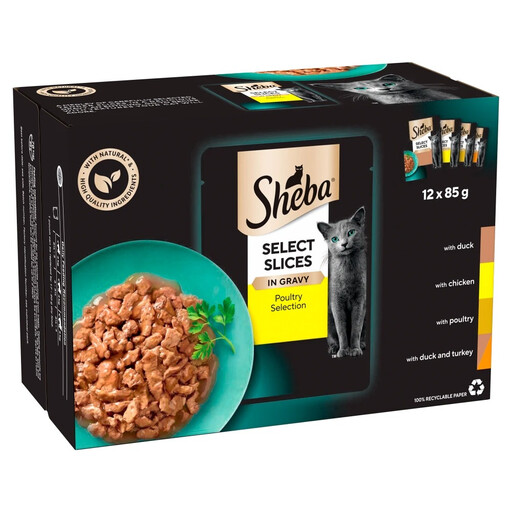
Why This Fits Their Persona: This multipack offers variety and portion-controlled pouches, making feeding quick and clean. It's a reliable choice from a well-known brand, perfect for those who need a no-fuss, quality meal solution.
This is a complete food, ensuring your cat gets balanced nutrition without needing supplements. The poultry selection provides variety to keep cats interested.
Convenient single-serve pouches reduce waste. Made with what the brand states are natural ingredients and no added artificial flavours or preservatives.
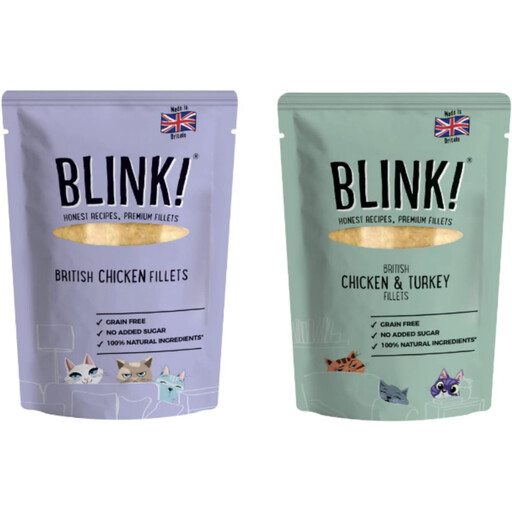
Why This Fits Their Persona: For owners who prioritise natural ingredients and high meat content. This food focuses on a simple, clear ingredient list sourced from the UK, appealing to those who read labels carefully.
It sidesteps the "with" trap by clearly stating a high meat percentage (e.g., 60% chicken fillets). It is also grain-free and contains no added sugar or salt.
Features a very high, specified meat content and is a complete meal. The formula is grain-free, which is a preference for many cat owners.
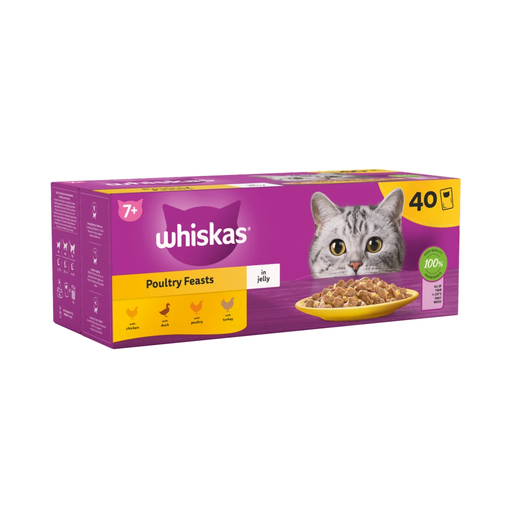
Why This Fits Their Persona: This `Whiskas cat food` is specifically designed for the needs of senior cats aged 7 and over. The large 40-pouch multipack is convenient for owners who want to stock up on a trusted, age-appropriate formula.
Directly addresses the lifestage pitfall by providing a complete and balanced meal tailored for senior cats, with adjusted mineral levels to support their health.
Formulated for senior cats (7+). The jelly consistency helps with hydration, which is particularly important for older felines.
We have compiled a complete, real-time list of products that fully satisfy these strict selection criteria and UK safety regulations.
For an average adult cat weighing around 4kg, the general recommendation is 3 to 4 pouches (85g each) per day, usually split into at least two meals. However, this is just a guide. You should always check the packaging and adjust the amount based on your cat's age, weight and activity level to maintain a healthy body condition.
Yes, many owners practise "mixed feeding." This can provide your cat with the benefits of both: the hydration and palatability of wet food and the dental advantages and convenience of dry food. When mixing, it is important to reduce the portion of each to avoid overfeeding. For example, you could replace one 85g pouch with approximately 15-20g of dry food.
Wet cat food should not be left out for more than one to two hours at room temperature. After this time, bacteria can begin to grow, making it unsafe for your cat to eat. It is better to serve smaller, fresh meals. Any uneaten food should be discarded and opened pouches should be refrigerated and used within 24 hours.