
24/7 Customer Support

Free returns

Same-day & Next-day Delivery

Quality Guaranteed

Unlock Your Welcome Offers: FREE Delivery | Up to 80% OFF | Free 30-day JoyPlus trial
Download the APP
Making the switch to an electric toothbrush can feel like a significant step up for your oral hygiene routine. Yet, the market is awash with technical jargon and features that sound impressive but may not deliver practical value. From 'AI-powered coaching' to a dozen cleaning modes, it's easy to feel overwhelmed and risk overspending on functions you'll never use.
As a Joybuy Product Recommendation Officer, my role is to help you see past the marketing clutter. Before you invest, let's look at the common pitfalls that UK shoppers encounter and what truly matters when selecting a new rechargeable toothbrush.
smart toothbrush with app connectivity and AI tracking can be a powerful tool for improving your technique. However, it's only valuable if you use it consistently. For many, the novelty wears off and the app is forgotten, leaving you with a costly feature that goes unused. Consider whether you are genuinely committed to using the app-based guidance before paying a premium for it.long battery life toothbrush of up to 180 days. This figure is often based on minimal usage—for example, one two-minute session per day on the lowest power setting. For typical twice-daily brushing on a standard or intense mode, the actual battery life will be considerably shorter. It's still convenient, but it's important to have realistic expectations.Instead of getting distracted by buzzwords, focus on the foundational features that have a direct impact on your oral health and the longevity of the device.
This is arguably the most important feature of any modern electric toothbrush. Brushing too hard is a common habit that can lead to gum recession and enamel erosion. An electric toothbrush with pressure sensor provides real-time feedback to prevent this.
The two dominant technologies on the market are oscillating-rotating and sonic. There isn't a single "better" option; it comes down to personal preference and what feels most effective for you.
Oral-B, this technology uses a small, round brush head that rotates back and forth and pulsates. The design is inspired by dental tools and is effective at cleaning tooth-by-tooth and along the gumline.Philips Sonicare and usmile, a sonic toothbrush features a brush head shaped more like a manual brush. It vibrates at very high speeds (tens of thousands of strokes per minute), creating fluid dynamics that help clean between teeth and below the gumline.Most modern electric toothbrushes use a Lithium-ion battery, which offers a more consistent power output and longer life between charges compared to older NiMH batteries. A typical charge lasts around two weeks. Also, note that nearly all electric toothbrushes sold in the UK come with a 2-pin plug designed for bathroom shaver sockets. If you don't have one, you will need a simple 2-pin to 3-pin adapter.
To help you find the right fit, we've matched some models to common user needs, focusing on the features that deliver real-world value.
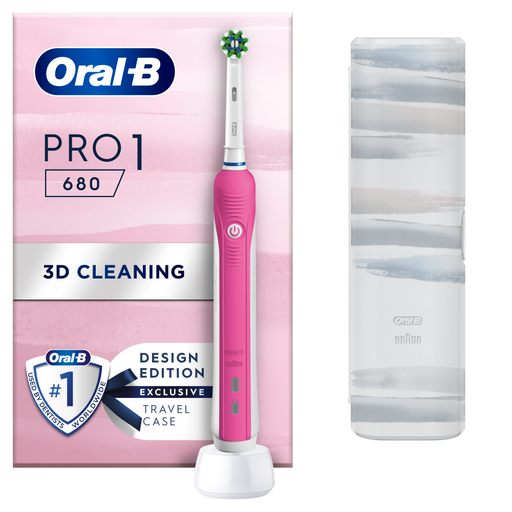
Why This Fits Their Persona: Perfect for those moving from a manual brush, this model focuses on the essentials for a better clean without overwhelming features. It provides the core benefits of an electric toothbrush at an accessible price point.
It sidesteps the "Mode Overload" trap with a single, effective 'Daily Clean' mode. It also avoids the "Smart Feature" illusion by focusing on core cleaning performance rather than app connectivity.
Includes the two most crucial features: a built-in pressure sensor to protect gums and a 2-minute timer with 30-second quadrant alerts to guide your routine.
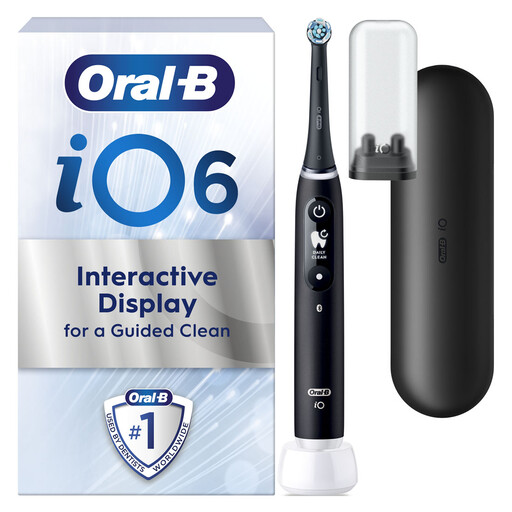
Why This Fits Their Persona: For the user who loves data and wants to perfect their routine, the iO6 offers a suite of smart features. The app connectivity provides real-time feedback on coverage and pressure, turning brushing into a data-driven exercise for improvement.
While it is a smart toothbrush, its features provide tangible feedback. The AI Brushing Recognition and interactive display offer guidance you can see and act on, making the "smart" aspect genuinely useful for this type of user.
The interactive OLED display provides at-a-glance information on modes and brushing time, while the multi-colour pressure sensor gives more nuanced feedback (green for good, red for too hard, white for too soft).
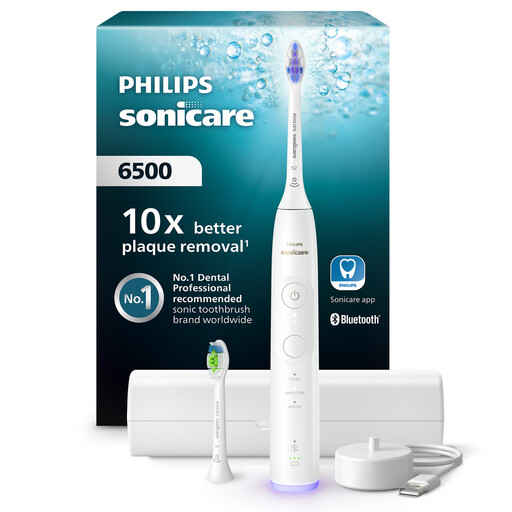
Why This Fits Their Persona: This model is an excellent choice for anyone with sensitive gums or teeth. It offers a high degree of personalisation to ensure a clean that is both effective and gentle, helping to protect delicate oral tissues.
Instead of a confusing array of modes, it offers three highly practical ones (Clean, White and Gum Health) and three intensity levels. This provides nine distinct combinations, allowing users to find the precise setting for their comfort.
The dedicated 'Gum Health/Sensitive' mode combined with the visual pressure sensor provides a dual layer of protection. It also includes a sensitive brush head, making it a complete package for an `electric toothbrush for sensitive gums`.
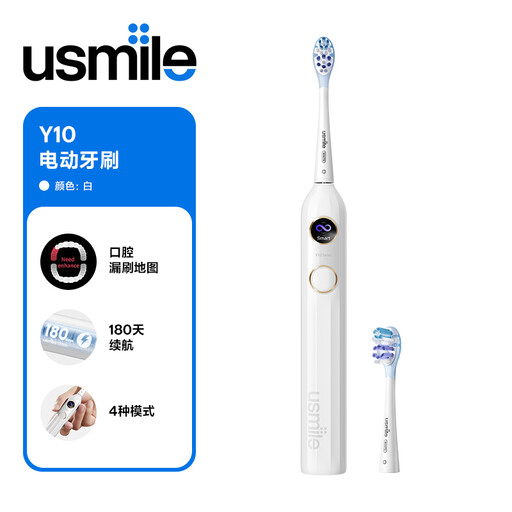
Why This Fits Their Persona: For those who travel often or simply dislike countertop clutter, the standout feature is the exceptionally long battery life. The ability to go months without needing a recharge offers unparalleled convenience for a life on the go.
It directly addresses the "Battery Life Mirage." While the 180-day claim is based on ideal conditions, its real-world performance of several months between charges is still far superior to the standard 2-week battery life of most competitors.
The USB-C charging port is a modern, practical touch, meaning you can charge it with the same cable as your phone or laptop, reducing the number of chargers you need to pack. The smart screen also provides useful brushing feedback without needing an app.
We have compiled a complete, real-time list of products that fully satisfy these strict selection criteria and UK safety regulations.
Yes, in most cases. Electric toothbrushes are considered bathroom appliances and, for safety reasons, are sold with a 2-pin plug. This plug fits directly into shaver sockets commonly found in UK bathrooms. If you plan to charge it using a standard 3-pin wall socket, you will need to purchase a 2-pin to 3-pin adapter.
Most manufacturers and dentists recommend replacing your brush head every three months. The bristles fray and wear down over time, becoming less effective at removing plaque. Some modern toothbrushes have a reminder light or an indicator on the brush head itself to let you know when it's time for a change.
Neither technology is definitively superior; both are highly effective at removing plaque when used correctly. The main difference is the sensation. Oscillating-rotating brushes provide a powerful, scrubbing feel, while sonic brushes offer a high-frequency vibration. The choice often comes down to personal preference. If you have sensitive gums, you might prefer the less intense feeling of some sonic models or an oscillating brush with a dedicated sensitive mode.