
24/7 Customer Support

Free returns

Same-day & Next-day Delivery

Quality Guaranteed

Unlock Your Welcome Offers: FREE Delivery | Up to 80% OFF | Free 30-day JoyPlus trial
Download the APP
Is your hair feeling dry, damaged or just a bit lacklustre? You’re not alone. Many of us in the UK reach for a hair mask, hoping for a quick fix to transform our locks. Yet, the journey from the shop shelf to genuinely healthier-looking hair is often filled with confusion and disappointing results. The market is saturated with products that promise miracles but often fail to deliver.
As a Joybuy Product Recommendation Officer, my role is to help you navigate this crowded space. Before you spend another pound, let’s look at the common pitfalls that lead to buyer's remorse and how you can choose a treatment that’s right for your hair and your wallet.
To avoid these traps, it’s helpful to understand a few core parameters. Analysing these will empower you to select a product based on its formulation, not just its marketing claims.
Silicones are common in hair care for their ability to coat the hair shaft, creating instant smoothness and shine. They are excellent for taming frizz and providing slip. However, some types of silicones can build up over time, particularly on fine hair, making it feel heavy or dull.
Understanding the different categories helps you choose the right tool for the job.
Look beyond the marketing and understand what the ingredients actually do.
Instead of a generic list, we’ve matched specific products to different user needs. This helps you find a solution that aligns with your hair type and lifestyle.
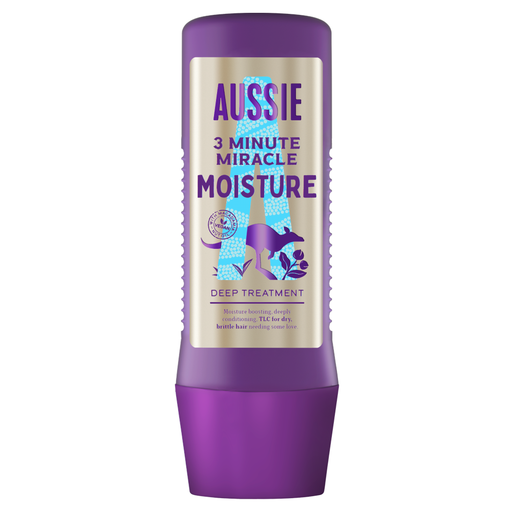
Why This Fits Their Persona: For those with a busy schedule, this product's versatility is a key advantage. It delivers noticeable hydration without demanding a long, drawn-out pampering session, making it perfect for fitting into a packed week.
It directly counters the "confusing terminology" trap by clearly stating its three uses: a daily deep conditioner, a quick 3-minute treatment or a longer intensive mask. You know exactly what it does and how to use it.
Its multi-use formula offers flexibility. The infusion of Macadamia Nut Oil provides deep moisture and the formula is vegan and cruelty-free.
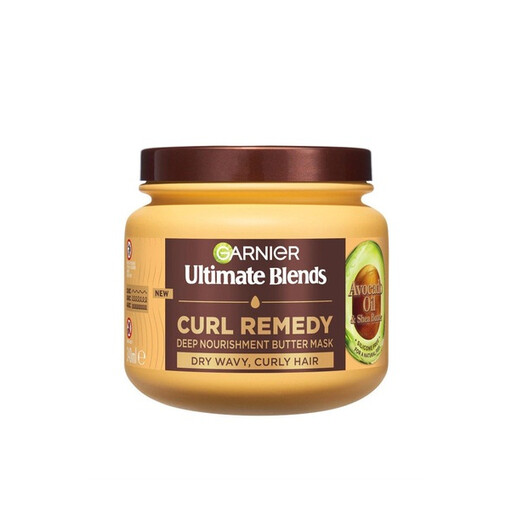
Why This Fits Their Persona: Those with curly, wavy or coily hair need intense hydration that defines their pattern without causing droop. This mask is formulated specifically to meet the needs of curls, providing nourishment and definition.
This is the antidote to the "one-size-fits-all" trap. As a dedicated curly hair mask, it's a targeted solution that acknowledges curls require specialised care, rather than a generic approach.
The silicone-free formula with Avocado Oil and Shea Butter nourishes deeply without causing build-up. It's designed to enhance curl definition for an extended period.
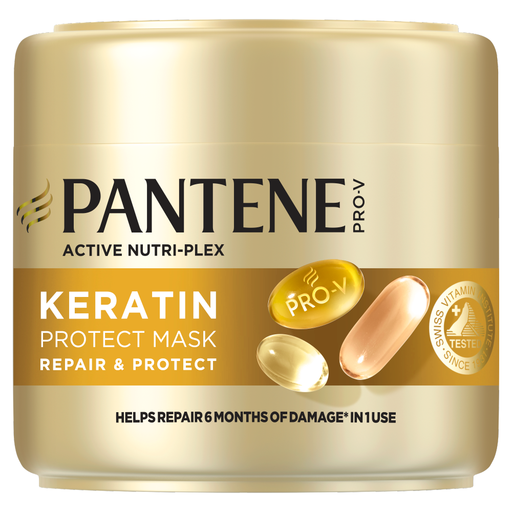
Why This Fits Their Persona: Frequent heat styling and chemical treatments weaken hair structure. This user needs a powerful hair repair mask that focuses on strengthening and reversing visible signs of damage.
It avoids the "miracle ingredient" trap by focusing on its Active Nutri-Plex technology and a higher concentration of bond-protecting agents, demonstrating that the overall formulation is what delivers the repair.
This intensive mask is designed to help repair visible damage in a single use. It nourishes deeply to strengthen hair against future styling damage.
We have compiled a complete, real-time list of products that fully satisfy these strict selection criteria and UK safety regulations.
For most hair types, using a hair mask once a week is sufficient to maintain moisture and health without over-conditioning, which can leave hair limp. If your hair is extremely dry or damaged from chemical treatments, you might benefit from using it twice a week initially, then reducing to once a week as its condition improves.
It's generally advisable to focus application on the mid-lengths and ends of your hair. Most hair masks are rich in oils and butters that can weigh down roots or clog pores if applied directly to the scalp. However, if you are experiencing scalp dryness, look for a dedicated scalp treatment like the Head & Shoulders Derma X Pro Scalp Soother, which is specifically formulated for scalp application. Always check the product's directions for use.
While the terms are often used interchangeably in marketing, a hair mask typically implies a more intensive hair mask treatment with a higher concentration of active ingredients. It's usually left on for a longer period (e.g., 10-20 minutes) for deep repair. A deep conditioner may be slightly lighter and designed for a quicker, more frequent boost of moisture (e.g., 3-5 minutes). Both serve the same fundamental purpose: to provide more nourishment than a standard daily conditioner.