
24/7 Customer Support

Free returns

Same-day & Next-day Delivery

Quality Guaranteed

Unlock Your Welcome Offers: FREE Delivery | Up to 80% OFF | Free 30-day JoyPlus trial
Download the APP
A multi cooker promises to be the ultimate kitchen workhorse, saving you time, counter space and effort. Yet, many UK households end up with a device that gathers dust after a few uses. The market is filled with models boasting endless functions and flashy features, making it easy to choose one that underdelivers.
As the Joybuy Product Recommendation Officer, my role is to help you see past the marketing jargon. Before you invest, let's look at the common pitfalls that lead to buyer's remorse and how you can select a truly useful appliance for your home.
pressure cooker or slow cooker setting—are poorly implemented.one pot cooker is quickly lost if cleaning it is a nightmare. Flimsy non-stick coatings that scratch or peel after a few months and complex lid designs with non-removable gaskets, can turn a time-saving device into a frustrating chore.To find a multi cooker that will become a staple in your kitchen, focus on these core parameters instead of the marketing buzzwords.
Choosing the right size is the first step to satisfaction. Don't just look at the number on the box; consider the practical, usable cooking volume.
small rice cooker of this size is perfect for single meals, side dishes or porridge.Instead of counting the number of presets, assess what you will actually cook. A good multi cooker should excel at its primary functions.
electric rice cooker is often the most straightforward and effective choice. Many models also include a basic steaming function.rice cooker with steamer basket adds great versatility, allowing you to cook vegetables, fish or dumplings while rice cooks below.The inner pot is where the cooking happens, and its material directly impacts performance and longevity.
Based on these practical criteria, here are a few models suited to different UK lifestyles.
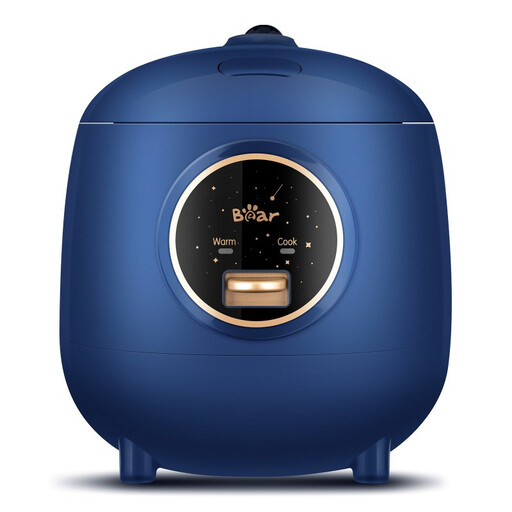
Why This Fits Their Persona: This compact cooker is perfectly sized for one or two people. Its simple, one-touch operation is ideal for those who want fuss-free meals without navigating complex settings. It's a perfect fit for a small dorm room or flat kitchen where counter space is at a premium.
It avoids the "functionality myth" by focusing on doing one thing well: cooking rice and simple one-pot meals like porridge or soup. There are no confusing menus or redundant features.
Key Advantage: Simplicity and compact size.
Pros: One-touch operation, automatic keep-warm and a removable non-stick pot for easy cleaning.

Why This Fits Their Persona: For the tech-savvy household that values convenience and control. The 3L capacity is perfect for 2-4 people, and the smart app integration allows for remote operation and access to a wide range of recipes, fitting a modern, connected lifestyle.
Its 8-in-1 functions are genuinely useful (Rice, Soup, Steam, etc.) and are enhanced by the app, not just multiplied for marketing. The app provides real value, allowing you to customise rice texture and schedule cooking.
Key Advantage: Smart app control.
Pros: 24-hour delay timer, versatile cooking modes and a clear, top-mounted display for easy operation without bending down.

Why This Fits Their Persona: This is a true workhorse for a family. The large 6L capacity handles meals for 4+ people, and its core functions—pressure cooking, slow cooking, steaming and sautéing—are designed to genuinely save time on busy weeknights.
It avoids the cleaning nightmare trap with a durable, chemical-free stainless steel inner pot. This material won't peel or degrade over time, ensuring longevity even with heavy family use.
Key Advantage: Large capacity and durable stainless steel pot.
Pros: Combines key appliances like a pressure cooker and slow cooker, comes with a full set of accessories (steamer rack, spoons).
We have compiled a complete, real-time list of products that fully satisfy these strict selection criteria and UK safety regulations.
This depends on your priorities. A stainless steel pot is more durable, can be used for high-heat searing and contains no chemical coatings. However, it requires more care to prevent food from sticking. A non-stick pot offers superior convenience and easy cleaning, but you must use non-metal utensils to protect the coating. For longevity and versatility, many experienced cooks prefer stainless steel, while those prioritising easy cleanup may opt for a quality, PFOA-free non-stick model.
For specific functions, yes. The Slow Cook function is designed to run for many hours (typically 4-10) at a low, stable temperature. Similarly, the automatic Keep Warm function is designed to hold food at a safe, ready-to-eat temperature for several hours after cooking finishes. However, you should never leave the appliance unattended on high-temperature settings like Sauté or Pressure Cook. Always follow the manufacturer's instructions for safe operation.
A multi cooker is generally more energy-efficient than a conventional oven. A typical 1000W (1kW) multi cooker used for one hour would consume 1 kilowatt-hour (kWh) of electricity. Based on average UK electricity prices, this would cost around 25-30 pence per hour of use. A pressure cooker function is particularly efficient as it significantly reduces cooking time compared to a hob or oven.