
24/7 Customer Support

Free returns

Same-day & Next-day Delivery

Quality Guaranteed

Unlock Your Welcome Offers: FREE Delivery | Up to 80% OFF | Free 30-day JoyPlus trial
Download the APP
Buying sanitary pads can seem straightforward until a pad shifts during a commute, feels bulky under clothing or provides less coverage than expected overnight. Packaging often highlights phrases such as “ultra-thin”, “maximum protection” or “breathable”, but these descriptions do not always explain the measurements, absorbency level or intended use.
The practical approach is to compare length, shape, absorbency, fastening and materials before choosing a pack. This helps avoid paying for features that do not suit your period pattern or lifestyle.
An ultra-thin sanitary pad may feel discreet, but thinness does not automatically indicate that it suits heavy flow. Absorbency depends on the pad’s core construction, size and intended flow level, not simply how slim it looks.
For normal-flow days, an ultra-thin daytime pad may be suitable. For heavier days or overnight use, look for longer sanitary pads with wider coverage and a stated night or heavy-flow purpose.
A standard pad can be comfortable during the day but may not provide enough protection when sitting, travelling or sleeping. Shorter pads may also be more likely to move if the shape does not match your underwear.
Check the measurement in millimetres where available. For example, 150mm panty liners are designed for light daily freshness rather than menstrual protection, while 240mm to 290mm products offer more coverage. Overnight sanitary pads commonly extend further towards the back.
“Cotton sanitary pads” may refer to the topsheet rather than the entire product. Similarly, breathable sanitary pads usually have a breathable backsheet or surface layer, but the exact material can vary.
If you have sensitive skin, check the ingredient or material list for fragrance, adhesives and the topsheet composition. A product labelled fragrance-free may be preferable if scented materials cause discomfort. Stop using any product that causes persistent redness, itching or irritation and seek medical advice where appropriate.
Wings are useful only when they adhere firmly to the underwear. Always check that the pad fits the gusset width and that the adhesive does not fold over itself.
Periods vary from day to day, so buying one size for every stage may not be practical. A normal or medium-flow pad may suit lighter days, while a heavy-flow pad or larger night pad can offer more coverage when required.
Menstrual pads are designed for period fluid, whereas incontinence pads, women’s bladder leak pads and men’s incontinence pads are designed for urine leakage. They use different shapes and absorbency zones. Do not assume that a menstrual pad will provide the same fit or odour-control features as a bladder-leak protector.
A soft topsheet can improve the user-perceived feel, while a breathable backsheet may help reduce a warm or enclosed sensation. Materials listed in the products below include cotton, non-woven fabric, wood pulp, superabsorbent polymer and polyethylene film.
Consider the number of pads in the pack as well as the purchase price. Larger packs can reduce the frequency of reordering, but only if the size and absorbency match your needs. Store disposable hygiene products in a cool, dry place, check packaging before use and follow the manufacturer’s instructions.
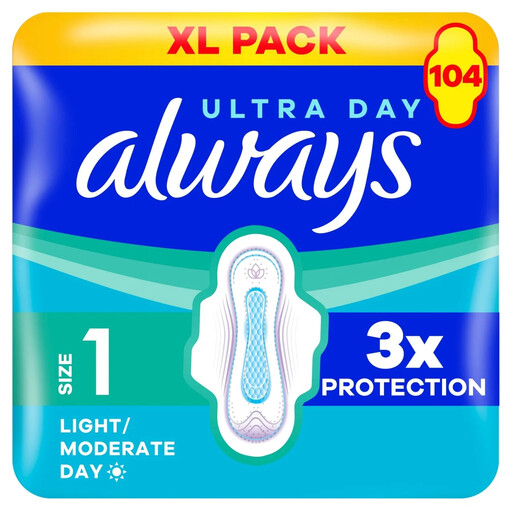
Why This Fits Their Persona: A 104-pad pack is suited to shoppers who want a regular supply for normal-flow daytime use, such as school, university or commuting.
The stated Normal Size 1 format helps distinguish it from longer or overnight designs that may feel unnecessary for lighter daytime use.
Ultra-thin construction, normal-flow positioning and a 104-pad quantity for regular replenishment.
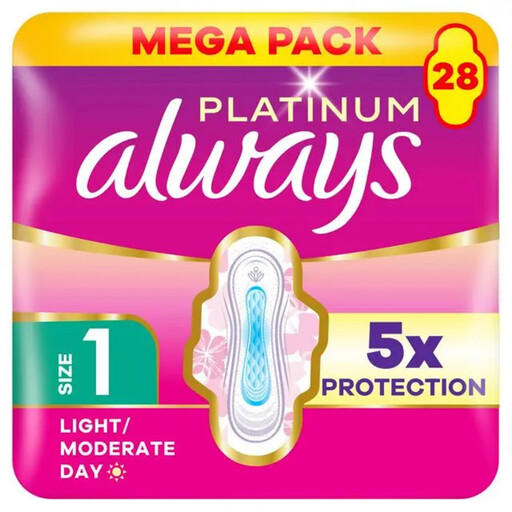
Why This Fits Their Persona: Suitable for users who prioritise a soft surface, a discreet profile and a secure winged fit during everyday activities.
The Size 1 designation, wings and 28-pad quantity make the intended daytime use clearer than vague “all-day” wording alone.
Soft surface, ultra-thin structure and flexible wings designed to help keep the pad in position.
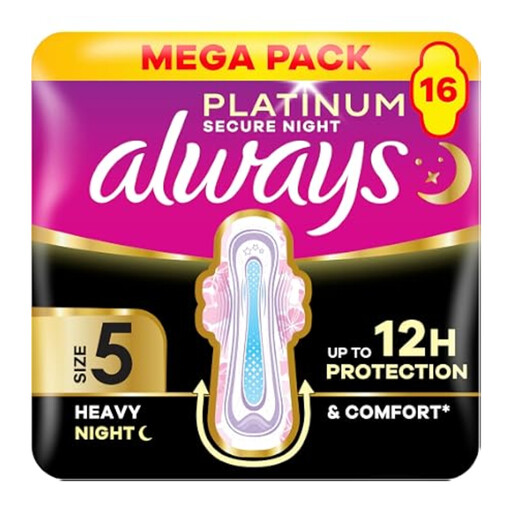
Why This Fits Their Persona: Designed for users who need extended overnight coverage during medium to heavy flow and want a wider back area.
Its Size 5 night format and winged design give clearer information about coverage than choosing a daytime pad for sleeping.
Extra-large night format, flexible wings and a 16-pad pack intended for overnight menstrual protection.
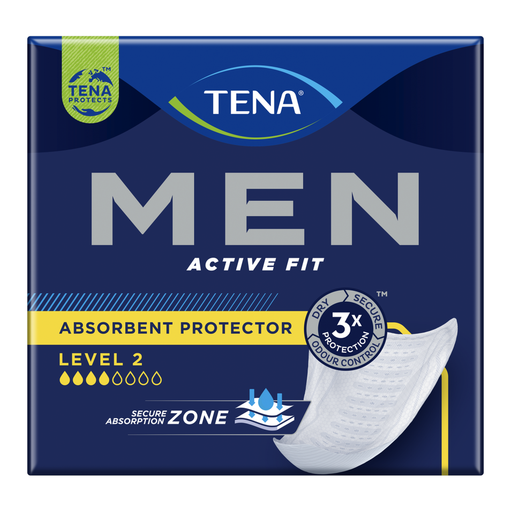
Why This Fits Their Persona: Men seeking discreet protection for moderate bladder leakage may prefer a shaped product designed for male anatomy and everyday clothing.
It is clearly identified as an incontinence protector rather than a menstrual pad, reducing the risk of selecting the wrong absorbency zone or shape.
4mm stated thickness, anatomical cup shape, adhesive strip and individually wrapped 10-pack.
We have compiled a complete, real-time list of products that fully satisfy these strict selection criteria and UK safety regulations.
There is no single interval for every user. Change a pad when it feels wet, full or uncomfortable, and follow the packaging guidance. Flow, activity level and the pad’s absorbency all affect how long it remains suitable.
Yes, but choose a product labelled for night use or with extended back coverage. Overnight sanitary pads with wings are designed to reduce shifting while sleeping. Users with heavier flow may prefer a longer or wider size rather than relying on a standard daytime pad.
Sanitary pads are designed for menstrual flow, with absorbency and coverage suited to light, medium or heavy days. Panty liners are thinner and shorter, commonly used for light discharge, spotting or everyday freshness. They are not generally a substitute for a menstrual pad during heavier flow.