
24/7 全天候客户支持

免费退货

当日/次日达

品质保障

开启新人专享福利: 全场免邮 | 低至 2 折 | 免费试用 30 天 JoyPlus 会员
下载 Joybuy
As a Joybuy Product Recommendation Officer, my role is to help you navigate the crowded shelves and find products that genuinely meet your needs. When it comes to sun cream, the choices can be overwhelming, and marketing claims often add to the confusion. Before you spend your money, it's important to understand a few common pitfalls that can lead to a poor purchase and, more importantly, inadequate protection.
1. The "Once-a-Day" Application Myth: Some sunscreens suggest they provide all-day protection with a single application. However, activities like swimming, sweating and even towel drying can remove the product. For reliable protection, all sunscreen should be reapplied regularly, typically every two hours and always after being in water.
2. The "Waterproof" Fallacy: In the UK and EU, you will not find a product labelled "waterproof." The correct term is water resistant or very water resistant. This indicates that the sun lotion maintains a certain level of its SPF protection after a specified time in water (e.g., 40 or 80 minutes). It does not mean the protection is unlimited, and reapplication after swimming is essential.
3. Focusing Only on the SPF Number: A high SPF is important, but it only measures protection against UVB rays—the primary cause of sunburn. UVA rays penetrate deeper into the skin, contributing to premature ageing and long-term damage. A good sun cream must offer broad-spectrum protection against both.
To ensure you are properly protected, focus on these core parameters rather than just the marketing slogans on the front of the bottle.
Effective sun protection is a two-part system. You need to shield your skin from both types of harmful UV radiation.
SPF 30 sun cream is the recommended minimum, while an SPF 50 sun cream offers a higher level of defence, blocking approximately 98% of UVB rays compared to 97% for SPF 30.sun cream that has "broad-spectrum" coverage and a high UVA star rating (ideally four or five stars) enclosed in a circle on the packaging.The right sun lotion is one you will happily wear every day. The texture and formulation are just as important as the protection level.
sun cream for sensitive skin. These are often hypoallergenic, fragrance-free and may use mineral filters (like zinc oxide or titanium dioxide) which sit on top of the skin and are less likely to cause irritation.kids sun cream is formulated to be gentler on delicate skin. They typically have high SPF and are very water resistant sun cream to withstand active play.face sun cream that absorbs quickly without a greasy residue is ideal for wearing under makeup. For the rest of your body, a moisturising sun lotion can double as your daily hydrator during the summer months.Based on these practical criteria, here are a few options tailored to different needs and lifestyles.
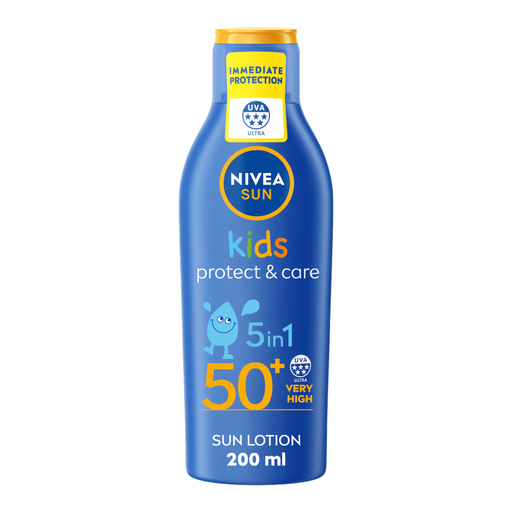
Why This Fits Their Persona: This is a practical choice for UK families heading to the park or the seaside. It's a reliable, high-protection family sunscreen that is specifically designed for children's delicate skin but can be used by everyone.
Its "extra water resistant" claim is clearly defined for active play and swimming, reminding users of its purpose without over-promising. It provides 5-in-1 protection, including high UVA defence, addressing more than just the SPF number.
The formula is paediatrician approved and fast-absorbing, making application on restless children much easier. It also supports the skin's barrier with added vitamins.
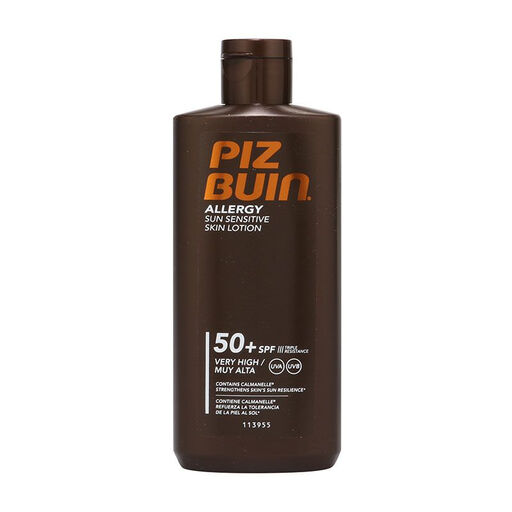
Why This Fits Their Persona: For those whose skin reacts easily to the sun or new products, this lotion is specifically developed for sun-sensitive skin. It's a high-protection body sun cream that also works to soothe.
It focuses on its core benefit for sensitive skin with its Calmanelle complex, rather than making unrealistic claims. It combines high SPF 50+ with advanced UVA filters, ensuring true broad-spectrum protection.
The formula is sweat and water-resistant, absorbs quickly without a greasy feel and provides hours of moisturisation to help prevent the dryness and peeling often associated with sun exposure.
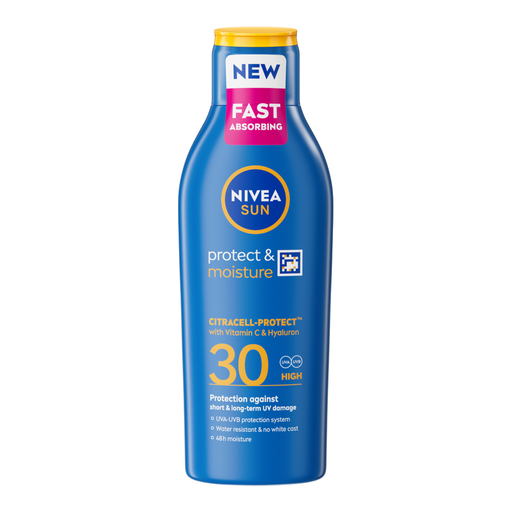
Why This Fits Their Persona: Ideal for those on holiday who need reliable sun protection that also combats the drying effects of sun, sea and sand. This moisturising sun lotion works to keep skin hydrated for up to 48 hours.
It provides immediate UVA/UVB protection with a clear SPF 30 rating and is water-resistant, setting realistic expectations for reapplication after swimming. Its "Ocean Respect" formula is a verifiable feature, not just a vague claim.
The formula contains antioxidant Vitamin E to support the skin's own protection. It is also 82% biodegradable and comes in a 50% recycled plastic bottle, offering an environmentally conscious choice.
We have compiled a complete, real-time list of products that fully satisfy these strict selection criteria and UK safety regulations.
A common mistake is not applying enough sun cream. For an average adult, the recommended amount is about 35ml, or enough to fill a shot glass, to cover the entire body. For your face and neck, a useful guide is the "two-finger rule": squeeze two full lines of lotion onto your index and middle fingers and apply that amount.
It is not recommended. Most sun creams have a "Period After Opening" (PAO) symbol on the packaging, which looks like a small open jar with a number followed by "M" (e.g., "12M"). This indicates the product should be used within 12 months of opening. After this time, the active ingredients can degrade and may no longer provide the stated level of protection.
They protect your skin in different ways.