People using a humidifier overnight
If heating leaves a bedroom feeling dry, compare stated noise, light controls, adjustable output and runtime at a low setting. A large tank alone does not tell you how disruptive the unit will be beside a bed.


Choose a humidifier whose stated coverage suits the room you will use, then look for adjustable output or humidity control so you can avoid adding too much moisture. For a bedroom, check noise, light controls and runtime at the setting you expect to use; for a larger space, compare model-specific coverage and maintenance. Do not use a humidifier to mask existing condensation, leaks or mould.
If heating leaves a bedroom feeling dry, compare stated noise, light controls, adjustable output and runtime at a low setting. A large tank alone does not tell you how disruptive the unit will be beside a bed.
Match the exact model’s stated coverage to the room and consider open doors, ventilation and cold surfaces. The aim is to add moisture without encouraging condensation on windows or walls.
Humidity control and ventilation deserve particular attention where damp, mould or house dust mites are concerns, as Allergy UK notes. A humidifier does not address their underlying sources; seek clinical advice if indoor air appears to worsen an existing lung condition.
Consider it when: Convenient refilling and adjustable mist matter for a bedroom or home office.
Keep in mind: A stated runtime at low mist does not establish runtime at your preferred output, and the tank still needs cleaning.
Consider it when: You prefer mist-free operation and want to compare models with a stated humidity range.
Keep in mind: Check the exact unit’s size, room-coverage assumptions and maintenance requirements.
Consider it when: You have a separate need for air filtration as well as humidification.
Keep in mind: Filters and both functions require model-specific maintenance; adding humidity will not resolve mould or allergen sources.
For a dry heated room, decide which concern takes priority, then check the exact model against that need rather than choosing by tank size alone.
| Concern | What to check | Who this matters to |
|---|---|---|
| Excess moisture | Look for adjustable output or a humidity target, and watch for condensation on cold surfaces. | If my windows already collect moisture, I want control over how much more I add. Around 31% of consumers put avoiding excess humidity first. |
| Cleaning and upkeep | Check tank access, the cleaning instructions and any replaceable parts for the exact model. | I need a filling and cleaning routine I can keep up with, particularly if the appliance has filters. For around 25% of consumers, manageable upkeep is the primary concern. |
| Bedroom use | Compare noise at the intended mode, light controls and the conditions attached to runtime claims. | When I run a humidifier overnight, sound, light and an inconvenient refill could disturb me. Quiet, uninterrupted use comes first for around 25% of consumers. |
| Larger-room coverage | Compare stated room coverage and output with the actual room, including its layout and ventilation. | For a larger living space, I need a model specified for the room rather than one sized for a bedside area. Around 19% of consumers prioritise room coverage. |
Adding moisture can compound a condensation or mould problem. UK Government guidance identifies health risks from damp and mould, while Allergy UK highlights high humidity and poor ventilation as concerns for mould and house dust mites.
Investigate leaks, water damage, condensation and ventilation before adding moisture; monitor cold surfaces if you later use a humidifier.
A larger tank does not establish that a unit is quiet, easy to clean or suited to the room. Runtime claims also depend on the operating setting.
Compare coverage, output controls, noise and cleaning access alongside tank capacity, and check the setting used for any stated runtime.
A combined appliance serves two functions, but humidification does not remove the need to address ventilation, damp or allergen sources.
Choose a purifier-humidifier only if you need both functions, and check the exact model’s filters, replacement requirements and room coverage.
A room humidifier is not a treatment for a lung condition. Asthma + Lung UK advises speaking to a GP or nurse if indoor air pollution worsens lung-condition symptoms.
Seek clinical advice if symptoms persist or worsen rather than relying on a change of appliance.
The Classic 300S is a UK-listed ultrasonic option for buyers comparing bedroom controls and a large top-fill tank.
The UK LW45 evaporative range is relevant when mist-free operation and a stated humidity range matter.
Philips offers both a dedicated HU4803/01 humidifier and an AC3829/60 combined purifier-humidifier, making the distinction between the two functions worth considering.
Meaco provides humidifier manuals, including instructions for its B 600 Professional evaporative model.
These dedicated humidifiers offer different tank sizes and room-use features for adding moisture to heated indoor air. Compare each model’s stated coverage, controls and upkeep with the room where you intend to use it.
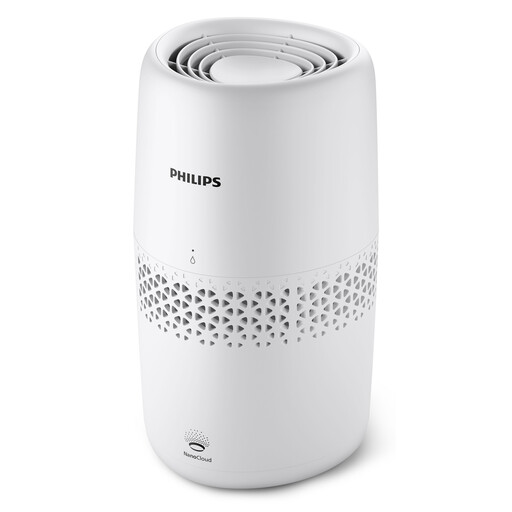 No image available
Consider this dedicated evaporative model for an enclosed room within its stated coverage. The listing specifies coverage up to 31 m², a 2 L tank, a humidity sensor and a Gentle mode rated at 32 dB. It also lists a replaceable filter and a standard EU power cord: check filter availability and an appropriate UK electrical connection before ordering.
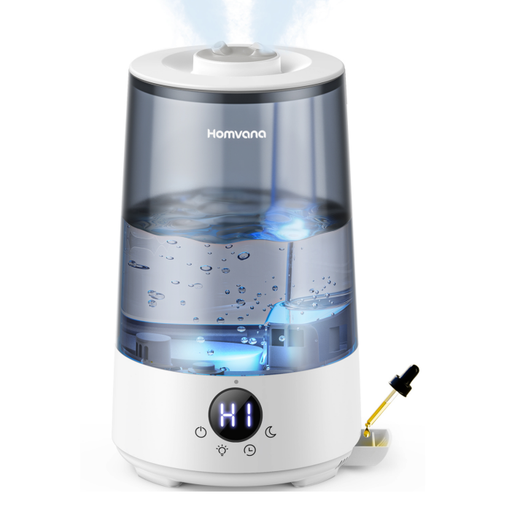 No image available
Consider this cool-mist model if top filling and sleep controls matter for a bedroom or modest enclosed room. Its listing states a 3.6 L tank, coverage of 24–35 m² and output of 170–250 ml/h. Check runtime at your intended setting, whether it can hold a humidity target automatically and its UK electrical compatibility before buying.
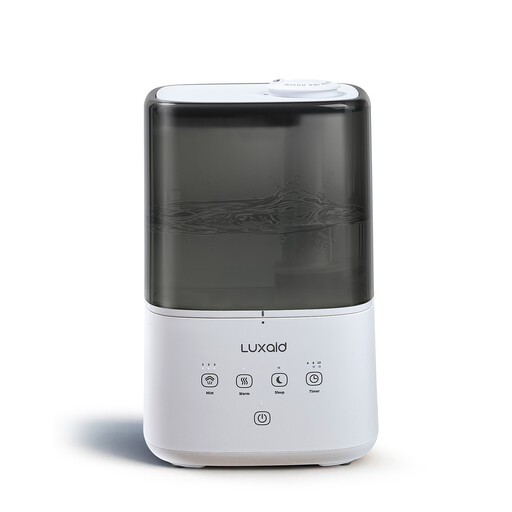 No image available
Consider this model if you want a top-fill tank and a choice of cool- and warm-mist settings. Its listing specifies a 4.5 L tank and coverage up to 505 ft². Confirm whether it can maintain a chosen humidity level automatically, along with consumable and UK electrical requirements.
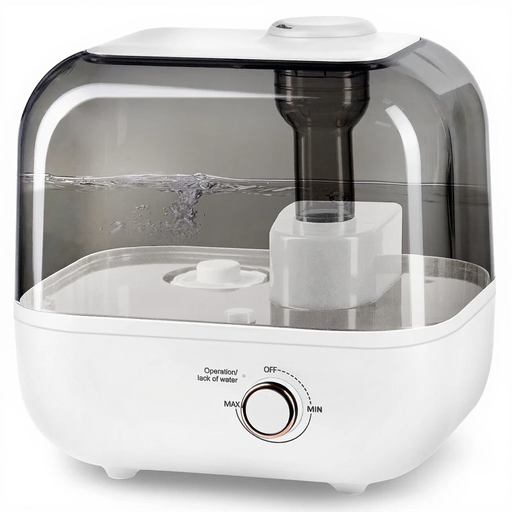 No image available
Consider this model for an enclosed room within its stated coverage if a larger tank and wide filling opening matter. The listing specifies a 5 L tank, coverage up to 30 m² and output up to 350 ml/h. Check runtime at your chosen output, automatic humidity-control options, cleaning requirements and UK electrical compatibility.
 No image available
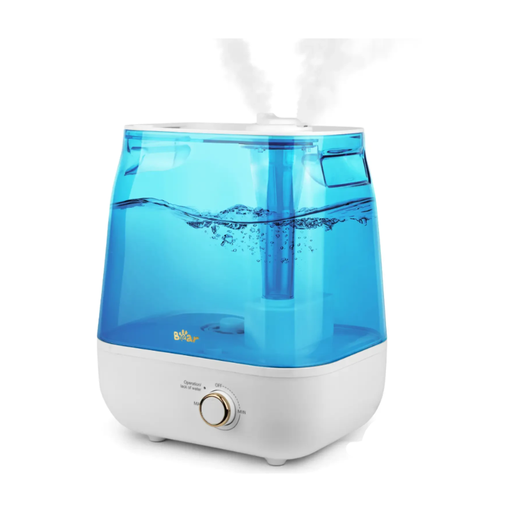
Consider this model if tank capacity and access for cleaning are priorities, subject to checking its fit for your room. The listing specifies a 6 L tank, a removable tank, a wide opening and adjustable mist output. Confirm room coverage, runtime at your intended setting, automatic humidity-control options and UK electrical compatibility before buying.
Do not use one instead of addressing the cause of existing damp. UK Government guidance identifies health risks from damp and mould, and Allergy UK highlights high humidity and poor ventilation as concerns for mould and house dust mites. Investigate leaks, water damage and ventilation before deliberately adding moisture.
Start with the exact model’s stated coverage and output, then consider your room’s ceiling height, open doors and ventilation. Venta specifies its LW45 Comfort Plus for rooms up to 68 m², while Philips specifies its AC3829/60 combined purifier-humidifier for rooms up to 80 m²; neither figure is a sizing rule for other models or layouts.
Check noise at the intended setting, light controls, tank capacity and the conditions attached to runtime claims. Levoit specifies a 6 L tank and up to 60 hours on low mist for its Classic 300S; that runtime should not be assumed at a higher setting.
No: discuss dryness during CPAP use with your sleep clinic rather than treating a room humidifier as an equivalent substitute. Asthma + Lung UK notes that some CPAP machines have integrated humidifiers and that a clinic may be able to provide one where appropriate.