Choose a humidifier only if your plants benefit from higher humidity and the room can take additional moisture without persistent condensation. A compact unit may suit a nearby plant cluster, while a larger collection calls for closer attention to stated room coverage and controls; whichever you choose, monitor the room and follow the model’s cleaning instructions. The Royal Horticultural Society’s guidance to aim for 60% humidity or higher applies to particular humidity-loving plants, not every houseplant.
Who needs a humidifier?
Keepers of humidity-loving houseplants
If you grow plants such as bird’s nest ferns or Stromanthe ‘Triostar’, check their particular humidity needs. The Royal Horticultural Society gives these as examples for which humidity of 60% or higher is appropriate; that figure is not a target for every indoor plant.
Owners of small plant clusters
A few plants near a desk, bedroom or plant stand may make positioning, adjustable direction and cleaning access more useful to you than a large stated coverage area. Compare those features with the room itself, not just the size of the shelf.
Householders concerned about damp
If windows, walls or corners already show condensation, consider the room before adding moisture. UK government guidance describes the health risks of damp and mould, while Barrow Borough Council identifies excess moisture and inadequate ventilation as contributors to condensation.
What matters when choosing?
Start with the plants’ requirements and the room’s existing moisture conditions. Then compare coverage, controls and the cleaning routine you can maintain.
| Concern |
What to check |
Who this matters to |
| Plant-appropriate humidity |
Check the main species’ needs, then look for adjustable output or a way to monitor humidity. |
If my plants need higher humidity, I want to manage it rather than assume one setting suits them all. Around 37% of consumers put plant-appropriate humidity first. |
| Room and collection size |
Compare stated coverage with the enclosed room; check tank size and controls for the intended placement. |
With plants spread across a room, I need a unit suited to that space, not merely the plant stand. Roughly 27% of consumers prioritise matching the humidifier to their room and collection. |
| Cleaning and upkeep |
Check access to the tank and base, the model’s cleaning instructions and any required pads or filters. |
If I will use the humidifier regularly, its water system needs a cleaning routine I can keep up with. Around 18% of consumers place manageable upkeep first. |
| Condensation and mould |
Inspect cold surfaces and ventilation before adding moisture; look for output you can reduce. |
Where my room already develops condensation, I do not want a plant-humidity goal to worsen the damp. Approximately 18% of consumers make damp-risk control their primary concern. |
Mistakes to avoid
-
Using one humidity target for every plant and room
The Royal Horticultural Society’s 60%-or-higher guidance concerns particular humidity-loving plants. Applying it throughout a room without checking conditions can add moisture where condensation is already a concern.
Identify your main species and monitor the room while adjusting output to their needs.
-
Choosing by tank size while overlooking upkeep
Water-system maintenance differs by model. The Health and Safety Executive identifies humidifiers among systems that can present a Legionella risk under relevant water and aerosol conditions; Levoit instructs owners of its LV600S to clean the tank and base chamber every three days.
Read the exact model’s cleaning instructions and check that you can reach the parts that need cleaning.
Depending on the model, pads, filters or absorption components may also need replacement.
-
Adding moisture to a room that is already damp
Condensation and mould call for attention to the room, not more humidifier output. UK government guidance describes potentially serious health effects from damp and mould.
Check windows, cold walls and ventilation first, and address an existing damp problem before using a humidifier.
Brands to consider for these humidifier types
Levoit
Levoit offers models at different stated room scales, from the Classic 160 to the LV600S smart hybrid humidifier.
- Levoit lists a 2.5 L tank for the Classic 160 and a 6 L tank with a stated 40–70 m² range for the LV600S.
- For the LV600S, Levoit specifies cleaning the tank and base chamber every three days and says absorption-pad replacement depends on water hardness.
Philips
The HU2510/10 is an evaporative option for consumers comparing humidification methods in a room within its stated coverage.
- Philips lists a 2 L tank and coverage up to 31 m² for this model.
- Philips’ statements about avoiding white dust and wet patches concern its NanoCloud technology; they do not remove the need to watch for condensation in the room.
Meaco
Meaco’s Armin evaporative range is relevant when you are comparing stated coverage and an evaporative approach.
- Meaco states room coverage up to 44 m² and 89 m² for its two Armin variants respectively.
- Check the selected model’s pad or filter requirements and cleaning instructions before choosing it.
Humidifiers on Joybuy
These models offer different tank sizes and mist or evaporative operation for considering a plant grouping or room. Match any stated coverage and controls to your space, and check the upkeep required for the exact model.
 No image available
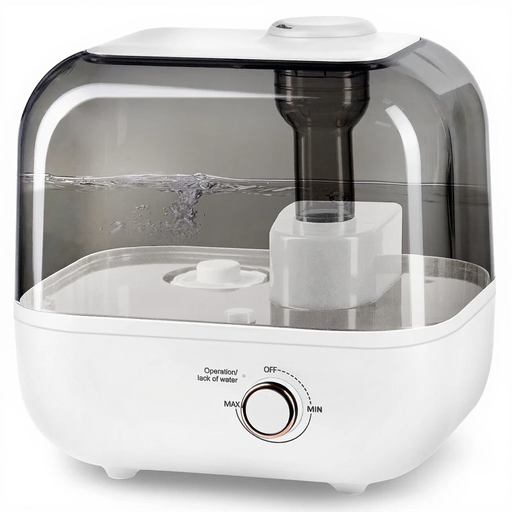
Bear 5 L top-fill humidifier, white
Consider this model for a nearby plant grouping if you want to direct the mist; its title specifies a 360° nozzle and a 5 L tank. Check how its controls work for your intended humidity level, and watch for condensation around the room.
View on Joybuy
 No image available
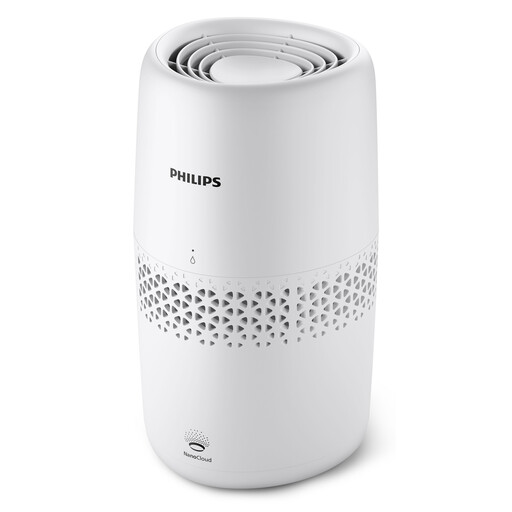
Philips 2000 Series HU2510/10 air humidifier
Consider this evaporative model if you prefer that method for a room within its stated coverage. Philips specifies a 2 L tank and coverage up to 31 m². Before buying, check its filter requirements and whether you need a suitable UK power adapter.
View on Joybuy
 No image available
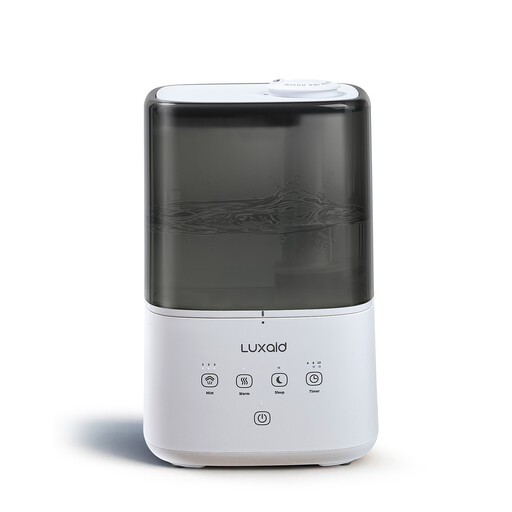
Luxaid 4.5 L cool- and warm-mist humidifier
This model offers cool and warm mist for consumers comparing those settings in a room. Its title specifies top filling, a 360° nozzle, a 4/8/12-hour timer and stated coverage up to 505 ft². Check the cleaning and filter instructions for this model before choosing it.
View on Joybuy
 No image available
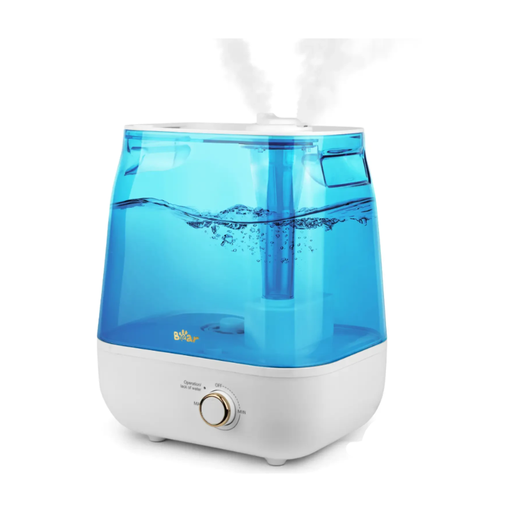
Bear 6 L top-fill humidifier
Consider the 6 L tank and 360° nozzle if tank size and mist direction matter for your plant grouping. The title also lists automatic shut-off, which should not be assumed to mean control to a chosen humidity level; check the room fit and controls separately.
View on Joybuy
 No image available
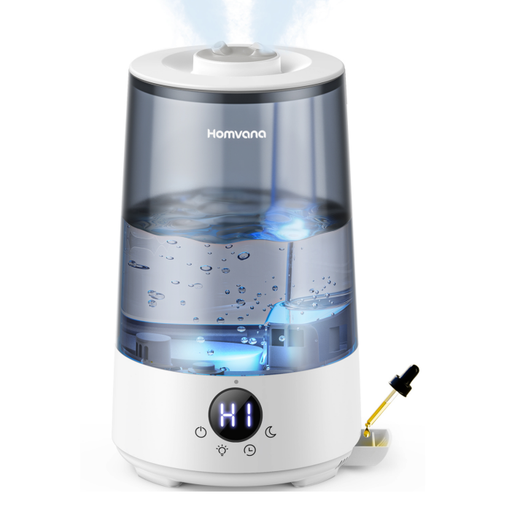
Homvana H101 grey 3.6 L top-fill humidifier
This top-fill cool-mist model may suit a plant grouping where a 3.6 L tank and 360° mist direction meet your needs. Check its humidity controls and maintenance instructions for the exact H101 variant; the product information recommends distilled or purified water.
View on Joybuy
Frequently asked questions
Do all indoor plants need a humidifier?
No. Check the species you grow before choosing a humidity target. The Royal Horticultural Society identifies bird’s nest fern and Stromanthe ‘Triostar’ as examples suited to humidity of 60% or higher, but that target does not apply to every houseplant.
Should I buy a larger humidifier for a bigger plant collection?
A larger unit is worth considering when the plants occupy a larger enclosed room that can take additional moisture. Compare the manufacturer’s stated coverage with that room and monitor conditions rather than choosing by tank size alone.
How often should I clean a humidifier used near plants?
Follow the instructions for your exact model. Levoit says to clean the LV600S tank and base chamber every three days; other models may specify a different routine. The Health and Safety Executive identifies humidifiers as potential Legionella-risk systems under relevant water and aerosol conditions, so do not neglect water-system maintenance.
What if the room already has condensation or mould?
Address the damp problem before adding moisture for plants. Barrow Borough Council links condensation with factors including excess moisture and inadequate ventilation, and UK government guidance describes serious potential effects of damp and mould. Check the affected surfaces and ventilation, and seek appropriate housing or building support where needed.


