Quiet-focus study users
If you read, revise or take calls in the study, consider operating noise, display light and how often you would need to stop for a refill.


Choose a humidifier sized for your study, with a way to monitor humidity and a tank you can clean thoroughly. A compact mist-producing model may suit limited space and quiet work, while an evaporative model suits a preference for mist-free operation; either way, check the exact model’s noise and upkeep requirements. Avoid running it continuously if moisture collects on windows or walls.
If you read, revise or take calls in the study, consider operating noise, display light and how often you would need to stop for a refill.
If you expect to use a humidifier regularly, look for a tank you can clean and a water-care routine you can keep up with, rather than choosing by mist output alone.
If your study has cold windows, an external wall or existing damp, monitor the room before adding moisture. Basingstoke and Deane Borough Council explains that moist air can condense on cold surfaces and contribute to mould.
Measure the study and decide how you will monitor humidity before comparing mist settings or tank sizes. The United States Environmental Protection Agency advises keeping indoor relative humidity between 30% and 50%; visible condensation is a reason to reduce moisture and investigate ventilation.
Consider it when: Space is tight and a low-noise mist setting matters during work.
Allow for: The United States Environmental Protection Agency warns that ultrasonic humidifiers can disperse minerals and microorganisms from tank water, making water choice and regular cleaning important.
Consider it when: You prefer humidification without a visible mist near your work area.
Allow for: Check the model’s footprint and maintenance system: some use filters or pads, while Venta says its LW25 Comfort Plus uses neither.
Consider it when: You specifically want both mist settings and have room to place the unit safely.
Allow for: Compare power use and noise in the mode you expect to use; Meaco lists different figures for the two modes on its Deluxe 202.
| Concern | What to check | Who this matters to |
|---|---|---|
| Room fit and control | Measure the room, check the model’s coverage basis and look for a humidity target or use a separate hygrometer. | If I want relief from dryness without making a compact study damp, I need to know when to turn the output down. Around 31% of consumers put controllable, room-sized humidification first. |
| Quiet work | Check noise in the mode you would use, display-light controls and refill frequency. | Calls and concentration are easily interrupted by an appliance I can hear or have to refill mid-session. For around 25% of consumers, avoiding those distractions is the primary concern. |
| Cleaning and water care | Check access to the tank and base, the cleaning instructions and any required filters or pads. | If I will use it regularly, I need a cleaning routine that fits my day and a clear plan for water and replacement parts. Manageable upkeep comes first for around 25% of consumers. |
| Condensation and placement | Check cold surfaces for moisture and find a stable position away from books and electrical equipment. | With a cold window or valuable equipment in the study, I would rather prevent excess moisture and spills than maximise output. Around 19% of consumers make that their main priority. |
Extra moisture is not automatically helpful in a small study. Basingstoke and Deane Borough Council notes that moisture condensing on cold surfaces can contribute to mould.
Measure the room, monitor humidity and reduce output if condensation appears. Investigate persistent damp separately.
The United States Environmental Protection Agency says ultrasonic humidifiers can disperse minerals and microorganisms from tank water.
Choose a tank and base you can wipe thoroughly. The agency advises emptying, drying and refilling portable humidifiers daily, and cleaning them every third day.
Water choice and model-specific pads or filters may add to the regular upkeep.
A warm-mist setting can have different power and noise requirements from cool mist on the same appliance; Meaco lists separate mode specifications for its Deluxe 202.
Compare the exact model’s power and stated noise in your intended mode, not just its headline specification.
Spills can reach nearby books or electrical equipment, while mist directed at a cold window or wall can add to local condensation.
Use a stable, water-resistant surface, direct output away from vulnerable items and follow the chosen model’s placement instructions.
Levoit’s UK humidifier range includes the Classic 160, Dual 150, OasisMist and LV600S across different stated room-size categories.
Venta offers an evaporative option for consumers who prefer mist-free humidification.
Meaco offers evaporative models as well as humidifier and air-purifier designs with humidity settings.
Philips offers the evaporative-style Series 2000 HU4803/01 for consumers considering humidification without visible mist.
These mist-producing humidifiers offer different tank sizes and controls for a study. Measure your room and check how you will monitor humidity; a stated coverage area or quiet-mode figure alone cannot establish the right fit.
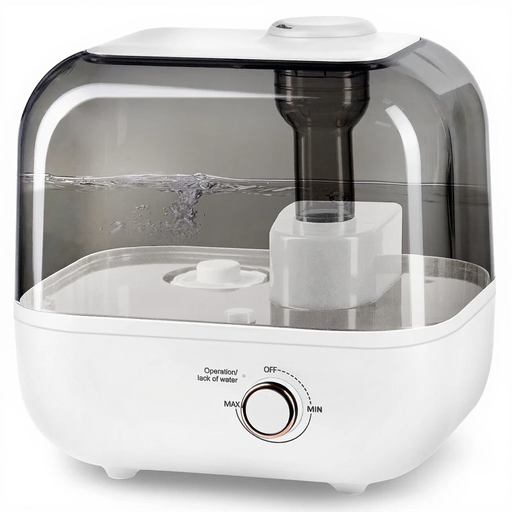 No image available
Consider this model if a measured study is within its stated coverage of up to 30 m² and refill interruptions matter. The listing describes adjustable humidity, a wide filling opening and up to 35 hours of runtime. Check whether its control uses a humidity sensor or target, and confirm the cleaning routine for this model.
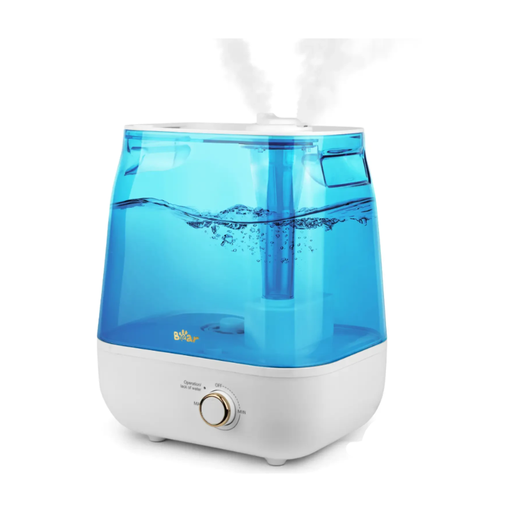 No image available
Consider this model if easy refill access and manual mist adjustment are priorities. Its listing describes a removable tank, wide opening, stepless mist-control knob and automatic shut-off. Confirm room coverage and any humidity-target control before choosing it for your study; the product descriptions give conflicting runtime figures.
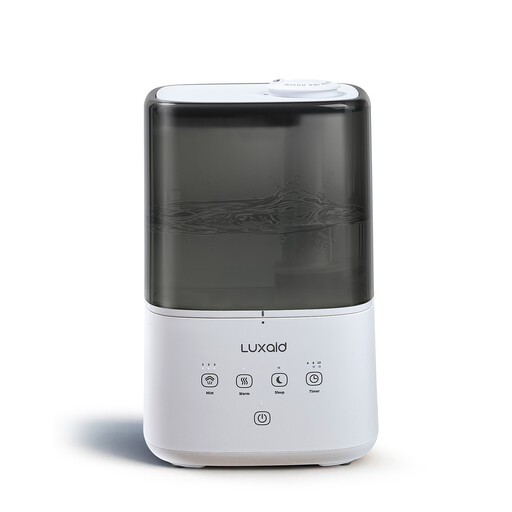 No image available
Consider this model if you specifically want selectable cool and warm mist. The listing describes a removable top-fill tank, several output levels and stated coverage of up to 505 ft². Check that coverage against your study, along with warm-mist power use, humidity control and filter or pad replacement requirements.
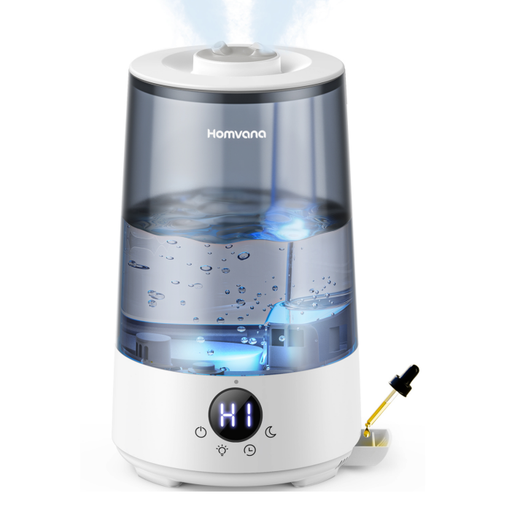 No image available
Consider this model if timed cool-mist operation suits your study sessions. Its listing states coverage of 24–35 m² and five timer settings from 2 to 10 hours. Compare the coverage basis with your room and check its humidity controls; the product descriptions conflict on sleep-mode runtime.
Use a hygrometer to keep humidity moderate rather than running a humidifier at maximum output. The United States Environmental Protection Agency advises an indoor relative-humidity range of 30% to 50%; if condensation appears on windows or walls, reduce output and look at ventilation.
Choose an ultrasonic model if its size and low-noise operation suit your study and you can maintain its water and cleaning routine. Choose an evaporative model if you prefer mist-free operation, then check its footprint and whether that particular model uses filters or pads.
The United States Environmental Protection Agency advises emptying the tank, wiping surfaces dry and refilling it daily, then cleaning a portable humidifier every third day. Follow any more specific instructions for the model you buy.
No: adding moisture does not address the cause of persistent damp or mould. Basingstoke and Deane Borough Council explains that condensation forms when moist air meets cold surfaces; investigate the room’s ventilation and the source of damp before using a humidifier there.