Small-room desk hobbyists
If you work in a compact study or craft room, focus on a unit that fits the room and leaves space around your desk or bench. Check its noise at the setting you expect to use, not just its stated room coverage.


Choose a humidifier to fit the room and your approach to humidity control before considering connected features. A compact model may suit a small study, while a larger tank may mean fewer refills during long sessions; either way, measure the room’s humidity rather than running at maximum output by default. Dorset Council describes around 40–55% relative humidity as a normal comfortable range in an occupied home and warns that levels regularly above 60% increase condensation and mould risk.
If you work in a compact study or craft room, focus on a unit that fits the room and leaves space around your desk or bench. Check its noise at the setting you expect to use, not just its stated room coverage.
For hours at a desk or hobby bench, tank capacity and refill access can matter more than extra controls. A larger tank may reduce interruptions, but you still need to monitor humidity during use.
If windows are often wet or the room has damp marks or mould, measure humidity and investigate ventilation or building moisture before adding more mist. Dorset Council advises that persistently high humidity increases condensation and mould risk.
Start by checking whether the room is genuinely dry, then match the humidifier to its size and to the noise and maintenance you can live with.
| Concern | What to check | Who this matters to |
|---|---|---|
| Humidity control | Check for a humidistat or plan to use a separate hygrometer. Look for condensation or damp before increasing output. | If my study feels dry but its windows sometimes mist up, I want to measure humidity rather than rely on how the air feels. Around 31% of consumers put controlled humidity and avoiding excess moisture first. |
| Quiet operation | Check noise at the output setting you intend to use and whether a night mode dims the controls. | During reading or detailed hobby work, a distracting hum or bright display could make the room harder to use. Quiet, low-distraction operation comes first for roughly 25% of consumers. |
| Refilling and cleaning | Check tank capacity, access for cleaning and any model-specific filter or maintenance requirements. | When I spend long sessions at my desk, I would rather not interrupt work repeatedly to refill the tank or struggle to clean it. About 25% of consumers prioritise manageable refilling and care. |
| Room fit | Measure the room, compare the maker’s stated coverage and check where the appliance will stand. | In a small hobby room, I need enough capacity without giving up useful desk or floor space. Appropriate capacity and footprint are the leading concern for around 19% of consumers. |
Adding moisture will not fix a leak, persistent condensation or poor ventilation and may worsen an existing moisture problem.
Check for damp patches, wet windows and ventilation problems first. If you rent, report suspected damp or mould to your landlord or managing agent.
More mist is not necessarily helpful in a cool or poorly ventilated room. Dorset Council associates relative humidity regularly above 60% with greater condensation and mould risk.
Use a humidistat or separate hygrometer and adjust output as the room changes. Dorset Council describes around 40–55% as a normal comfortable range for an occupied home.
A tank that is awkward to fill or clean can make regular upkeep more difficult, particularly when the humidifier runs for long sessions.
Check the exact model’s filling access, cleaning instructions and whether it uses replaceable filters or other maintenance accessories.
Replaceable filters can add an ongoing maintenance task.
A maker’s room-size rating is a starting point; ventilation, temperature and insulation also affect what happens in your study.
Compare the stated coverage with your room dimensions, then measure humidity after setup and reduce output if condensation appears.
The Classic 300S is a larger-tank, app-connected ultrasonic option to consider for longer sessions.
The HU4803 is an evaporative option for consumers interested in sensor-led humidity control.
The H300 combines humidification with optional air-cleaning operation for consumers considering a larger hybrid appliance.
The LB 37 is a compact ultrasonic option for a smaller study where simple controls matter.
These Joybuy humidifiers offer different tank sizes and controls for a dry study or hobby room. Compare each model’s stated features with your room size, then measure humidity while using it.
 No image available
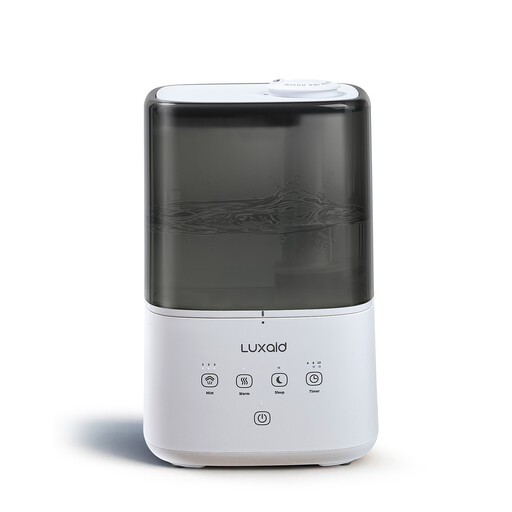
Consider this top-fill model if a 4.5 L tank and a choice of cool or warm mist suit your desk-room routine.
The title lists a 4-, 8- and 12-hour timer and stated coverage of up to 505 ft². Use a hygrometer to guide mist adjustment, and check the exact model’s filter requirements.
 No image available
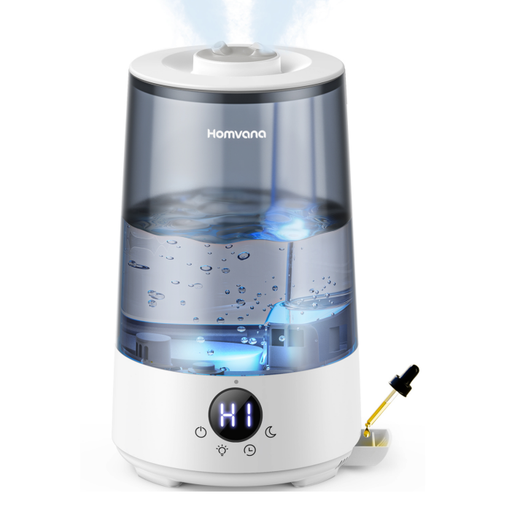
The top-fill tank and sleep mode make this a model to consider when refilling access and evening desk use matter.
Its title states a 3.6 L capacity and cool-mist operation. Check noise at your intended setting and use a hygrometer to monitor the room.
 No image available
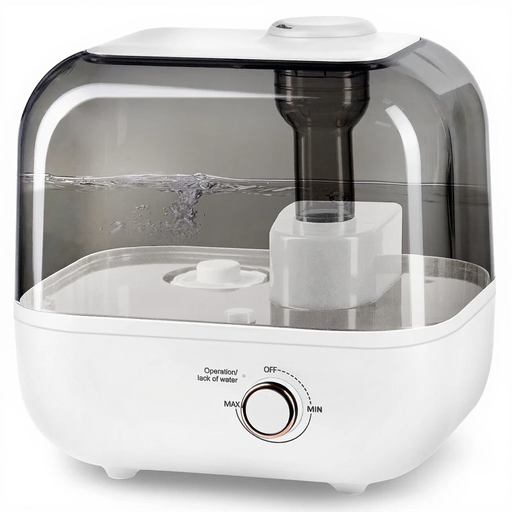
Consider this model if a larger tank and top-fill access are priorities for your hobby room.
The title identifies a 5 L tank and an aromatherapy tray. Check noise at the setting you would use, and measure room humidity while adjusting mist.
 No image available
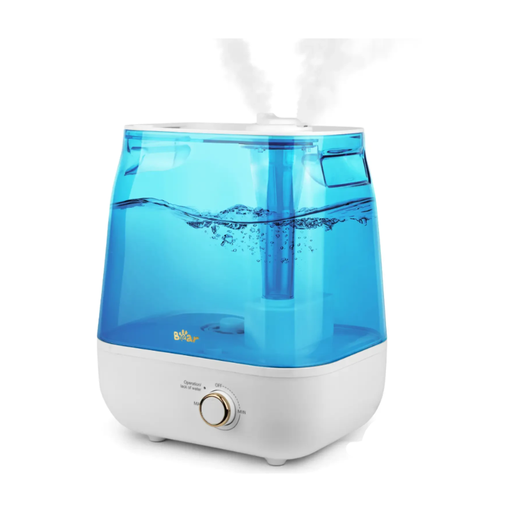
The 6 L tank may appeal if refilling interruptions matter during long desk or hobby sessions.
The title lists top filling and automatic shut-off. Check the model’s room-size guidance and applicable runtime, and use a hygrometer to guide mist adjustments.
Use a hygrometer or reliable humidistat and aim for around 40–55% relative humidity in an occupied home, as described by Dorset Council. The council warns that humidity regularly above 60% increases condensation and mould risk; check any moisture-sensitive hobby materials against their own storage guidance.
Investigate the moisture problem before adding more humidity. Wet windows, damp walls and mould call for checks of ventilation, condensation and possible building defects rather than more mist; report suspected damp or mould to your landlord or managing agent if you rent.
Measure the room and use the maker’s stated coverage as a starting point, then check the actual humidity after setup. Beurer states up to 20 m² for the LB 37, Levoit states 20–47 m² for the Classic 300S, and BONECO recommends up to 50 m² for the H300; ventilation and temperature can affect results.
Check noise at the output setting you expect to use and whether lights can be dimmed. Beurer describes quiet operation without bright lights in the LB 37’s night mode, while BONECO specifies 28–51 dB(A) across the H300’s operating levels.
No; use an aroma product only if the exact model’s instructions permit it. Beurer says the LB 37 can use water-soluble aroma oils, but that does not establish suitability for other models or other types of oil.