Desk workers dealing with dry air
If you work in a small, enclosed conservatory study and the glazing does not regularly collect condensation, an adjustable humidifier with a tank you can clean is a sensible type to consider.


Choose a humidifier for a conservatory study only after checking that the room needs added moisture and that condensation is not already collecting on the glazing. A compact, adjustable unit may suit a small desk area; a larger or more changeable room calls for closer attention to humidity control and output. If the glazing regularly becomes wet, deal with the condensation before adding water vapour.
If you work in a small, enclosed conservatory study and the glazing does not regularly collect condensation, an adjustable humidifier with a tank you can clean is a sensible type to consider.
Sunlight, heating and ventilation can change conditions during the day. Check the humidity rather than leaving a humidifier running at a fixed output.
If mineral residue and awkward cleaning would put you off regular maintenance, examine tank access, water guidance and any filter requirements before choosing a model.
In a conservatory study, check for existing moisture on the glazing before deciding how much humidification the enclosed space needs.
Consider when: A small desk area is dry and you can monitor the room while adjusting the mist.
Trade-off: A compact tank may need more frequent refilling, and desk-area use does not establish coverage across a larger conservatory.
Consider when: The enclosed study is larger or its humidity changes noticeably through the day.
Trade-off: Check any stated coverage against the actual room; automatic control does not remove the need to watch for condensation.
Consider when: You have a separate reason to want air filtration as well as humidification in the study.
Trade-off: Check replacement-filter requirements; filtration does not replace reservoir cleaning.
Consider when: Windows or roof glazing already collect moisture regularly.
Trade-off: You will need to examine heating, ventilation and moisture sources before deciding whether humidification is appropriate. Meaco explains that warm air meeting cold conservatory glass can cause condensation.
| Concern | What to check | Who this matters to |
|---|---|---|
| Avoiding condensation | Check humidity and inspect glazing for recurring moisture before adding vapour. Look for adjustable output or humidity control. | If the windows are already wet, I need to understand that moisture before running another appliance. Around 42% of consumers put avoiding condensation first. |
| Output and control | Compare the exact model’s stated output and controls with the normally enclosed study area, not just its tank size. | My study changes temperature through the day, so I need to adjust humidification as conditions change; around 33% of consumers prioritise output and control. |
| Cleaning and residue | Look at tank access, the manual’s water guidance and any replacement-filter requirements. | I need a reservoir I can maintain regularly without letting residue build up. Keeping cleaning manageable comes first for around 25% of consumers. |
A desk area can feel dry while cold glazing collects condensation. Meaco notes that conservatory condensation depends in part on construction, heating and ventilation.
Check humidity and inspect the glazing before buying; if you do humidify, choose output you can adjust as conditions change.
A larger tank says more about how much water the appliance holds than how its output and controls will suit your enclosed study.
Compare the exact model’s stated output, controls and claimed coverage with the space you intend to humidify.
A tank that is awkward to inspect can make regular cleaning harder. Levoit also advises that mineral-rich tap water can leave white dust.
Check the opening and follow the exact model’s instructions for water, emptying and cleaning. The Health and Safety Executive lists humidifiers among systems that can present a Legionella risk.
Some designs also call for replacement humidification filters; check whether the model you choose uses them.
A conservatory study may need a longer reach to a socket, but damaged or unsuitable extension equipment can create an electrical hazard.
Use an appropriate fixed socket where possible. If you need an extension lead, Electrical Safety First advises checking for a standard UK three-pin plug and fuse; fully unwind any cable reel before use.
Levoit’s UK humidifier range includes compact and larger-room models, including the Classic 160 and LV600S.
The Philips 3000i AC3829/60 combines air purification and humidification for buyers who want both functions.
Meaco’s UK range includes the Armin evaporative humidifier and the Deluxe 202 humidifier and air purifier.
These humidifiers offer different tank sizes and controls to consider once you have confirmed that your enclosed conservatory study needs added moisture. Check each model against the area you intend to humidify and any existing condensation.
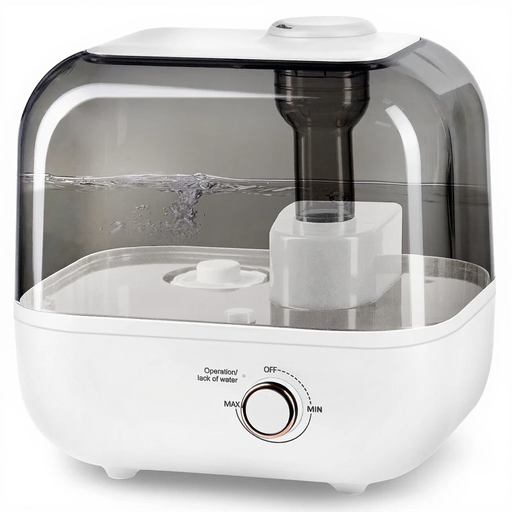 No image available
Consider this model for a measured-dry, enclosed study where you want to adjust the mist manually.
Its 5 L tank is stated in the product name. The Joybuy listing claims mist output up to 350 ml/h and coverage up to 30 m²; compare that coverage with your actual study layout.
If room conditions change during the day, check the exact model’s humidity controls before ordering.
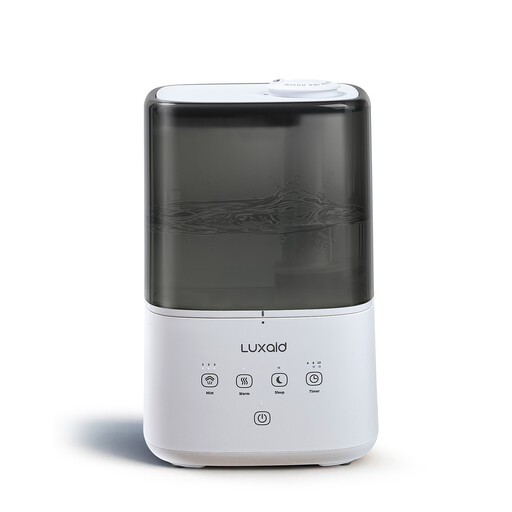 No image available
Consider this model if you want cool- and warm-mist options for a study whose humidity you can monitor.
The product name specifies a 4.5 L top-fill tank, a 4/8/12-hour timer and claimed coverage up to 505 ft². Check that coverage against the normally enclosed space.
For changing conditions, confirm how the exact model controls humidity and check its consumable requirements.
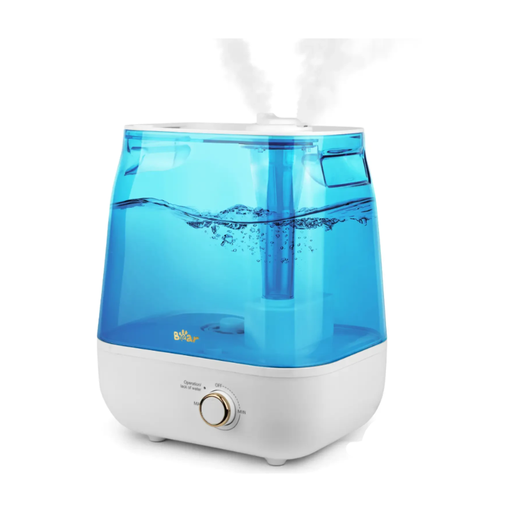 No image available
Consider this model if tank size and manual mist adjustment matter more to you than a stated room-coverage figure.
Its product name specifies a 6 L top-filling tank and automatic shut-off. Confirm its output and coverage for your enclosed study before choosing it.
Check the applicable runtime on the exact listing: its title and description give different figures.
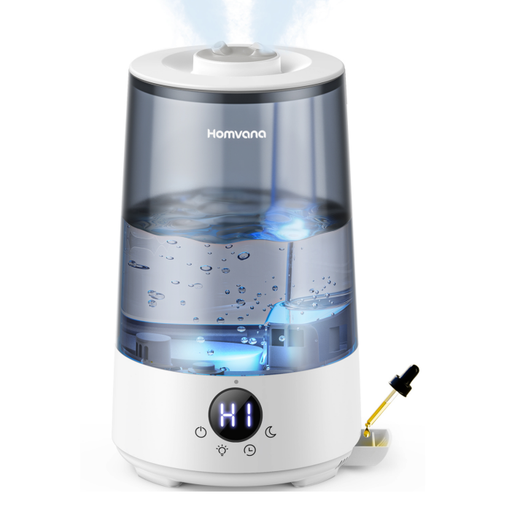 No image available
Consider this top-fill cool-mist model for a measured-dry study, subject to checking how you would control its output as conditions change.
The product name specifies a 3.6 L tank. Check the exact listing’s coverage claim against your enclosed study and follow its water and cleaning instructions.
Check the cause of the condensation before adding moisture. Meaco explains that warm air meeting cold glass can cause conservatory condensation, with construction, heating and ventilation affecting the result. Check room humidity and the pattern of moisture on the glazing first.
Adjustable output and a tank you can clean are useful starting points for a small, dry desk area. For a larger or more changeable enclosed room, compare stated output and humidity controls against the actual space rather than choosing by tank size alone.
Follow the exact model’s water instructions. Levoit advises that mineral-rich tap water can cause white dust and that distilled water can reduce mineral-related residue; using it does not replace regular cleaning.
Regular tank care is part of using a humidifier. The Health and Safety Executive lists humidifiers among systems that can present a Legionella risk, so follow the appliance’s instructions for emptying, cleaning and maintenance rather than leaving the reservoir neglected.
Use an appropriate fixed socket where possible, and follow the appliance’s instructions. If an extension lead is necessary, Electrical Safety First advises checking that it has a standard UK three-pin plug and fuse; fully unwind a cable reel before use.