
24/7 Customer Support

Free returns

Same-day & Next-day Delivery

Quality Guaranteed

Unlock Your Welcome Offers: FREE Delivery | Up to 80% OFF | Free 30-day JoyPlus trial
Download the APP
Cleaning exterior windows can involve ladders, awkward reaching and repeated wiping, while indoor glass and bathroom tiles often show every mark. A window cleaner robot may reduce manual effort, but advertised suction figures and “intelligent” functions do not automatically make every model suitable for every home.
The HUTT DDC56 window cleaning robot is listed with 3800Pa suction, remote control operation and navigation intended for windows, glass and tiles. Before buying, it is worth understanding what those specifications mean in everyday UK use.
A rating such as 3800Pa describes the stated suction force. It does not guarantee that a robot will remain attached to every surface, particularly where there is dust, condensation, textured glass, damaged seals or uneven tile grout.
A robotic window cleaner should be used only on surfaces permitted by the instructions. Keep the safety cable secured where supplied, supervise the machine and avoid relying on it unattended, especially on upper-floor windows.
Most glass cleaning robots are designed for relatively smooth, continuous surfaces. They may not be appropriate for:
A tile cleaning robot can be useful on smooth bathroom tiles, but the robot’s movement and pad contact may be affected by grout gaps. Always check the surface guidance before use.
An automatic window cleaner is not completely maintenance-free. Microfibre pads collect dirt and need washing or replacing. Dirty pads can spread marks rather than remove them, while blocked vents or poor contact can affect movement.
Check whether replacement pads are available, whether the pads are washable and how the robot should be stored after use. These details often matter more than an impressive headline specification.
The HUTT DDC56 is described as a 3800Pa window cleaning robot. This provides a useful point of comparison, but suction should be considered alongside surface condition, robot weight, pad design and the safety system.
For UK homes, inspect the window first. Remove loose dust and large particles, dry excessive condensation and make sure the glass is structurally sound. A robot cleaner for windows should not be used to compensate for damaged glazing or loose frames.
An intelligent navigation window cleaner should be able to move across a pane in a reasonably systematic pattern rather than repeatedly travelling over one small section. Remote control operation is also valuable for starting, pausing or repositioning the machine from a safer position.
The HUTT DDC56 is listed with a remote control. This can be helpful when cleaning tall internal windows, conservatory glazing or hard-to-reach panels, although it does not remove the need for supervision.
The listed HUTT DDC56 materials include ABS plastic, microfibre and electronic components. Microfibre is intended to contact the surface and collect moisture or dirt, but performance depends on keeping the pad clean and correctly fitted.
Before purchase, confirm:
Avoid applying excess cleaning liquid unless the instructions specifically allow it. Too much moisture may affect traction and leave streaks.
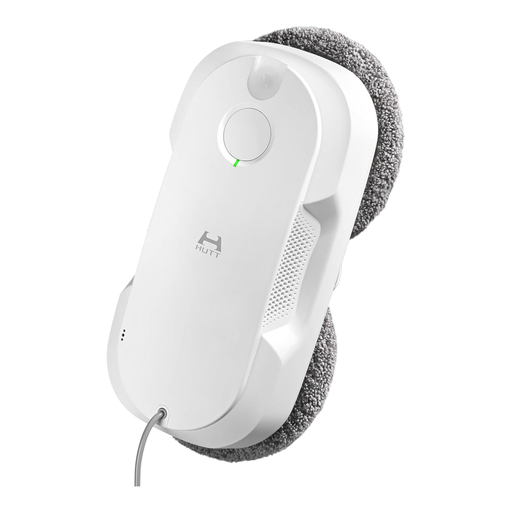
Why This Fits Their Persona: The listed clearance price and free next-day delivery make this a practical starting point for households wanting to try an automatic window cleaner without selecting a more elaborate model.
Its stated 3800Pa suction and remote control are clearly specified, so buyers can compare the core functions rather than relying only on vague automation claims.
3800Pa stated suction; remote control; listed for windows, glass, tiles and bathroom cleaning.
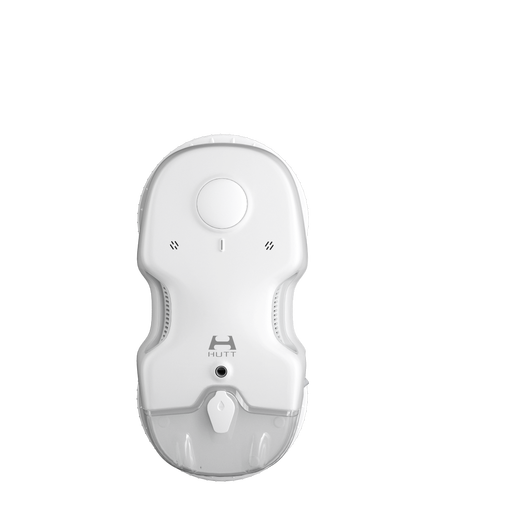
Why This Fits Their Persona: This option suits shoppers who want a window cleaning robot with a stated spray function, remote control and an integrated 80ml tank for regular indoor or outdoor window maintenance.
The 80ml tank is stated directly, helping buyers assess liquid capacity instead of assuming that every spray-enabled model has the same system.
Integrated 80ml tank; spray function; remote control; listed for indoor and outdoor windows.
Why This Fits Their Persona: This model is suited to users managing several smooth household surfaces, including mirrors, glass panels and suitable bathroom tiles, while operating the machine by remote control.
Its stated use cases make it easier to check whether the intended surface is smooth and continuous, rather than assuming it can clean every tile or window design.
Specified use on glass and tiles; 3800Pa suction rating; remote control operation.
Before using a robotic window cleaner:
These steps are particularly important for elderly users, renters and anyone cleaning windows above ground level. A robot can reduce reaching and ladder use, but it should not be treated as a substitute for safe supervision.
No. It should be used only on smooth, stable surfaces allowed by the instructions. Textured glass, deep grout, damaged panes, excessive condensation and interrupted surfaces may affect contact and movement.
No. 3800Pa is a stated suction specification, not an unconditional safety promise. Correct pad fitting, surface cleanliness, power supply and use of the safety cable remain important.
Electricity use is generally only one part of ownership. Also consider replacement microfibre pads, cleaning solution if permitted, storage and any servicing or replacement accessories. A model with washable pads may reduce recurring purchases, but the care instructions should be checked before ordering.