
24/7 Customer Support

Free returns

Same-day & Next-day Delivery

Quality Guaranteed

Unlock Your Welcome Offers: FREE Delivery | Up to 80% OFF | Free 30-day JoyPlus trial
Download the APP
Tackling a large painting project, like reviving a garden fence or redecorating an entire room, can feel daunting. While rollers and brushes have their place, the promise of a fast, smooth finish from an electric paint sprayer is tempting. However, the market is filled with models that can lead to frustration, wasted paint and a finish that’s far from professional.
As a Joybuy Product Recommendation Officer, my role is to help you see past the marketing claims and focus on what truly matters. Before you invest, be aware of a few common pitfalls that can turn a promising tool into a garage shelf ornament.
To ensure you get a tool that works for your project, focus on these key specifications. They are the difference between a quick, professional job and a day of frustration.
These two figures are directly related and tell you what kind of paint the sprayer can handle.
The nozzle is where the work happens. Having options is crucial for a good finish.
Functionality extends beyond just power. Look for features that make the job easier.
Instead of a single "best" model, the right choice depends on your specific needs. Here are our recommendations matched to different user profiles.
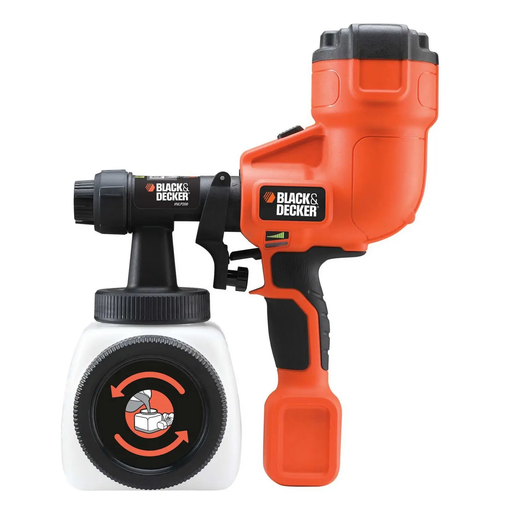
Why This Fits Their Persona: This user needs a straightforward tool for smaller jobs like garden furniture, a single fence panel, or a feature wall. The BLACK+DECKER sprayer is lightweight, easy to handle and comes from a recognised brand, making it a reliable entry point into spray painting.
Its 400W motor is suited for thinner paints like stains and varnishes, avoiding the "underpowered" trap when used for its intended purpose. The side-filling canister simplifies refills and cleaning, addressing a key usability pain point.
The simple paint flow indicator helps you set and repeat your spray settings. Its lightweight, handheld design reduces fatigue on small to medium tasks.
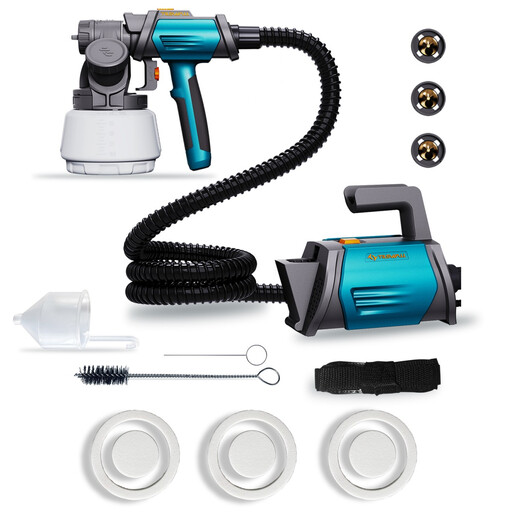
Why This Fits Their Persona: This user is tackling large-scale projects: painting entire rooms, extensive decking, or the whole garden fence. They need power, capacity and versatility. This Tilswall paint sprayer is built for exactly that.
It directly counters the "underpowered" trap with its 800W motor and high viscosity rating of 120 DIN-s, capable of handling thick emulsion. The inclusion of four durable brass nozzles avoids the "one-size-fits-all" flaw entirely.
The split design with a floor-based motor and lightweight gun reduces hand fatigue. A large 1300ml container minimises refills and the long hose and power cord provide excellent reach.
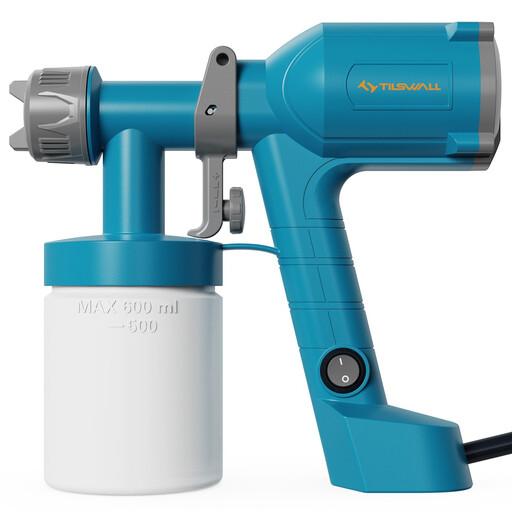
Why This Fits Their Persona: This user values comfort and ease of handling above all. They are tackling medium-sized jobs like sheds, interior doors, or cabinets, where manoeuvrability is key. The ultra-lightweight design is the main draw, making painting less of a physical strain.
By focusing on an ergonomic, lightweight build, it directly addresses the fatigue that comes with heavy, all-in-one units. The inclusion of two nozzles provides more versatility than basic models, avoiding the "one-size-fits-all" trap for varied tasks.
Its primary benefit is the ultra-light construction, which makes it easy to control for detailed work and reduces arm ache during use. It's a simple, effective tool for those who prioritise comfort.
We have compiled a complete, real-time list of products that fully satisfy these strict selection criteria and UK safety regulations.
1. Do I still need to thin emulsion paint for an HVLP sprayer? In most cases, yes. Even a powerful high viscosity paint sprayer performs better when the paint is at the right consistency. Most UK emulsions are too thick to be sprayed straight from the tin. Always check your sprayer's manual for the recommended viscosity (in DIN-s) and use the supplied cup to test. A good starting point is to thin the paint with about 10% water, mixing thoroughly.
2. How do I properly clean an electric spray gun after using it? Proper cleaning is vital. For an easy clean paint sprayer, the process is straightforward. Immediately after you finish painting, empty any leftover paint from the container. Fill it with the correct cleaning fluid (water for water-based paints, white spirit for oil-based) and spray it through the gun onto a scrap piece of cardboard until it runs clear. Afterwards, unplug the unit, disassemble the nozzle and front end and use the small brushes and needles provided to clean every part thoroughly. This prevents clogs and ensures your sprayer is ready for the next project.
3. Is an HVLP paint sprayer for walls and fences really faster than a roller? For large, uninterrupted surfaces, an electric spray gun for fences or walls is significantly faster. However, the total job time includes preparation. You must spend time masking off windows, floors, sockets and anything else you don't want painted to protect from overspray. For a single, small wall, a roller might be quicker from start to finish. But for an entire room, a long fence, or multiple pieces of furniture, the speed of application with a sprayer more than makes up for the prep time.