Workers short on screen space
If switching between documents, messages and meeting windows slows your work, decide whether a separate monitor solves the problem before adding a dock. The laptop’s supported display arrangement still matters.


Start with the task your home desk makes difficult: add a monitor for cramped screen space, consider a dock for repeated reconnection, or choose call and input peripherals when those are the daily obstacle. Before buying a dock, check the exact laptop model, its port capabilities, display limits, charging requirements and any employer restrictions on accessory software.
If switching between documents, messages and meeting windows slows your work, decide whether a separate monitor solves the problem before adding a dock. The laptop’s supported display arrangement still matters.
If the same laptop travels between home and another workplace, a dock may simplify connections for displays and peripherals. Its video and charging functions depend on the laptop and port, while a managed work device may restrict required software.
If camera position, lighting or household noise disrupts meetings more than limited screen space, assess your camera and audio setup before buying a larger display or dock.
Choose the part of screen-based work, calls or device connection you most need to improve, then check whether the proposed equipment fits your laptop and temporary home desk.
| Concern | What to check | Who this matters to |
|---|---|---|
| Reliable desk connections | Match the exact laptop and port to the dock’s video and charging requirements; check whether work IT permits any required software. | If I reconnect a work laptop every day, I want my display and peripherals to work through a repeatable connection. Around 38% of consumers put connection compatibility first. |
| Usable screen space | Check the laptop’s external-display limit, monitor inputs and the cable or adapter needed between them. | When documents and meeting windows compete for space, I need room to see more of my work at once; around 31% of consumers make screen space their primary concern. |
| Video calls at home | Assess camera positioning and the audio connection; confirm that a chosen device works with your meeting software. | Household noise or awkward camera framing can make my calls harder to manage. Clearer, more controllable calls come first for around 23% of consumers. |
| Pack-away input and positioning | Check stand fit and adjustment, keyboard layout and the port needed for any wireless receiver. | If my desk must be cleared after work, I need input devices and laptop positioning that fit that routine; around 8% of consumers prioritise this need. |
A matching connector does not establish that the laptop can send video through the port or accept the charging arrangement you expect. HP and Lenovo both condition dock functions on host capabilities.
Look up the exact laptop model and port specification, then compare its supported display arrangement and charging requirements with the dock and its power supply.
Apple says external-display support depends on the Mac model. A DisplayLink arrangement can also require software and macOS permissions that may need attention on an employer-managed device.
Check the Mac’s supported display count and ask work IT about DisplayLink software before choosing a dock that depends on it.
Software approval or deployment may add a step before the desk can be used as planned.
A monitor addresses screen space, while a dock consolidates connections and call peripherals address meetings. Buying them together does not establish that each solves a problem you have.
Identify the interruption that matters most in your working day and choose the corresponding equipment first.
Adapter and plug details matter. In March 2026, the Office for Product Safety and Standards reported a specific USB-C power adapter with a high electric-shock risk because its plug did not meet BS 1363 dimensional requirements; that report does not describe every adapter.
Check which power unit the dock requires and whether one is supplied. For an unfamiliar replacement, check its specifications and any relevant product-safety alerts before use.
HP’s business docking range is relevant when a desk needs display, port and charging connections.
Lenovo’s ThinkPad Hybrid USB-C with USB-A Dock offers a connection route to consider at a mixed-device desk.
Logitech offers webcam and input-device options for desks where calls or switching between devices matter.
Jabra’s Evolve2 55 is a call-focused headset option for a home desk.
Ergotron’s Neo-Flex laptop stand is relevant when laptop-screen position is the main desk adjustment.
These choices address different parts of a hybrid desk: a dock for connections, monitors for screen space, a webcam for calls and a keyboard-and-mouse set for daily input. They are alternatives or additions according to your own bottleneck, not a bundle you need to buy together.
 No image available
Consider this dock if repeatedly connecting displays and desk peripherals is the main interruption. Check that your laptop supports the required USB-C video and charging functions, and confirm whether the external power adapter you need is included.
 No image available
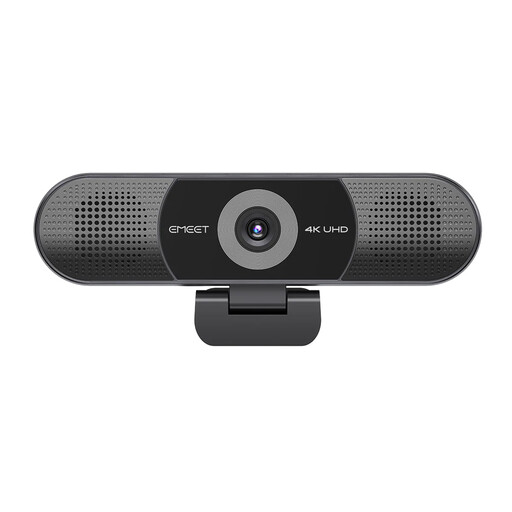
Consider it when camera framing and call audio matter more than extra screen space. Its title also specifies fixed focus, dual speakers and a 98° adjustable field of view; check compatibility with your meeting software and the privacy features you want.
 No image available
Consider a separate screen if your laptop display feels cramped during document-heavy work. This model’s title specifies 2560 × 1440 resolution, HDMI and DisplayPort connections and VESA 100 × 100 mm mounting; check the laptop connection and the monitor’s physical fit on your desk. A monitor does not take the place of a dock.
 No image available
Consider separate input devices if daily laptop use or a pack-away desk calls for a keyboard and mouse. Check that your work device has a suitable USB-A port for the set’s receiver, or that an adapter is permitted.
 No image available
Consider a portable second screen if it needs to travel with your laptop. The title specifies an IPS panel and USB Type-C connection; check that your laptop’s port provides the video output and power the monitor requires.
No: the USB-C connector alone does not establish video or charging support. HP and Lenovo condition dock functions on the host laptop’s capabilities, so check the exact model, port protocol, display arrangement and charging requirements before choosing a hub or dock.
Not necessarily: Apple says the number of supported external displays depends on the Mac model. Check that model’s display specification and the dock’s connection method; a DisplayLink-based arrangement may also need software and macOS permissions.
Ask work IT before buying one. DisplayLink’s corporate guidance describes software deployment, and its macOS guidance says silent installation does not automatically grant Screen Recording permission; your employer’s device settings determine whether the proposed arrangement is workable.
Not automatically. The Health and Safety Executive says display-screen equipment rules can apply to workers who routinely split time between home and a workplace, and that employers must assess and reduce relevant risks. The equipment needed follows the individual work and assessment, rather than a fixed monitor-or-dock requirement.
Check the dock’s required power specification, the supplied adapter and any relevant product-safety alerts. For context, the Office for Product Safety and Standards reported in March 2026 that one specific USB-C adapter presented a high electric-shock risk because its plug did not meet BS 1363 dimensional requirements. Its electrical-equipment guidance concerns Great Britain; Northern Ireland arrangements are distinct.