Who needs a different setup?
The right addition depends on whether the difficulty is sustained screen work, positioning or remote meetings.
Regular laptop-based hybrid workers
If you routinely work from home on a laptop for sustained periods, consider the whole workstation rather than choosing an accessory in isolation. The Health and Safety Executive (HSE) says an employer workstation assessment is required for workers who use DSE daily, continuously for an hour or more, in Great Britain.
People working across documents and windows
If the laptop screen is difficult to position for regular tasks, consider a raised laptop with separate input devices or a separate monitor. Your desk space and the laptop’s display connection will help determine which route is workable.
Workers with frequent remote meetings
A separate camera or audio device may be worth considering when the current setup does not meet the role’s call requirements. For a work-issued laptop, check approved connections, conferencing software and IT support before buying.
What should you check first?
Establish any employer assessment and device rules, then choose equipment for the task it needs to solve. Check display and dock compatibility against the exact laptop, not the shape of its port.
| Priority | What to check | Your needs |
|---|
| Screen and input position |
Can the screen sit at a workable height and distance? If raising the laptop, plan for a separate keyboard and mouse, as HSE advises for prolonged laptop use. Check whether a separate monitor fits the desk. |
I spend long stretches typing on a laptop and need to position its screen without relying on the built-in keyboard and trackpad. |
| Employer assessment |
For Great Britain DSE users, ask about the workstation assessment and the action it identifies. HSE says workers cannot be charged for equipment required by that assessment; Acas advises agreeing who provides equipment, repairs and support. |
Before buying for regular home work, I want to know what my employer will assess, provide or approve. |
| External display |
Check the laptop’s supported display connections and the intended resolution and refresh rate. Confirm the cable or adapter supports the planned setup; Apple Support and Microsoft Support note that display results depend on the connection configuration. |
A separate screen could help with my document or multi-window tasks, provided I can place it on my desk and connect it to my laptop. |
| Dock connections |
Match the exact laptop model, port capabilities, operating system, display count and charging requirement to the dock and cable. USB Implementers Forum notes that a USB4 connection operates at the best capability shared by the connected devices. |
I repeatedly connect desk peripherals and would find a dock useful, but need the complete setup checked before choosing one. |
| Meeting accessories |
Check the camera or headset connection, conferencing software and employer rules for USB devices, Bluetooth pairing and information security. |
Calls are a substantial part of my work, and I need an approved way to use a separate camera or audio device. |
Relevant brand ranges
These ranges illustrate equipment categories to compare; brand-level descriptions do not establish compatibility with a particular work laptop.
Dell
Dell UK lists business-oriented monitors and docking hardware, including USB-C docks for displays and desk peripherals.
- Dell UK publishes model-specific display and power-delivery figures for its docks.
- Match those figures to the exact laptop and display arrangement; they do not establish compatibility with every work-issued device.
Logitech
Logitech UK lists keyboards, mice and video-conferencing products relevant to home-office desks.
- Its range covers both input devices and meeting accessories.
- Check the chosen model’s receiver, Bluetooth or USB connection against the work device and employer policy.
HP
HP UK lists business USB-C docking equipment, including models marketed for multiple external displays.
- HP UK states supported display configurations for individual dock models.
- A dock’s stated capability does not establish the laptop’s supported display or charging configuration.
Kensington
Kensington UK lists laptop docks and accessories across different connection types.
- Kensington advises starting dock selection with the laptop’s compatibility and the required features.
- Check display, power and operating-system support for the exact setup rather than relying on a universal-dock description.
Joybuy options by equipment type
These options cover separate input devices, desk and portable monitors, a meeting camera and a dock. Choose the equipment type around your workstation task, then confirm employer approval and compatibility where relevant.
 No image available
HP 680 CFT Dual-Mode Keyboard/Mouse Combo
A separate keyboard and mouse are relevant when raising a laptop for prolonged work. Check the keyboard layout and whether the connection method is permitted on your work device.
View on Joybuy
 No image available
AOC Q32V4 31.5-inch IPS Monitor
This separate screen is an option for a desk used for sustained document or multi-window work. Check that its 31.5-inch size fits your planned position and that the laptop and cable support the display connection you intend to use.
View on Joybuy
 No image available
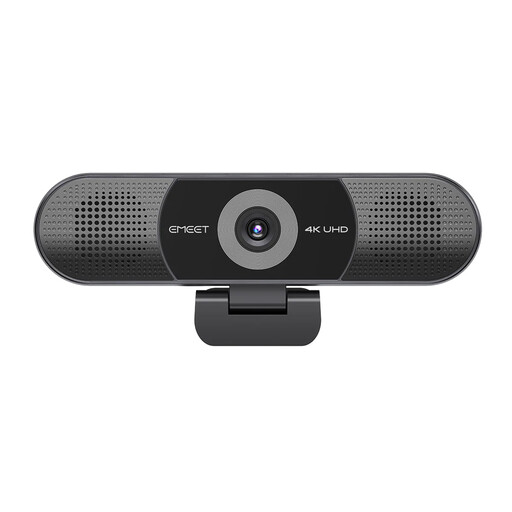
EMEET All-in-One 4K Webcam with Sony Sensor
For a meeting-heavy setup, this model combines a camera with a four-microphone array and speakers. It has fixed focus and a stated adjustable 98° field of view; check the intended placement, conferencing software and employer approval.
View on Joybuy
 No image available
ASUS ZenScreen MB166C 15.6-inch Portable Monitor
A portable additional screen may suit work across different desks. This Full HD IPS model uses USB Type-C; confirm that the work laptop supports the required video and power connection before choosing it.
View on Joybuy
 No image available
Targus USB-C Dual HDMI 4K Dock with 100W Power Delivery Pass-Thru
Consider a dock if you repeatedly connect displays and desk peripherals. Check the laptop’s USB-C video capability, supported display arrangement and charging requirements. This dock calls for an external 100 W+ power adapter; confirm what is included before buying.
View on Joybuy
Common questions
When is a home worker covered by Great Britain DSE guidance?
The Health and Safety Executive says the DSE Regulations apply to workers using display screen equipment daily for continuous periods of an hour or more. Permanent or long-term home workers and people who routinely split their working time between home and the workplace can fall within that scope.
Must my employer provide a monitor, stand or dock?
Not automatically. For a worker covered by Great Britain DSE requirements, the employer’s workstation assessment identifies the action needed; the Health and Safety Executive says the worker cannot be charged for equipment required by that assessment. Ask about the assessment and approved equipment before choosing a model.
Is a laptop stand enough for prolonged laptop work?
A stand alone does not provide separate input devices. The Health and Safety Executive advises a separate keyboard and mouse for prolonged laptop use so the screen can be elevated on a riser or similar.
What should I check before buying a USB-C dock for work?
Check the exact laptop model, its supported display connections and charging requirements, the intended monitors, the cable and the dock’s operating-system support. Apple Support and Microsoft Support explain that external-display capability depends on the device and connection configuration; also confirm that your employer permits the dock.
Does Great Britain’s DSE guidance automatically apply in Northern Ireland?
No. Legislation.gov.uk identifies the cited DSE Regulations as applying in Great Britain, while the Health and Safety Executive for Northern Ireland describes separate Northern Ireland DSE Regulations. For a Northern Ireland workplace, use the applicable guidance and your employer’s assessment process.


