Frequent laptop commuters
If equipment moves with you on most office days, a kit that is straightforward to pack and reconnect matters more than recreating a full desktop setup at each location.


Carry a compact hub and the input or meeting accessories you use in both places; consider a portable monitor if a second screen needs to travel too. If one location is a regular desk, a dock and fixed monitor can keep its connections in place instead. Before choosing either setup, check the laptop’s display, charging and port capabilities, and ask about your employer’s equipment and workstation arrangements.
If equipment moves with you on most office days, a kit that is straightforward to pack and reconnect matters more than recreating a full desktop setup at each location.
If you repeatedly work at the same desk, you may prefer to leave a display and peripherals connected there. Check the laptop’s display and charging requirements before choosing a dock.
If calls are part of both home and office days, consider which camera, microphone or headset arrangement you need in each place, alongside your employer’s device and conferencing-platform rules.
Consider when: You regularly move between locations and need a few extra ports, with a portable screen only if you need one in both places.
Trade-off: A portable screen adds another item to carry and position, and its video and power requirements must match the laptop.
Consider when: One location has a desk you use repeatedly and you want to leave a monitor and peripherals connected there.
Trade-off: A dock and fixed monitor are less practical to move; the dock cannot provide display or charging functions the laptop does not support.
| Concern | What to check | Who this matters to |
|---|---|---|
| Display and charging compatibility | Check the exact laptop’s supported video modes and display limits against the accessory’s requirements. Compare its USB-C charging requirements with the dock or monitor’s host-power specification. | If my laptop cannot drive the intended screen or accept power through the proposed connection, the setup will not work as planned. For around 33% of consumers, compatibility would be the primary concern. |
| Equipment to carry | Check dimensions and weight, whether a cable or stand comes with the item, and whether it needs separate power. | I move between home and office often enough that each extra device affects what I take with me. Carry convenience would come first for roughly 27% of consumers. |
| Repeatable desk arrangement | Check display positioning and space for a separate keyboard and pointing device. Discuss the home and office workstation arrangements with your employer where display-screen-equipment requirements apply. | At a desk I use regularly, I need a workable arrangement each day rather than just more laptop ports. Around 27% of consumers would put that desk setup first. |
| Calls and privacy | Check conferencing-platform and operating-system compatibility, the intended camera or microphone arrangement, and any employer software rules. | If meetings shape my working day, I need call equipment that fits the platforms and spaces I use. That would be the main concern for about 13% of consumers. |
USB-C describes the connector, not a guaranteed combination of video, data and power functions. As Kensington explains, those capabilities depend on the manufacturer’s implementation.
Find the exact laptop model and compare its documented port modes, display limits and charging support with the proposed accessory’s host requirements.
A portable screen can have specific host requirements. For example, Lenovo specifies DisplayPort 1.2 Alt Mode and PD 2.0 compatibility for the ThinkVision M14.
Check both the monitor’s video input and power arrangement against the laptop before deciding what must travel with it.
The Health and Safety Executive says that, where display-screen-equipment requirements apply to someone routinely working at home and in the office, the assessment should cover both situations. An accessory choice alone does not assess the whole workstation.
Ask your employer about the applicable assessment, supplied equipment and approved-device policy before choosing items intended to address a workstation concern.
Some webcam functions depend on companion software or a supported processor. Conferencing compatibility also needs to fit the organisation’s rules.
Check the operating system, conferencing platform, privacy features and employer software policy for the exact device you are considering.
Anker has compact USB-C hubs and larger desktop docks relevant to different home-and-office connection setups.
Kensington is relevant when comparing USB-C, Thunderbolt and other docking approaches for a regular desk.
The ThinkVision M14 illustrates a portable second-screen option for a kit that moves between desks.
Logitech’s compact keyboards and webcams are relevant to input and video-call arrangements across work locations.
These products cover portable laptop connections, second screens and desk-based video calls. Choose the type of accessory around what needs to travel, then check the exact laptop and workplace requirements before selecting a model.
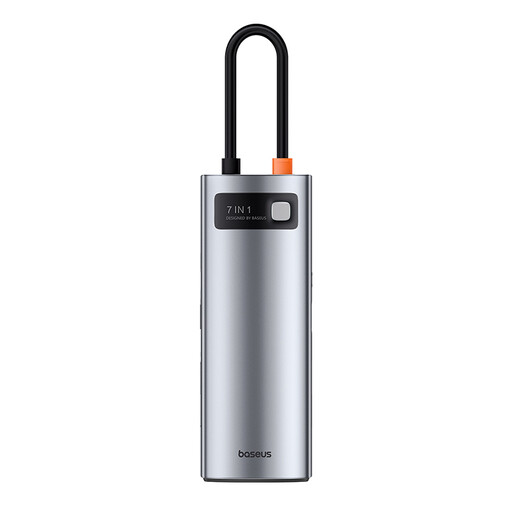 Image unavailable
A seven-port hub to consider when you need to take extra laptop connections between desks. Confirm that its connections cover your peripherals and that the laptop supports any intended display or charging function.
 Image unavailable
Consider this adapter for a desk that needs display and wired-network connections. Its stated connections include 4K HDMI, VGA, Gigabit Ethernet, dual USB 3.0 ports and 100 W Power Delivery; check the laptop’s display mode and charging requirements before relying on them.
The product information specifies single-display operation, so do not plan on using its two video outputs as a two-screen setup.
 Image unavailable
A second-screen option to consider if the display needs to move between work locations. Its product name specifies VESA compatibility and a stand adjustable through 180°.
Check the laptop’s video output, the required cable and the monitor’s power arrangement before planning a one-cable setup.
 Image unavailable
A portable second-screen option with a stated Full HD IPS panel. Confirm that the laptop provides the USB-C video and power functions needed for the intended connection.
The product information specifies no HDMI input, so check the connection you plan to use.
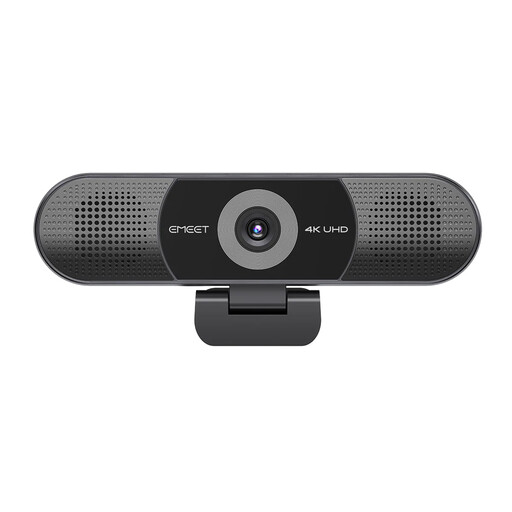 Image unavailable
Consider this for a desk where video meetings call for a separate camera and integrated audio. The product name specifies a four-microphone array, dual speakers, fixed focus and an adjustable 98° field of view.
Check conferencing-platform and operating-system compatibility, employer device rules and how the camera will fit at the intended desk.
No. A USB-C connector does not guarantee the video, data or power functions an accessory needs. Check the laptop’s documented port capabilities, supported display configuration and charging requirements against the exact dock or monitor; Lenovo, for instance, specifies DisplayPort 1.2 Alt Mode and PD 2.0 compatibility for its ThinkVision M14.
Only if the laptop accepts compatible USB-C charging and the dock’s host-power output, cable and charging arrangement meet its requirements. Compare those specifications for the exact laptop and dock rather than relying on the dock’s headline power figure.
A portable monitor is worth considering when you need the extra screen in both places and its connection and power requirements match your laptop. If you mainly need it at one regular desk, leaving a monitor there avoids carrying and positioning another screen on every move.
It may be required where display-screen-equipment rules apply. The Health and Safety Executive says the rules can apply to workers who routinely split their time between home and the workplace, and that an applicable assessment should cover both situations. Ask your employer how its assessment and equipment process applies to your work.