People checking work-laptop compatibility
If you use an employer-managed laptop, confirm its ports, external-display support and accessory rules before choosing a monitor or dock.


Start with the work laptop: confirm its video output, supported external displays, charging needs and any employer restrictions before choosing a monitor or dock. For one screen, a compatible direct connection keeps the setup simpler; a dock makes more sense when you need to reconnect several peripherals through one desk connection, provided its requirements match the laptop. Screen position and desk space matter alongside the connection.
If you use an employer-managed laptop, confirm its ports, external-display support and accessory rules before choosing a monitor or dock.
For sustained document work, calls and several open applications, balance screen space and peripheral connections with a viewing position that works at your desk.
If the same laptop moves between home and another workplace, consider how easily you can disconnect, carry and reconnect the accessories you actually use.
Decide what your laptop can connect to before settling on a screen or a one-cable desk arrangement.
Choose it when: You need one external screen and the laptop has a confirmed compatible video output.
Trade-off: A direct display cable does not, by itself, reconnect your other peripherals or charge the laptop.
Choose it when: You regularly reconnect a screen and several accessories at the same desk, and the laptop supports the chosen dock.
Trade-off: Display and charging capabilities depend on the dock, host laptop and connection protocol; the dock also adds equipment and cabling to the desk.
| Concern | What to check | Who this matters to |
|---|---|---|
| Laptop and policy compatibility | Match the exact laptop model and operating system to the required video and dock protocols. Ask IT about accessories or drivers on a managed device. | I need to know that my work laptop and employer will allow the setup before I buy it. Around 33% of consumers put compatibility and approval first. |
| Screen space and position | Check the monitor inputs, desk and stand dimensions, and available positioning adjustments. Use an employer assessment where display-screen equipment rules apply. | For long stretches of documents and multiple applications, I need a screen arrangement that fits both my work and my desk. Screen space and positioning come first for roughly 27% of consumers. |
| Desk reconnection | Count the display, USB and network connections you use; compare the dock’s host requirements and charging output with the laptop. | Moving my laptop between workplaces makes repeated cable handling a nuisance when I return to my home desk. About 20% of consumers prioritise reconnecting their peripherals together. |
| Video calls | Check the connections needed by your headset or camera and whether your employer permits the accessories and any required software. | Regular home calls mean I need my approved camera and audio devices to connect without losing the ports needed for work. Video-call readiness is the primary concern for around 20% of consumers. |
The connector’s shape alone does not establish video capability. Microsoft Support notes that external-display options depend on the device model and cable or adapter; a dock may also require a particular host protocol.
Check the laptop model’s documented display output against the monitor or dock’s host requirements before ordering.
A dock’s stated display configuration does not establish what a particular laptop can drive. Lenovo identifies host-protocol requirements for its docks, while Dell lists capabilities by dock model.
Compare the intended number of screens, resolution and refresh rate with both the laptop’s supported configuration and the exact dock model.
A technically compatible dock or camera may still need employer approval for accessories, drivers, firmware or network use. Workstation suitability is a separate question from connector compatibility.
Ask your employer or IT team about permitted equipment before buying, and raise positioning or discomfort concerns through the relevant workstation-assessment process.
A monitor still needs to fit the desk and allow a workable viewing position. The Health and Safety Executive’s home-working guidance considers the workstation as a whole rather than prescribing one monitor size.
Check desk depth, stand footprint, screen placement and room for the keyboard and mouse; let any applicable assessment guide further changes.
Dell’s dock range is relevant when comparing USB-C and Thunderbolt connections for a fixed laptop desk.
Lenovo’s ThinkPad docks are relevant if several desk connections need to be restored when a laptop is plugged in.
HP’s USB-C docks provide models to compare when choosing display outputs and USB connections for a home desk.
Microsoft’s Surface dock and display guidance is particularly relevant to a setup built around a Surface device.
Apple’s adapters and displays are relevant when the work laptop is a compatible Mac.
These choices cover a desk dock, external monitors and a video-call camera. Start with the connection and space checks that apply to the part of your setup you are changing.
 No image available
Consider this dock when you want to reconnect a home-desk display setup through your laptop. Its name specifies dual HDMI, 4K and 100W Power Delivery pass-through; check that your laptop supports the intended display configuration and confirm the power adapter needed for charging.
 No image available
Consider this external screen for a regular home desk where document and application space matters. Its name specifies an IPS panel and WQHD resolution; confirm desk fit, laptop video compatibility and charging requirements before planning a single-cable connection.
 No image available
Consider this 24-inch FHD screen if you want an external monitor for home-based document work. Check its full dimensions and stand footprint against your desk, then match the laptop’s video output to the monitor connection you intend to use.
 No image available
Consider this screen if you have room for a 31.5-inch monitor at a fixed desk. The product name also specifies built-in speakers; confirm the actual monitor and stand dimensions before buying, as the stated physical dimensions conflict with the screen size.
 No image available
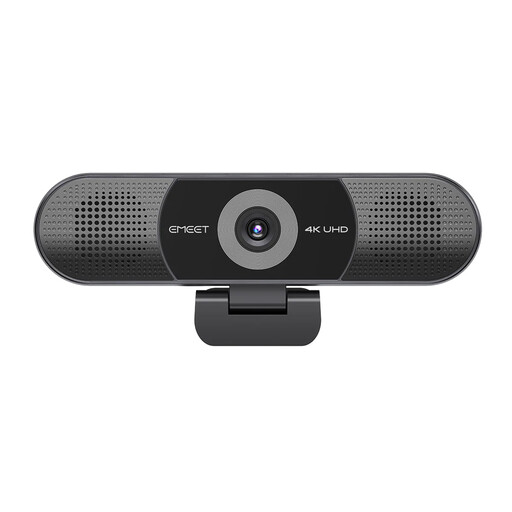
Consider this camera for regular home video calls if an external camera and audio device are permitted on your work laptop. Its name specifies fixed focus and an adjustable 98° field of view; confirm the required connection and compatibility before buying.
No dock is necessary if your laptop has a compatible video output for the monitor and you are content to connect other accessories separately. Consider a dock when you also want to reconnect several peripherals through one desk connection, after checking its host requirements.
No: a USB-C connector alone does not establish display, charging or dock compatibility. Check the laptop and dock documentation for the required protocol and operating-system support, and ask IT about accessory or driver approval if the laptop is managed.
Recheck the connections and screen position if your equipment, work pattern or comfort changes. Keep cables and the power supply in good condition, and use your employer’s process for any updates to a managed laptop or dock.