For prolonged laptop work at a home desk, start by positioning the screen separately from the keyboard and mouse: use either an external monitor or a raised laptop with separate input devices, as the Health and Safety Executive advises. Add a dock or docking monitor if reconnecting displays and peripherals through one cable matters to you, but check the laptop’s video support, intended display arrangement and charging requirements before choosing one.
Who is each setup for?
Laptop-first hybrid workers with a regular home desk
If you take your laptop elsewhere but return to the same desk, an external monitor can stay in place. A dock may make reconnection simpler when you also use several peripherals, provided its display and charging functions match your laptop.
Home workers with prolonged laptop sessions
Screen position and separate input devices deserve attention when the laptop is used at a desk for long periods. The Health and Safety Executive advises using a separate keyboard and mouse so a laptop screen can be raised, or using a separate display.
Workers who need to pack the desk away
A laptop stand with a separate keyboard and mouse can suit limited desk space or frequent moves between locations. It is easier to put away than a permanent monitor setup, but it does not add screen area or ports.
What should you check before buying?
Choose how to position the screen and input devices first; then decide whether the connections you use at the desk warrant a dock or docking monitor.
| Priority |
What to check |
Your needs |
| Screen position |
Check where the display can sit and whether its stand provides the adjustments your desk needs. For a raised laptop, allow space for a separate keyboard and mouse, in line with Health and Safety Executive guidance for prolonged laptop use. |
I work at one desk for long stretches and want to position the screen without having to use the laptop’s built-in keyboard. |
| Video and charging |
Match the laptop’s video-output capability to the monitor or dock input. For USB-C video, check the required DisplayPort Alt Mode or Thunderbolt support; compare power delivery with the laptop’s charging requirement and check charger conditions. |
If one cable is going to connect my desk equipment, I need to know that it will carry the video and power my laptop actually requires. |
| Daily reconnection |
List the displays and peripherals you reconnect. Check the dock’s documented display count, resolution and outputs, as well as the ports needed for your keyboard, mouse and other devices. |
I take my laptop away regularly and would rather leave the desk connections in place. |
| Mouse fit |
Check the stated hand-size range, handedness and shape of a separate mouse. Logitech describes its Lift mouse as suited to small-to-medium hands and offers a left-handed version; that does not establish the fit of other models. |
A mouse needs to suit my hand and preferred grip, not just carry an ergonomic label. |
What mistakes are easy to make?
-
Assuming a USB-C socket guarantees video and charging
The connector shape does not establish which functions the laptop supports. Lenovo says its USB-C and Thunderbolt docks require a laptop port supporting USB-C Alt Mode or Thunderbolt.
Check the exact laptop model’s video output, external-display support and charging specifications against the dock or monitor requirements.
An incompatible connection can leave you needing a different adapter or dock.
-
Raising the laptop but keeping its built-in inputs
Once the screen is raised, the integrated keyboard and trackpad move with it. The Health and Safety Executive’s guidance pairs a raised laptop screen with a separate keyboard and mouse.
Plan desk space and connections for those input devices when choosing a stand.
-
Reading a dock’s charging figure without its conditions
Lenovo lists up to 100W laptop power for its USB-C Dual Display Travel Dock with an additional 135W USB-C adapter. That condition matters when comparing the figure with a laptop’s charging requirement.
Check power delivered to the laptop, the required adapter and what the package includes.
A suitable higher-wattage charger may need to be obtained separately.
-
Treating an ergonomic label as a fit guarantee
A mouse’s stated hand-size range or handedness may not match the person using it. Logitech, for example, describes its Lift mouse for small-to-medium hands and offers a left-handed version.
Use those fit details to narrow the choice, then check the shape and grip against your own preferences.
Relevant brand references
Dell
Dell has monitor and desktop-dock examples worth comparing for a fixed home desk.
- Dell lists an adjustable stand and up to 90W USB-C power delivery for its P2425E monitor; its WD25 dock lists up to four displays and 96W power delivery for non-Dell systems.
- Those product ratings do not establish what a particular laptop can display or receive through its port. Check the laptop and the exact connection.
Lenovo
Lenovo’s travel docks and USB-C docking monitors provide examples of different ways to connect a laptop at a desk.
- Lenovo publishes display and charging conditions for its USB-C Dual Display Travel Dock, including the additional adapter required for up to 100W laptop power.
- Lenovo says its USB-C and Thunderbolt docks require USB-C Alt Mode or Thunderbolt support on the laptop. Check the intended display arrangement and charger as well as the connector.
Logitech
Logitech is a reference for separate input devices when a raised laptop or external display changes the desk layout.
- Logitech describes its Lift mouse for small-to-medium hands and offers a left-handed version.
- That fit guidance applies to the Lift model, not every Logitech mouse; assess handedness, size and grip for the device you choose.
Joybuy options for the home desk
These monitors and USB-C connection devices are options for a home desk. A monitor provides the separate-screen route; a dock or adapter addresses connections but does not replace the display, keyboard or mouse you may also need.
 No image available
ASUS ProArt PA278CFRV QHD IPS 100Hz monitor
A separate screen for a regular home desk. Check the exact unit’s USB-C video, data and charging capabilities, and match your laptop’s video output to an available monitor input.
View on Joybuy
 No image available
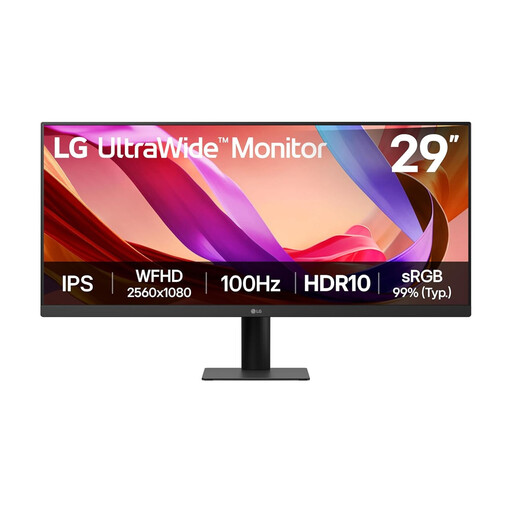
LG UltraWide 29U511A 29-inch IPS monitor
A 29-inch external screen for a desk with room for it. The named connections include HDMI and DisplayPort; check the laptop’s video output and whether the monitor’s positioning suits your desk. Its title also specifies 100Hz.
View on Joybuy
 No image available
Targus USB-C Universal Dual HDMI 4K Docking Station
A connection option for a desk using two HDMI displays. The title specifies 100W power-delivery pass-through; check your laptop’s USB-C video support and dual-display capability, and confirm the required power source and package contents.
View on Joybuy
 No image available
Acer Predator X49X 49-inch curved QD-OLED monitor
A 49-inch, 32:9 screen for a desk that can accommodate its width. The title lists HDMI, DisplayPort and USB-C; check your laptop’s video compatibility and charging needs before relying on USB-C for the desk connection.
View on Joybuy
 No image available
V7 V7UC-U3CRJ45HDVG-BLK USB-C adapter
A compact connection option for one external display and peripherals, rather than a stated dual-monitor dock. Its title lists 4K HDMI, VGA, Gigabit Ethernet, two USB 3.0 ports and 100W power delivery; check laptop video support, the power source and charger inclusion.
View on Joybuy
Common questions
Will any USB-C laptop work with a USB-C dock or docking monitor?
No. Check the laptop’s documentation for the video-output capability required by the device, such as USB-C DisplayPort Alt Mode or Thunderbolt. Lenovo says its USB-C and Thunderbolt docks require one of those supported protocols through the laptop’s USB-C port; the plug shape alone is not enough.
What should I check before buying a dual-monitor dock?
Match the laptop’s supported external-display arrangement to the dock’s stated outputs, resolution and refresh rate, then check charging conditions. Lenovo lists two 4K/60Hz displays for its USB-C Dual Display Travel Dock, while its up-to-100W laptop power figure requires an additional 135W USB-C adapter.
Can a laptop stand replace an external monitor?
A stand can be the simpler choice when you do not need more screen area and want to pack the setup away. For prolonged laptop use, the Health and Safety Executive advises a separate keyboard and mouse so the screen can be raised; a stand does not add a larger display or extra ports.


