Choose a USB-C or Thunderbolt dock if one cable needs to reconnect several fixed desk accessories. A USB-C docking monitor suits a desk centred on one external screen, while a compact hub is easier to carry if fewer connections will do. Before choosing, check your exact laptop model’s video output, external-display limit and charging requirements: the USB-C connector alone does not establish those capabilities.
Who is this setup for?
The Office for National Statistics reported that 28% of working adults in Great Britain hybrid worked between January and March 2025. That describes the working pattern, not demand for any particular desk accessory.
One-cable desk switchers
If a laptop travels to the office, leaving displays and other accessories connected at home can make the next desk setup simpler. The useful question is whether the laptop can carry the required video, data and power over the proposed connection.
Display-space-first laptop workers
For someone choosing an external screen or a multi-display desk, the laptop model’s supported display configuration matters as much as the number of sockets on a dock. Apple notes that a supported hub or daisy chain does not raise a MacBook Air’s maximum supported display count.
Video-call-ready home workers
A separate camera or audio device is worth considering when the laptop’s position makes meetings awkward. It addresses call setup rather than reconnecting displays or power; the Health and Safety Executive also advises assessing whether home display-screen work calls for additional equipment.
What matters when choosing?
Start with what you want to leave connected at home. Then compare the accessory’s stated functions with the video, charging and display limits of your exact laptop model.
USB-C or Thunderbolt dock
Choose it when: Several fixed accessories need to meet the laptop at one desk cable.
Allow for: Display modes and charging depend on both devices; some DisplayLink docks also require software setup.
USB-C docking monitor
Choose it when: One main screen can also serve as the fixed connection for power and USB devices, provided the laptop supports those functions.
Allow for: The screen and connection hub are tied to the same device, giving you less freedom to change either independently.
External monitor and compact hub
Choose it when: The hub needs to travel with the laptop and a smaller set of connections is sufficient.
Allow for: Check the selected hub’s display modes and the power left for charging after the hub’s own use.
| Concern | What to check | Who this matters to |
|---|
| Quick reconnection |
Confirm the laptop’s video and charging functions, then match the dock or monitor connection to the accessories left at the desk. |
If I move my laptop between home and office, I want my fixed desk equipment ready without reconnecting each item. Around 33% of consumers put quick reconnection first. |
| Display space |
Check the exact laptop model’s external-display count and supported resolution and refresh rate against the proposed screen and dock mode. |
When a laptop screen feels restrictive for desk work, I care most about a usable external-display arrangement. Display space comes first for around 27% of consumers. |
| Meeting setup |
Check camera placement, audio connections and any software or platform conditions for the call features you need. |
If the laptop sits poorly for calls, I want a camera and audio arrangement I can leave ready at home. Around 20% of consumers make meeting readiness their primary concern. |
| Portability |
Compare the hub’s connections, stated display mode and charging behaviour with what you need to carry. |
When I pack the laptop often, I would rather carry a compact connection accessory than build around a larger fixed dock. Portability is the first concern for around 20% of consumers. |
Connection mistakes to avoid
-
Judging a USB-C port by its shape
USB Implementers Forum material distinguishes the connector from capabilities such as video Alternate Modes and USB Power Delivery. A physically compatible plug does not establish that video or charging will work.
Look up the exact laptop model’s port functions, charging input and external-display support before selecting a hub, dock or monitor.
-
Counting dock outputs as supported screens
A dock’s video sockets do not override the computer’s native display limit. Apple specifically notes that a supported hub or daisy chain does not increase a MacBook Air’s maximum supported display count.
Match the intended screen count, resolution and refresh rate to both the laptop model and the dock’s operating mode.
-
Equating pass-through power with laptop charging power
StarTech.com states that its DK30C2DAGPD uses 15W of its stated 100W power pass-through for the dock, leaving the remainder available for laptop charging.
Compare the power available to the laptop with its charging requirement, rather than relying on the pass-through figure alone.
If the remaining power is insufficient, using that hub for charging may require a different compatible USB-C charger.
-
Overlooking DisplayLink setup
DisplayLink-based display functions can require a driver. DisplayLink Support says that macOS users must grant Screen Recording permission for DisplayLink Manager to function properly.
If you are considering a DisplayLink dock, check operating-system support and whether you can complete the required software and permission setup for work.
Relevant brands to consider
These product lines illustrate different desk connections and peripherals; the stated features belong to particular models, not every product from a brand.
Dell
Dell offers USB-C hub monitors for a fixed desk built around the screen.
- Dell lists a 23.8-inch FHD panel, up to 90W power delivery and RJ45 Ethernet for the Pro 24 Plus USB-C Hub Monitor P2425HE.
- Check the laptop’s USB-C video and charging support against this model; those specifications do not apply to every Dell monitor.
Lenovo
Lenovo’s ThinkVision docking-monitor line is relevant when the monitor itself will be the desk connection.
- Lenovo describes the ThinkVision T27QD-4v as carrying power, data and display over one cable, with up to 100W stated; it also lists a 5MP camera and speakers.
- Confirm the laptop’s compatible connection and power requirement. An integrated monitor is less modular than a separate screen and dock.
Targus
Targus USB-C docks are relevant to desks with fixed peripherals and a laptop that travels.
- Targus markets power-delivery docks with dual-monitor options.
- The display result and charging capability need checking for the individual dock, laptop display protocol, operating system and power requirement.
StarTech.com
StarTech.com offers both compact USB-C adapters and larger docks, including DisplayLink-based options.
- StarTech.com states that its DK30C2DAGPD supports dual 4K 30Hz or single 4K 60Hz output and 100W power pass-through, with 15W used by the dock.
- Check the selected display and USB data mode. StarTech.com says driver installation is required on Windows and macOS for the DisplayLink dual-display function of its DK30CHHPDUK dock.
Logitech
Logitech is relevant when a separate home webcam matters more than expanding display connections.
- Logitech lists 1080p video, dual noise-reducing microphones and a privacy shutter for the Brio 505.
- Logitech says certain auto-framing features need Logi Tune and are unavailable on ChromeOS or unsupported ARM computers; check the feature and platform you intend to use.
Joybuy products for the home desk
These choices address video calls and separate typing and pointing devices at a home desk. Neither product connects the laptop’s displays and power as a dock or docking monitor would.
 No image available
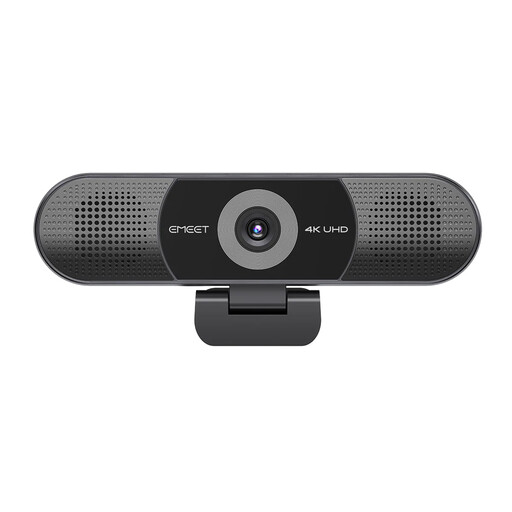
EMEET All-in-One 4K Webcam with Sony Sensor
Consider this separate camera and audio device if the laptop’s position makes a repeatable home call setup difficult; it does not connect displays or other desk accessories.
The product title specifies a four-microphone array, dual speakers, fixed focus and an adjustable 98° field of view. Check the connection and any conferencing-platform requirements against your setup.
Joybuy
 No image available
Philips SPT6318B/05 3000 Series Wireless Keyboard and Mouse, UK English, Black
This keyboard-and-mouse set suits a home desk that needs separate input devices, but it does not itself reconnect displays, charging or other accessories.
The product title identifies the UK English version and wireless design. Check how the set connects to your laptop or desk equipment before choosing it.
Joybuy
Frequently asked questions
Does a USB-C port mean my laptop supports video and charging through a dock?
No. USB Implementers Forum material distinguishes the USB-C connector from capabilities such as video Alternate Modes and USB Power Delivery. Check the exact laptop model’s port specifications, charging input and display limits before choosing a dock or monitor.
Will a dual-monitor dock always give me two external screens?
No. The laptop’s model-specific display limit and the dock’s operating mode both matter. Apple notes that a supported hub or daisy chain does not increase a MacBook Air’s maximum supported display count; a DisplayLink route may also require drivers and, on macOS, Screen Recording permission for DisplayLink Manager.
How much charging power reaches a laptop through a USB-C hub?
Use the selected hub’s stated power budget rather than its headline pass-through figure. StarTech.com says its DK30C2DAGPD uses 15W of its stated 100W pass-through for the dock, leaving the rest available for charging; compare that remainder with your laptop’s requirement.
When does a docking monitor make more sense than a separate dock?
A docking monitor is a practical choice when one main external screen and a fixed one-cable desk connection meet your needs, provided your laptop supports the monitor’s video and charging functions. A separate dock gives you more flexibility to choose or change the screen and connection hardware independently.


