
24/7 Customer Support

Free returns

Same-day & Next-day Delivery

Quality Guaranteed

Unlock Your Welcome Offers: FREE Delivery | Up to 80% OFF | Free 30-day JoyPlus trial
Download the APP
Buying a Hy-Pro rugby training ball can seem straightforward, but the wrong design may quickly become frustrating in a garden, park or outdoor training session. A ball that is too small, lacks grip or rebounds unpredictably in the wrong way may not suit the player using it.
Parents, players and coaches should watch for three common buying pitfalls:
The right choice depends on the player’s age, the type of practice required and the surfaces available for training.
Size affects handling, reach and the feel of passing drills. The products in this guide are available as:
A size 4 rugby ball can be easier for younger players to control during catching, passing and coordination exercises. A size 5 rugby ball provides a training feel closer to senior rugby, making it suitable for older players and those preparing for full-size play.
Always consider the player’s club guidance and playing requirements rather than relying on age alone.
For partner work or general handling, look for a rugby ball with grip and a construction that can cope with repeated outdoor use. The Hy-Pro Rugby Ball Intercept Orange Size 5 has a dual grain grip texture, a synthetic rubber outer shell and hand-stitched panels.
For independent practice, a rugby reaction training ball with a rebound feature can add movement to drills. The Hy-Pro Solo Rebound models include an internal weighting mechanism designed to create an unpredictable rebound. This can be used for solo passing, catching, hand-eye coordination and reaction practice.
A rebound ball is not a substitute for every training activity. Its irregular movement is useful for reaction work, but a conventional ball may be more suitable for structured passing sequences.
A durable rugby ball should have an outer layer suited to repeated contact with grass and other appropriate outdoor surfaces. Synthetic outer materials are practical for regular garden or park sessions, while stitched construction can support shape retention during repeated use.
Before buying, also check how the ball should be maintained:
No assembly is required for the products below, so they can be prepared for use once correctly inflated.
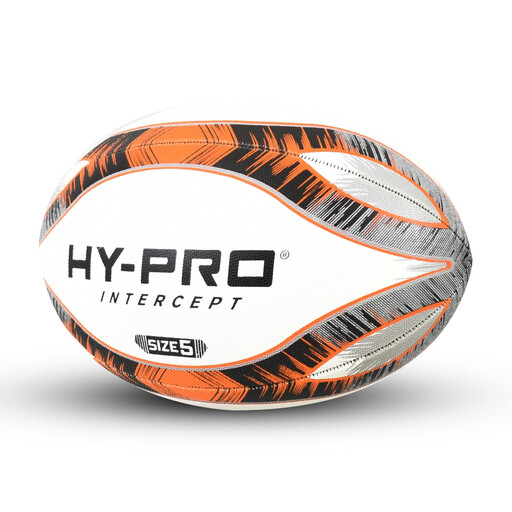
Why This Fits Their Persona: A practical size 5 option for players who want one rugby skills training ball for passing, catching and general outdoor practice in a garden, park or pitch.
Its stated dual grain grip and synthetic rubber shell address the risk of choosing a ball based only on appearance.
Size 5 format; dual grain grip texture; latex bladder and hand-stitched panel construction.
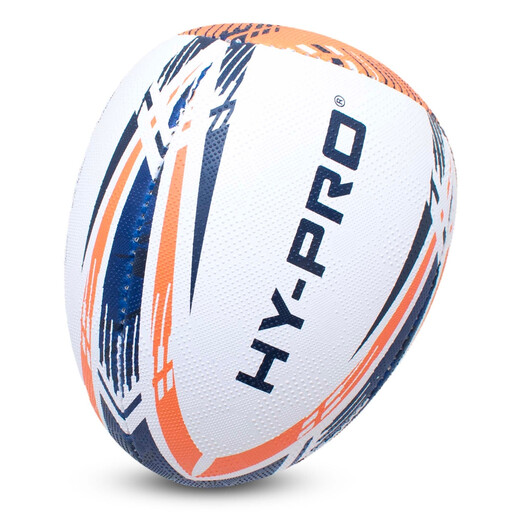
Why This Fits Their Persona: Suitable for older players seeking a more feature-focused size 5 training aid for independent handling and reaction sessions.
The weighted rebound design is clearly intended for solo practice, rather than being presented as a universal replacement for a standard training ball.
Size 5 format; internal weighting mechanism; designed for independent passing, catching and reaction drills.
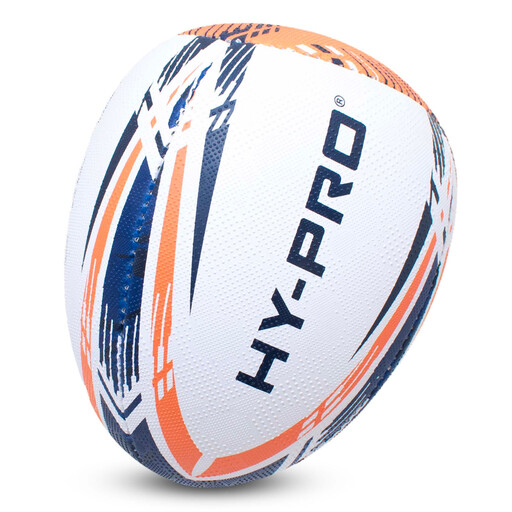
Why This Fits Their Persona: A junior rugby training ball for players aged 9–12 who need regular solo practice in the garden, park or on an outdoor training area.
The size and purpose are clearly stated, helping parents avoid buying a full-size weighted ball for a younger player.
Size 4 junior format; high-visibility blue and orange design; rebound feature for catching and coordination drills.
We have compiled a complete, real-time list of products that fully satisfy these strict selection criteria and UK safety regulations.
A rugby ball can travel quickly, particularly during kicking, passing or rebound exercises. Use an open area away from roads, windows, parked vehicles and other people. Young players should be supervised, especially when using a weighted rugby reaction training ball with an irregular rebound.
Check the ball before use and stop training if you notice surface cracks, cuts, loose stitching or seam separation. For weighted models, do not use the ball if the internal weighting appears loose. Keep the ball correctly inflated and avoid unsuitable abrasive surfaces that may accelerate wear.
The Hy-Pro size 4 Solo Rebound model is described for junior players aged 9–12. A size 5 rugby ball is a full-size option for senior players and advanced skills development. Club requirements, player size and the intended training activity should also be considered.
Yes. The weighted design creates an unpredictable rebound, allowing a player to practise catching, passing, reactions and hand-eye coordination independently. Use it only in a clear outdoor area and supervise younger players.
Lifespan depends on inflation, frequency of use, storage and the surface where it is used. Regularly wiping the ball, storing it away from direct sunlight and checking for damage can help maintain its condition. No fixed service life can be guaranteed, so inspect it before every session.