Small households planning occasional treats
A four-cone pack gives you a defined number of portions to plan around. Compare the number of cones and the volume of each one rather than treating every four-pack as the same size.


For an at-home afternoon snack, choose a four- or six-cone pack according to the portions you expect to use while keeping the cones frozen; check the exact pack’s allergens and per-cone nutrition too. Do not assume a frozen cone will work in a school lunchbox. The Department for Education’s school-food guidance covers food provided in state-funded schools in England, while Southampton City Council says there are no set national standards for lunches brought from home; the school’s own policy and the product’s storage instructions still matter.
A four-cone pack gives you a defined number of portions to plan around. Compare the number of cones and the volume of each one rather than treating every four-pack as the same size.
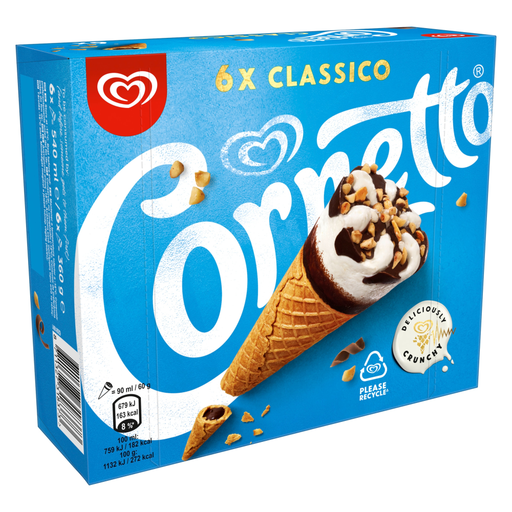
Six individual cones may fit several people or several planned snack occasions. Cornetto Classico contains six 90 ml cones; check its allergy advice for everyone who will eat them and keep the pack frozen.
Check the school’s lunchbox policy and whether the cone can stay frozen until it is eaten. Rules for food provided by schools in England do not automatically describe a lunch packed at home.
Start with how many cones you will use and where you will serve them, then compare the exact packs’ labels.
| Priority | What to check | Your needs |
|---|---|---|
| Portions | Check cone count, volume per cone and total pack volume. For example, the Sainsbury’s and ASDA four-packs contain 4 × 110 ml, while Cornetto Classico contains 6 × 90 ml. | Four planned snacks may be enough for my household; if more people will share, I may use six smaller cones. |
| Allergens | Read the ingredients and precautionary allergy statement on the exact flavour. The examined packs differ in their declared ingredients and nut or peanut warnings. | I need to check the pack against each eater’s allergy requirements, not rely on a familiar brand or similar-looking cone. |
| Nutrition | Compare figures on the same stated basis: per cone, per serving or per 100 g. ASDA Groceries lists 10 g sugars and 7.2 g saturates per Cornetto Classico cone; its Toffee cone lists 17 g sugars and 6.8 g saturates per cone. The cones differ in size and recipe. | For the portion I would serve, I want to read that product’s nutrition panel rather than judge it by the size of the box. |
| Frozen storage | Follow the pack’s storage and refreezing instructions. Joybuy states that Cornetto Classico should be stored at −18°C or below and not refrozen once thawed. | If the cone has to travel, can I maintain its required storage conditions until it is eaten? |
| School setting | Distinguish a home-packed lunch from food provided in an England state-funded school. Check the school’s policy as well as the cone’s storage instructions. | Before packing a cone, I need to know whether the school permits it and whether it can remain frozen until lunchtime. |
Four 110 ml cones and six 90 ml cones offer different numbers and sizes of individual portions. Cone count alone does not tell you which pack fits your plans.
Check both the number of cones and the volume per cone before choosing.
The examined Cornetto, Sainsbury’s and ASDA products have different declared ingredients and precautionary warnings. A change of flavour can matter to someone avoiding an allergen.
Read the ingredients and any may-contain statement on the exact pack.
Joybuy’s Cornetto Classico instructions require storage at −18°C or below and say not to refreeze the cones once thawed. General advice from safefood on keeping packed lunches cold does not establish that a cone will remain frozen until lunchtime.
Plan to serve cones from a freezer unless you can maintain the product’s stated storage conditions and the school permits the item.
According to the Department of Health and Social Care, England’s less-healthy-food rules address qualifying retail promotions and placement. The Department for Education’s school-food guidance addresses food provided in state-funded schools in England. Neither scope, by itself, decides what a parent may put in a home-packed lunch.
Check the rule relevant to the setting, then check the individual school’s policy. Do not classify a particular cone as HFSS from its name alone.
The Classico six-pack is a reference point when you want six individually portioned cones for serving at home.
Its Chocolate & Nut Cones offer four 110 ml portions to compare with other pack sizes.
ASDA Toffee is another four-cone format, with 110 ml per cone.
Check the product format rather than assuming that a preferred frozen-treat brand offers the cone multipack you need.
Its cone category provides examples of different pack sizes and recipes to check individually.
These four- and six-cone packs offer individually portioned options for planned at-home snacks. Check each flavour’s label and keep the cones under its stated frozen-storage conditions; the list does not establish lunchbox suitability.
 No image available
Six individual cones suit a plan for several at-home servings. ASDA Groceries lists 163 kcal, 10 g sugars and 7.2 g saturates per cone; the product contains milk, wheat and hazelnuts. Joybuy instructs storage at −18°C or below and says not to refreeze once thawed.
 No image available
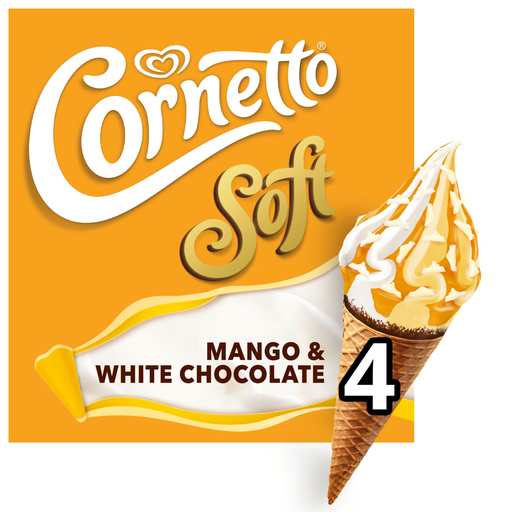
Four 140 ml cones give a different portion size from the six-cone Classico pack. Check the exact pack’s allergy advice and frozen-storage instructions before choosing it for a particular eater or occasion.
 No image available
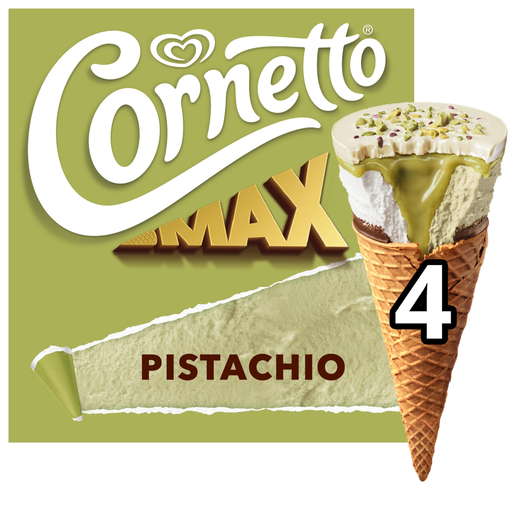
This four-pack has 90 ml cones, so compare both serving size and cone count with other packs. For anyone avoiding nuts or other allergens, read the exact product’s ingredients and precautionary statements; plan for frozen storage.
 No image available
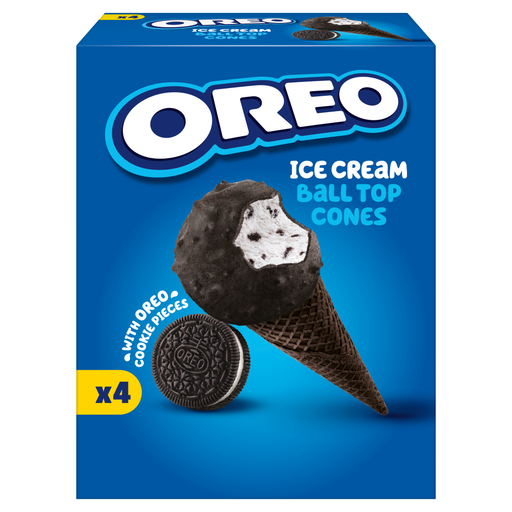
Four 100 ml cones provide another defined portion size for at-home serving. Check the pack’s allergy declaration and maintain its required frozen storage rather than assuming it will keep in a lunchbox.
 No image available
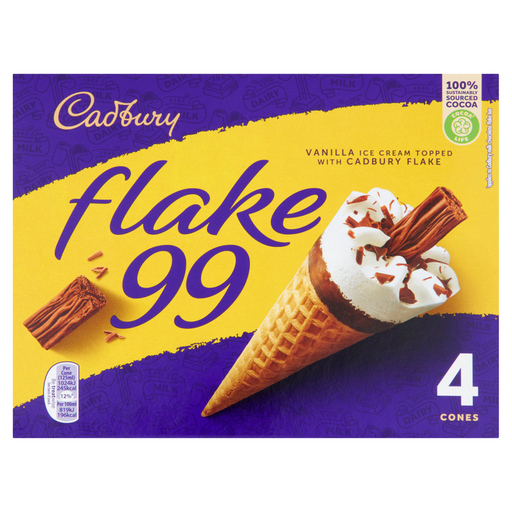
Four 125 ml cones suit a plan for four individual servings. Read the exact pack’s nutrition and allergy panels for your comparison, and follow its frozen-storage instructions.
The Department for Education’s school-food guidance applies to food and drink provided in state-funded schools in England, not automatically to a lunch packed by a parent. Southampton City Council says there are no set national standards for home-packed lunches. Check the individual school’s policy and the cone’s storage instructions.
No. The Department of Health and Social Care describes England’s rules as restrictions on qualifying promotions and placement, rather than a prohibition on consumer purchases. Its nutrient profiling model classifies products through a calculation; do not assume a particular cone’s classification from its name alone.
Do not assume it will meet the cone’s frozen-storage instructions. Joybuy says Cornetto Classico must be stored at −18°C or below and not refrozen once thawed. Safefood’s advice to keep perishable packed-lunch food cold does not establish that an ice cream cone will remain frozen until lunchtime.
Read the exact pack’s ingredients and precautionary statements. ASDA Groceries lists milk, wheat and hazelnuts for Cornetto Classico; Sainsbury’s warns that its Chocolate & Nut Cones are unsuitable for customers with a peanut or other-nut allergy because of manufacturing methods; ASDA Toffee declares milk, wheat and soya and warns that it may contain nuts and peanuts.
The Department for Education says updated standards are planned for September 2027, subject to Parliamentary approval. For a current school-food decision, check the rules that apply at the time and the individual school’s policy; standards for school-provided food should not be treated as a blanket rule for home-packed lunches.