Cyclists planning food for a ride
If you need food and drink you can carry and use while cycling, consider portability and how each item fits your carbohydrate and fluid plan. A frozen dessert needs a different storage arrangement.


For food to carry on a ride, choose portable food and drink that fit your carbohydrate and fluid plan rather than a frozen ice-cream cone or stick. If you have freezer access and want a dessert, choose between a cone and a stick by portion, ingredients and the exact pack’s allergen information.
If you need food and drink you can carry and use while cycling, consider portability and how each item fits your carbohydrate and fluid plan. A frozen dessert needs a different storage arrangement.
If you can eat the ice cream straight from freezer storage, compare individual cones and sticks by portion, ingredients and the format you prefer.
Check the exact flavour and pack rather than assuming that all cones or all sticks have the same ingredients or allergen information.
Decide whether you need food to carry while cycling or a frozen dessert to eat when you have freezer access; the checks differ.
| Priority | What to check | Your needs |
|---|---|---|
| Ride fuelling | Check carbohydrate per serving and count all food and drink in your ride plan. The International Society of Sports Nutrition position stand describes 30–60 g of carbohydrate per hour during exercise; that figure is not a reason to use ice cream as ride food. | I need food or drink I can carry and consume during the ride, rather than a dessert that must stay frozen. |
| Frozen storage | Check the product’s storage instructions and whether a freezer is available until you eat it. Food Standards Agency guidance says a freezer should be around −18°C. | If I am buying ice cream for after a ride, I need to get it into freezer storage and eat it at a time when that is practical. |
| Ingredients and allergens | Read the exact pack’s ingredients, declared allergens and precautionary statements. Feast Classic lists wheat, milk and soybeans in the Unilever Food Solutions UK product information. | I want to know whether this particular flavour and pack meet my dietary requirements; the word “stick” or “cone” cannot tell me that. |
| Dessert format | Compare the stated portion and construction. Tesco describes Cornetto Classico as ice cream in a wafer cone with chocolate-flavour coating and hazelnut pieces; Unilever Food Solutions UK describes Feast Classic as a coated stick with biscuit pieces. | Once I am back near a freezer, would I rather have a wafer cone or a coated stick? |
A cone or stick needs frozen storage, whereas food for a ride needs to fit a portable food-and-drink plan.
Plan what you will carry for the ride separately. Save ice cream for a time when you can take it from a freezer and eat it.
Ingredients differ by product: Unilever Food Solutions UK lists wheat, milk and soybeans for Feast Classic, while Tesco describes hazelnut pieces in Cornetto Classico.
Read the ingredients and allergen information on the exact flavour and pack before buying.
Ice cream needs freezer storage. Food Standards Agency guidance says a freezer should be around −18°C, which an ordinary jersey pocket or saddlebag cannot provide.
Take a multipack home for freezer storage rather than treating it as food to carry on the bike.
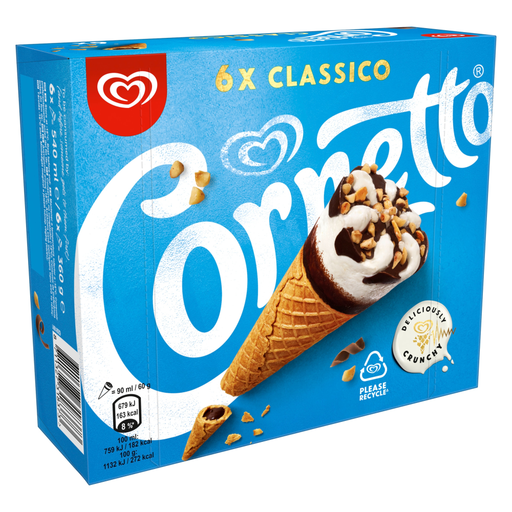
Tesco describes Cornetto Classico as vanilla-flavour ice cream in a wafer cone with chocolate-flavour coating and hazelnut pieces.
Magnum Classic is an individual ice-cream stick. Magnum Ice Cream UK lists 23 g carbohydrate and 14 g fat per 100 ml portion.
Unilever Food Solutions UK describes Feast Classic as chocolate-flavour ice cream with a chocolate-flavour centre, crisp coating and biscuit pieces.
These individual cones and sticks are options for a frozen dessert when you have freezer access, not food to carry as part of a ride-fuelling plan.
 No image available
A portioned cone for a dessert when you can eat it from freezer storage, rather than carry it on a ride. Tesco describes Cornetto Classico as vanilla-flavour ice cream in a wafer cone with chocolate-flavour coating and hazelnut pieces; check the pack for allergen information.
 No image available
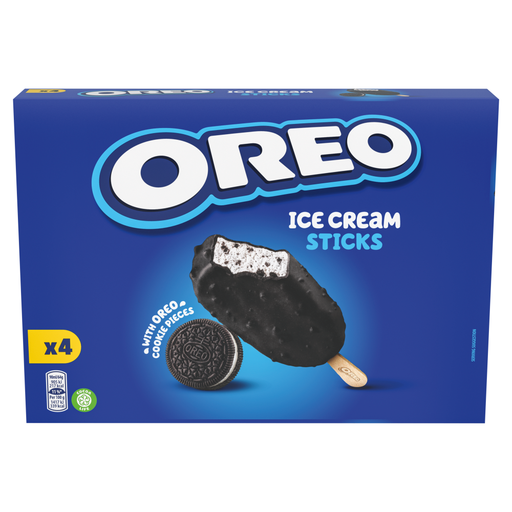
An individual stick format to consider as a frozen dessert when freezer access is available. Check the exact pack’s ingredients, allergen information and storage instructions; do not rely on a frozen stick as food to carry during a ride.
A frozen cone is not a practical substitute for food and drink you can carry during a ride. Plan portable options around your intended intake; Food Standards Agency guidance says a freezer should be around −18°C, so consider a cone for an occasion with freezer access instead.
A stick removes the wafer cone but not the need for frozen storage. Choose between the formats for a dessert you can eat after taking it from a freezer, rather than treating either as ordinary on-bike food.
Check the exact pack’s portion, ingredients, allergen information and storage instructions. For example, Unilever Food Solutions UK lists wheat, milk and soybeans for Feast Classic; another flavour or product may differ.