Home bakers serving cake and a frozen dessert
For a birthday cake or dessert table, separate frozen portions let guests have a lolly alongside the finished cake. Check the portion size and plan when each one will come out of the freezer.


Serve individual ice lollies with a finished cake, or add them immediately before serving, rather than treating these frozen desserts as ingredients for baking. Choose the portion size and flavour to suit the cake, then check the exact pack for allergens and a physical stick if the decoration depends on one: Calippo Mini is a squeeze-from-the-tube format.
For a birthday cake or dessert table, separate frozen portions let guests have a lolly alongside the finished cake. Check the portion size and plan when each one will come out of the freezer.
A separate frozen portion is not necessarily a stick lolly. Sainsbury’s describes Calippo Mini as an ice pop squeezed from its tube; check the packaging of any alternative before making its stick part of the cake design.
Check the exact cake and lolly packs together. The Sainsbury’s listings for Wall’s Mini Milk and Rocket Ice Lollies illustrate why: Mini Milk contains milk and carries precautionary allergen information, while Rocket Ice Lollies carry a milk-allergy warning linked to manufacturing methods.
Start with the serving format if the cake needs a visible stick; otherwise, choose a portion and flavour that work alongside the cake, then check the pack and freezer instructions.
| Priority | What to check | Your needs |
|---|---|---|
| Physical format | Check the pack for a physical stick if the design requires one. Sainsbury’s describes Calippo Mini as squeezed from a tube; do not assume a lolly-shaped product has a stick. | If sticks will be visible around my cake, I need to confirm that the exact product has them before planning the layout. |
| Portion and flavour | Compare individual portions, not just pack totals. Sainsbury’s lists 35 ml Mini Milk portions, 50 ml Twister Mini portions and 80 ml Calippo Mini tubes; these are different formats and flavour combinations. | I might want a small milk lolly alongside a slice, or a fruit-led frozen portion that stands on its own. |
| Ingredients and allergens | Read the ingredients and allergy advice on the exact variant. Sainsbury’s lists milk in Mini Milk and Twister Mini, and warns that its Rocket Ice Lollies are unsuitable for customers with a milk allergy because of manufacturing methods. | Where I am serving guests with allergies, the fruit flavour or appearance alone cannot tell me whether a lolly is suitable. |
| Frozen serving | Follow the product’s storage label. The Food Standards Agency advises a freezer temperature of around -18°C; reviewed Sainsbury’s packs also say not to refreeze after defrosting. | I need to finish the cake and arrange the table while the lollies stay frozen, then bring out only the portions being served. |
Sainsbury’s says Calippo Mini is squeezed from its tube, so it will not provide the visible stick needed for a stick-based cake design.
Check the physical format on the exact pack before deciding where lollies will sit in the decoration.
Sainsbury’s says its Rocket Ice Lollies are unsuitable for customers with a milk allergy because of manufacturing methods.
Read both the ingredients and allergy advice for the exact pack rather than relying on its flavour or colour.
Reviewed Sainsbury’s packs say to keep the products frozen and not to refreeze them after defrosting. The Food Standards Agency advises keeping a freezer at around -18°C.
Finish and cool the cake first. Leave the lollies frozen until you are ready to serve them, following each pack’s instructions.
The Sainsbury’s and Joybuy descriptions of similarly named Twister Mini Pineapple products differ in their ingredient and allergy information.
Use the ingredient list and allergen panel for the precise product you intend to serve.
These examples show how formats and pack information differ; check the exact variant rather than applying one listing’s details to a whole brand.
Sainsbury’s lists a pack of ten 35 ml milk-ice lollies in vanilla, strawberry and chocolate flavours.
The Twister Mini Pineapple product listed by Sainsbury’s is a six-pack of 50 ml mixed ice-cream and fruit-ice lollies.
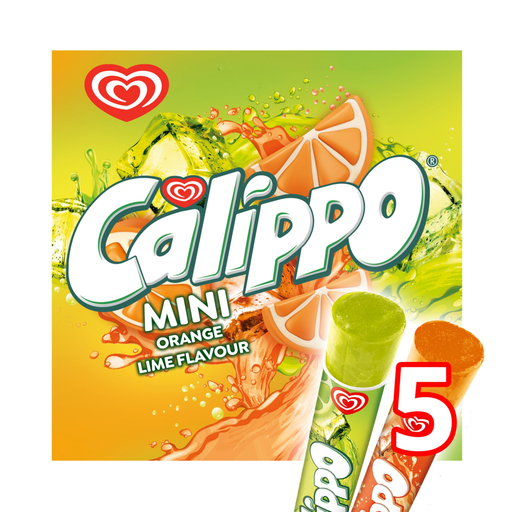
Sainsbury’s lists Calippo Mini Orange and Lemon-Lime as five 80 ml fruit-ice portions served from tubes.
Its reviewed own-brand products include 8 × 35 ml assorted milk lollies and a separate Rocket Ice Lollies fruit-ice pack.
These individually portioned frozen desserts offer fruit-led, milk-lolly and tube formats to consider alongside a finished cake. Check the exact pack before using any product in a design that needs a visible stick.
 No image available
The product name identifies a stick format for a cake display. The pack contains four 70 ml mango-and-passion-fruit portions; allergy advice says it may contain nuts, eggs, milk and soya, so check the exact pack before serving.
 No image available
Five individual pistachio-flavoured milk lollies can be served separately with cake. They contain milk, soya and pistachios and may contain other tree nuts and peanuts; check the exact pack and confirm a physical stick if your decoration needs one.
 No image available
Five individual citrus portions can accompany cake when a stick is not part of the design. Sainsbury’s describes this Calippo Mini format as an ice pop squeezed from its tube, not a visible stick lolly.
 No image available
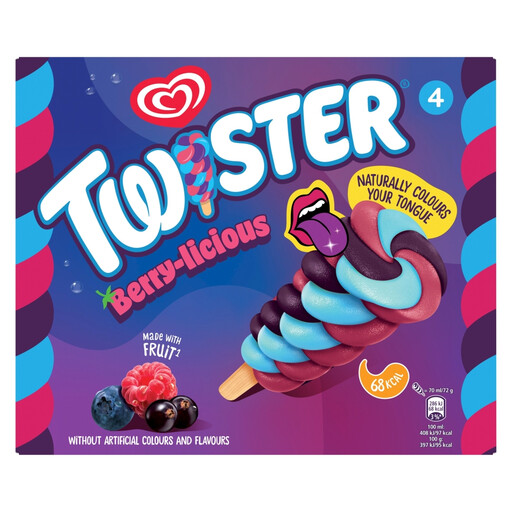
Four 70 ml fruit-led portions offer a separate frozen serving with cake. The product information identifies sulphur dioxide and sulphites; check the exact pack for guests’ allergies and for a physical stick if one is required.
 No image available
Five mango-flavoured milk lollies provide separate portions to serve with a finished cake. They contain milk; check the exact pack for the individual portion size, allergy advice and a physical stick if your cake design depends on one.
Treat these products as frozen desserts to serve with a fully baked, cooled cake, not as bake-in ingredients. Keep them frozen until you are ready to add or serve them, following the product’s storage instructions.
Avoid Calippo Mini tubes for a stick-dependent design: Sainsbury’s says to squeeze the ice pop from its tube. Check the exact packaging of any alternative for a physical stick before buying.
Keep them frozen while preparing the cake and take out the portions you are about to serve. The Food Standards Agency advises a freezer temperature of around -18°C; follow each pack’s storage directions, including any instruction not to refreeze after defrosting.