What should you compare?
Choose the texture you want, then compare the nutrition figures on a consistent basis. The NHS advises checking information per 100g or 100ml and, where given, per portion.
Fruit or water-based ice lollies
Consider when: you want to start with a fruit-ice option while reducing fat.
Bear in mind: fruit wording says nothing definite about fat, sugars or energy; compare the exact pack.
Creamy or ice-cream lollies
Consider when: a creamy texture matters and the labelled serving fits your own fat goal.
Bear in mind: the NHS identifies ice cream as a food that can be high in saturated fat, so check saturates as well as total fat.
Luxury ice cream
Consider when: you want a tub dessert rather than an individual ice lolly and can compare the amount you will serve.
Bear in mind: Tesco lists luxury ice-cream tubs separately from ice lollies; a tub serving and a whole lolly need not be comparable portions.
| Priority | What to check | Your needs |
|---|
| Fat and saturates |
Compare total fat and saturated fat per 100g or 100ml, then for the whole lolly or intended serving. Use traffic-light labelling, where present, as a quick starting point before reading the figures. |
I want to compare fruit ice and creamy treats on the same basis, not by their names. In a Food Standards Agency and Ipsos Northern Ireland survey of 611 people interviewed from 16 September to 23 November 2024, 49% said they actively used traffic-light labelling when shopping for food; that figure describes label use, not a preference for low-fat lollies. |
| Sugars and energy |
Read sugars and energy separately from fat, both per 100g or 100ml and for the serving you intend to eat. A calorie figure does not establish the fat content. |
A lower-calorie claim alone would not settle my low-fat choice, and I also want to know how much sugar is in the serving. |
| Serving size |
Check whether the stated portion is one mini lolly, one standard lolly or a measured amount from a tub. Use the amount you expect to eat when comparing portion figures. |
If I am likely to have two mini lollies or a larger scoop, the label’s single-portion figures will not describe everything I eat. |
| Prescribed allowance |
Check the exact product’s fat figure for the amount you will eat against your individual clinical plan. Seek advice from your clinician or dietitian if you are unsure. |
A prescribed fat restriction calls for a product-by-product decision, not a supermarket category filter. Oxford University Hospitals NHS Foundation Trust’s 20g-per-day guidance is specifically for people given that limit by a healthcare professional. |
Which brands and ranges might you encounter?
These are references for comparing formats, not endorsements or a list of products established as low in fat.
Wall’s
Tesco lists Wall’s products in fruit-ice and ice-cream-lolly formats, including Calippo Mini and Twister.
- The different formats give you a reason to compare texture and nutrition within a familiar range.
- Tesco’s Calippo Mini listing states no more than 77 kcal per portion, but an energy statement does not establish low fat. Check the exact flavour’s nutrition and allergen information.
Tesco
Tesco Groceries separates ice lollies, sorbet ice lollies, calorie-filtered products and luxury ice-cream tubs in its catalogue.
- Those categories can help you locate different frozen-dessert formats.
- A category or calorie filter does not replace the nutrition panel for the product and portion you intend to buy.
Solero
Tesco Groceries lists Solero Exotic Ice Cream Lollies in its ice-lolly category.
- This is a fruit-flavoured ice-cream-lolly format to compare with fruit ice.
- Check the exact product’s fat, saturated fat, sugars, serving size and allergens before deciding whether it suits you.
Fruit-ice options on Joybuy
These Joybuy listings cover fruit-ice lollies and bars. Compare their current pack labels before deciding how any one serving fits a low-fat eating goal; they are not a comparison of creamy lollies or luxury ice-cream tubs.
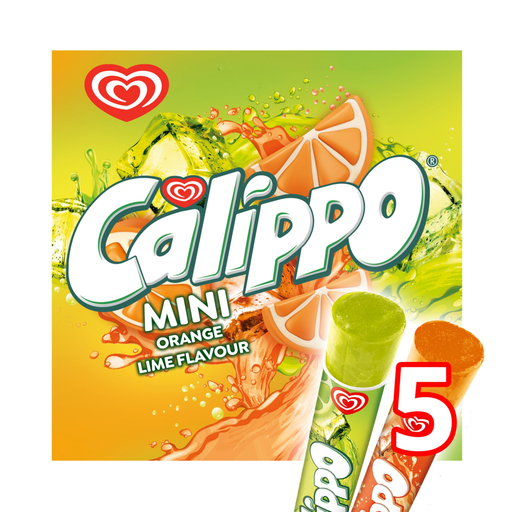 Image unavailable
Wall’s Calippo Mini Orange & Lemon-Lime, 5 × 80 ml
The mini-lolly format makes a whole lolly a useful serving to check when comparing fruit-ice options. The pack contains Orange and Lemon-Lime flavours; compare each flavour’s current fat and saturated-fat figures, including the value for a whole Lemon-Lime lolly.
View on Joybuy
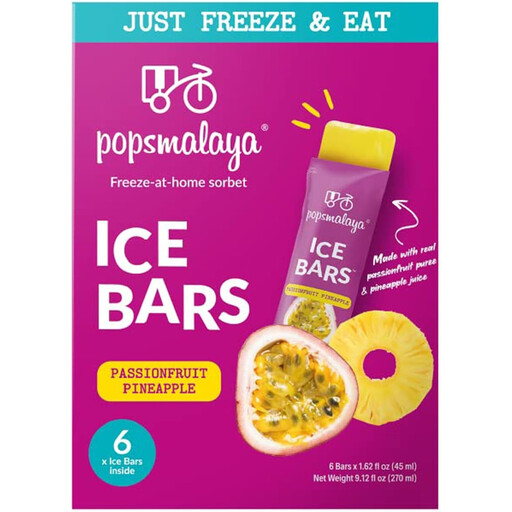 Image unavailable
PopsMalaya Passion Fruit & Pineapple Ice Bars, 6 × 45 ml
Individual 45 ml bars provide a defined serving for a fruit-ice comparison. Check the current pack’s fat, saturated fat, sugars and energy per 100g or 100ml as well as per bar before comparing them with a different-sized lolly.
View on Joybuy
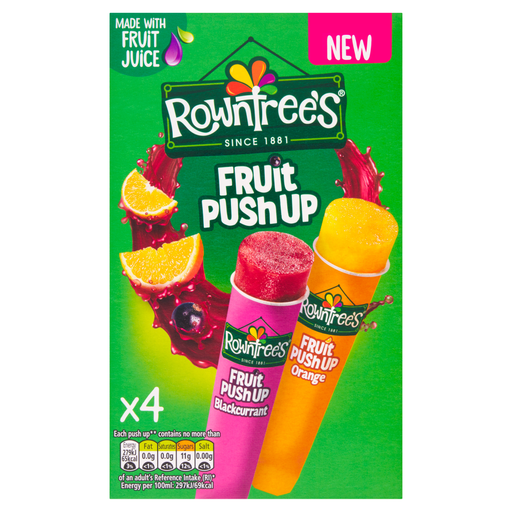 Image unavailable
Rowntrees Fruit Pastille Blackcurrant & Orange Push Ups, 4 × 90 ml
Each 90 ml push-up is a defined serving for checking fat and saturated fat per lolly. The product information gives conflicting energy figures of 61 kcal and 65 kcal; check the current pack before comparing calories. It also warns that the tube may pose a choking hazard for very young children and advises adult supervision.
View on Joybuy
Common questions
What should I check first on an ice-lolly pack if I am reducing fat?
Start with total fat and saturated fat per 100g or 100ml and for the whole lolly, then read sugars and energy separately. The NHS explains that pre-packed food labels provide nutrition information per 100g or 100ml and sometimes per portion.
Does a lower-calorie ice lolly necessarily contain less fat?
No. Calories and fat are separate label measures, and a calorie statement may refer to a particular portion. Check total fat and saturated fat for the amount you expect to eat.
Can a creamy lolly or luxury ice cream fit a low-fat eating goal?
Judge the specific product and serving from its nutrition panel rather than its description. The NHS lists ice cream among foods that can be high in saturated fat, so compare both total fat and saturates with an alternative you would actually eat.
Is a supermarket calorie filter enough to choose an ice lolly?
No. A filter can narrow the products you look at, but it does not establish their fat content. Tesco Groceries has calorie-oriented ice-lolly categories; read the exact product’s fat, saturated fat, sugars and serving information before choosing.
What if I have been prescribed a very-low-fat diet?
Use your prescribed allowance and your clinician’s or dietitian’s advice when assessing any lolly or ice cream. Oxford University Hospitals NHS Foundation Trust’s guidance for no more than 20g of fat a day applies to people specifically given that instruction by a healthcare professional, not to everyone seeking to eat less fat.


