Solo TV-dinner dessert shoppers
If you would rather not scoop from a large tub, compare a separate mini cup with a handheld stick. The cup still calls for a spoon; the stick does not.


Choose a mini cup if you want a spoonable dessert without opening a conventional tub, or a stick if eating without a spoon matters more. A tub lets you serve an amount of your choosing or share it, but you will need to scoop and store what remains. None of these formats establishes a suitable serving size or allergy suitability on its own; check the exact pack.
If you would rather not scoop from a large tub, compare a separate mini cup with a handheld stick. The cup still calls for a spoon; the stick does not.
A conventional tub lets you scoop an amount for one evening, share it or keep some for later, provided you follow its storage instructions. Check the pack’s serving information rather than assuming a smaller-looking tub is one serving.
Check the ingredients and allergen information on the exact pack, whatever its shape or flavour. The Food Standards Agency says allergens in UK prepacked food must be emphasised in the ingredients list.
Start with how you want to eat dessert, then check the pack quantity, label and storage instructions for the product you intend to buy.
| Priority | What to check | Your needs |
|---|---|---|
| Eating format | Check whether the pack contains separate cups, handheld sticks or one scoopable tub. A mini cup avoids opening a shared tub but still needs a spoon. | For dessert without a spoon, I would choose a stick. If I want to eat with a spoon but avoid scooping from a large tub, a mini cup fits that routine. |
| Pack quantity | Read the number of cups or sticks and the quantity in each. For a tub, check its stated weight or volume and any serving information; pack size alone does not define one serving. | Will I eat one separately packed dessert, share the pack or keep some for another evening? I want the quantity I open to fit that plan. |
| Ingredients and allergens | Read the current ingredients list, emphasised allergens and any precautionary statements on the exact pack. Do not infer suitability from the flavour or format. | When an ingredient matters to me, I need to check this particular product rather than rely on another flavour’s label. |
| Frozen storage | Follow the product’s own storage and refreezing instructions. Marks & Spencer lists −18°C storage and a no-refreezing instruction for its cited Butterscotch tub. | If I plan to keep dessert for later, I need freezer space and a pack whose storage directions fit that plan. |
A stick is handheld, a mini cup remains spoonable, and a conventional tub requires scooping. Those differences affect how easily each fits a TV dinner.
Choose the eating method first: stick for no spoon, mini cup for a separate spoonable dessert, or tub when serving flexibility matters.
Marks & Spencer lists a 237 g Butterscotch tub, but its pack weight does not establish how much one person should serve.
Check the exact pack’s serving information and decide how much you intend to dish out.
Ingredients and precautionary statements are product-specific. For example, Tesco’s Magnum Almond listing describes a milk-chocolate coating and almonds.
Read the current physical pack’s ingredients, emphasised allergens and precautionary statements before eating.
These examples illustrate the formats to compare; a brand name alone does not identify the pack size, ingredients or serving information of a particular product.
Sainsbury’s lists the Vanilla Collection as four separate 95 ml mini cups.
Sainsbury’s lists Chocolate Fudge Brownie in a 465 ml tub with brownie pieces.
Tesco lists Magnum Almond as a pack of three 100 ml ice cream sticks.
Tesco lists own-label Vanilla and Triple Chocolate ice cream in 900 ml tubs.
Marks & Spencer lists a 237 g Butterscotch tub and a 500 ml Collection Madagascan Vanilla tub.
These Joybuy options cover separate mini cups and handheld sticks or bars for a TV-dinner dessert. Compare the multipack quantities as well as whether you want to use a spoon.
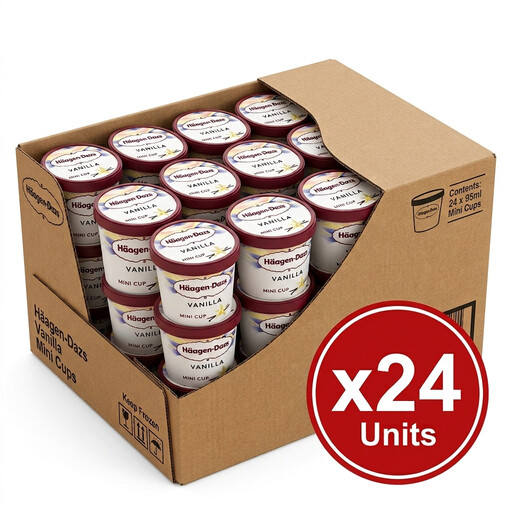 Image unavailable
For a spoonable dessert without opening one large tub. This is a case of 24 mini tubs, so check whether that pack quantity fits your plans and read the current allergen label.
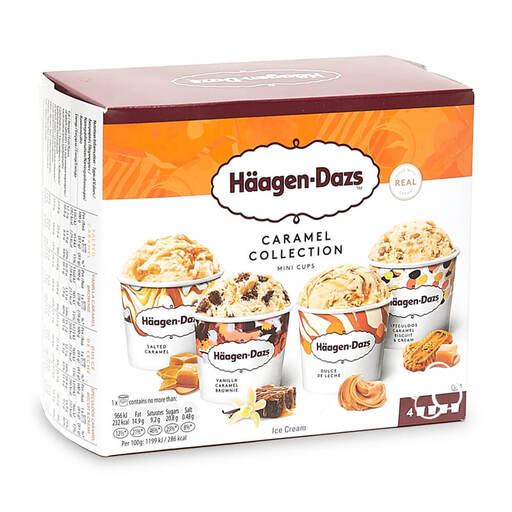 Image unavailable
Four separate mini cups offer a spoonable format without scooping from a conventional tub. Check the current pack for allergens and storage instructions.
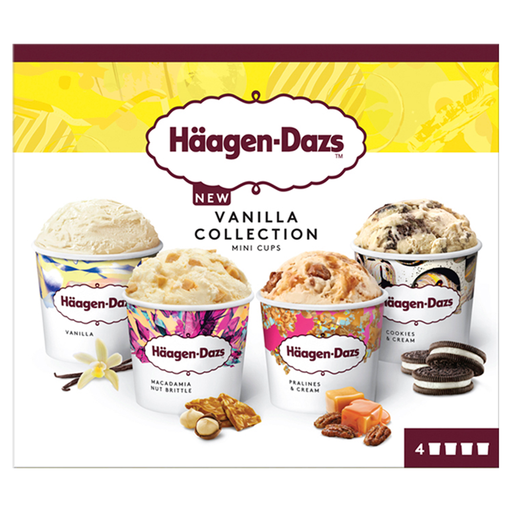 Image unavailable
The four-cup pack suits a spoonable dessert without opening a shared tub. Check the label for ingredients relevant to you and follow its frozen-storage directions.
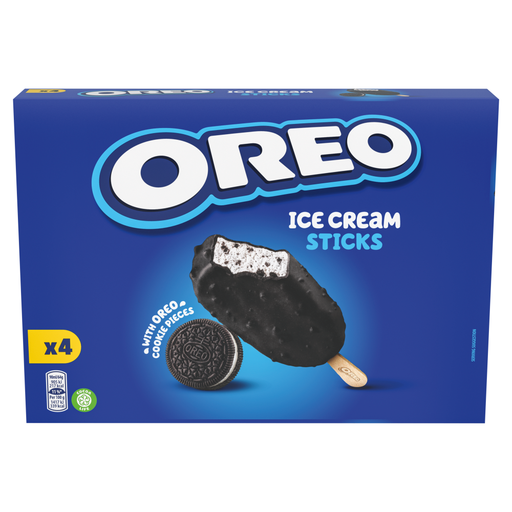 Image unavailable
Choose the stick format if eating without a spoon matters more than having a scoopable dessert. The pack contains four 90 ml sticks; check its current ingredient and allergen information.
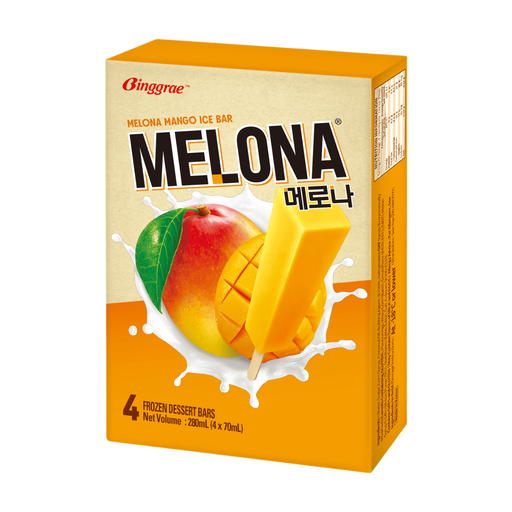 Image unavailable
These four mango ice bars are a handheld option rather than spoonable mini tubs. The stated total is 280 ml; read the current pack for allergen and storage information.
Choose a mini cup for a separate dessert you can eat with a spoon, or a stick when you do not want to use one. For example, Sainsbury’s lists Häagen-Dazs Vanilla Collection as four 95 ml mini cups, while Tesco lists Magnum Almond as three 100 ml sticks; check the particular pack’s ingredients before choosing.
No. Marks & Spencer lists a 237 g Butterscotch tub, but that weight does not define a serving. Read the pack’s serving information and decide how much you intend to dish out.
Read the ingredients and precautionary statements on the exact physical pack. The Food Standards Agency says allergens in UK prepacked food must be emphasised in the ingredients list; do not use the flavour name or an image of another pack as a substitute.
Follow that tub’s storage instructions and distinguish an opened, still-frozen tub from a product that has thawed. Marks & Spencer’s cited Butterscotch tub says to keep it frozen at −18°C and not to refreeze it; check the directions on any other product separately.