One-drink afternoon break makers
If you usually make one iced latte, a personal blending cup lets you prepare and drink it from the same vessel, with less to transfer afterwards.


For one iced latte, start with a personal blender that has a cup you can drink from and whose manufacturer explicitly states that it can crush ice. A jug blender makes more sense if you also prepare several drinks or other recipes; whichever format you choose, check its usable capacity and follow the exact model’s ice-loading instructions.
If you usually make one iced latte, a personal blending cup lets you prepare and drink it from the same vessel, with less to transfer afterwards.
If breaking up ice is your main concern, look for an explicit ice-crushing function and be prepared to follow the model’s instructions on loading ice and liquid.
If iced lattes are only one of the things you make, a jug or a model with both jug and personal-cup formats may suit larger drinks and other recipes.
Decide how many drinks you normally make before comparing cup and jug sizes. Then check the exact model’s ice capability and instructions: Breville advises adding a little liquid when processing ice, while Magimix says its Blender Power Crushed Ice programme can process ice cubes without added liquid.
| Concern | What to check | Who this matters to |
|---|---|---|
| One-drink convenience | Check cup capacity for your intended drink and ice, and which removable parts can go in the dishwasher. | I usually make one latte and would rather drink from the blending cup than pour from a jug; around 40% of consumers put that one-drink convenience first. |
| Processing ice | Look for stated ice-crushing capability and follow the model’s ice, liquid and loading instructions. | Ice is central to my drink, so I need a model with clear instructions for using it; ice processing comes first for around 40% of consumers. |
| Capacity and other recipes | Compare working capacity, supplied vessels and the space needed to store and clean them. | I also make drinks for others or use the blender for other recipes; around 20% of consumers give that broader use priority. |
Ice capability and loading instructions differ by model. Breville advises a small amount of liquid with ice to help prevent blade damage, whereas Magimix gives different guidance for its Blender Power Crushed Ice programme.
Check the exact model’s stated ice function and manual rather than applying another blender’s instructions.
Breville’s cited Blend Active bottle holds 0.6 L, while the cited Magimix Blender Power 4 has a 1.8 L working capacity. Those formats serve different preparation quantities.
Think about your usual number of drinks per session before choosing a cup, jug or dual-format model.
A cup-only format may mean making several portions separately when you have company.
Ingredients can stop circulating in a personal blending bottle. Breville says to remove the bottle from the motor base before redistributing them.
Stop the blender, remove the bottle, then shake or rearrange its contents before refitting it.
A convenient ice setting does not replace basic electrical and care checks. Electrical Safety First advises using a UK three-pin fused plug and unplugging a blender before cleaning it.
Confirm the supplied plug is suitable, read the model’s manual and wash only the parts identified as dishwasher-safe.
Breville’s Blend Active line illustrates the compact, direct-to-bottle option for an individual iced latte.
The Blender Power range offers jug formats for people who make iced lattes alongside larger drinks and other recipes.
Sage’s Super Q illustrates a dual-format option for someone who would use both a full-size jug and a personal cup.
These choices span personal cups, a jug with a drink bottle, and a jug-and-single-serve format. Choose by your usual serving size, then confirm the exact model’s instructions before blending ice.
 No image available
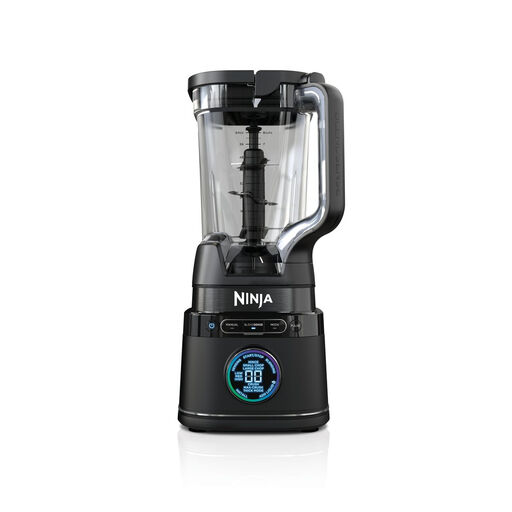
A personal-cup option for making one iced drink. Its product title states that it is suitable for crushing ice.
Check the model’s ice-loading instructions and confirm the supplied plug is suitable before use.
 No image available
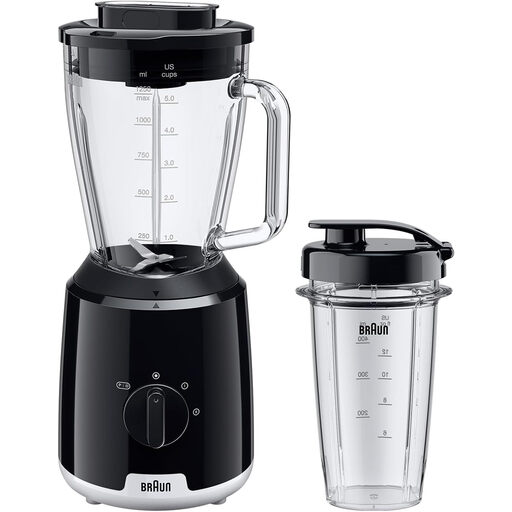
The jug and separate bottle offer two vessel formats if you alternate between an individual drink and other recipes.
The product title specifies a 600 W blender and two speeds. Check the bottle’s capacity, the exact model’s ice instructions and the supplied plug before buying.
 No image available
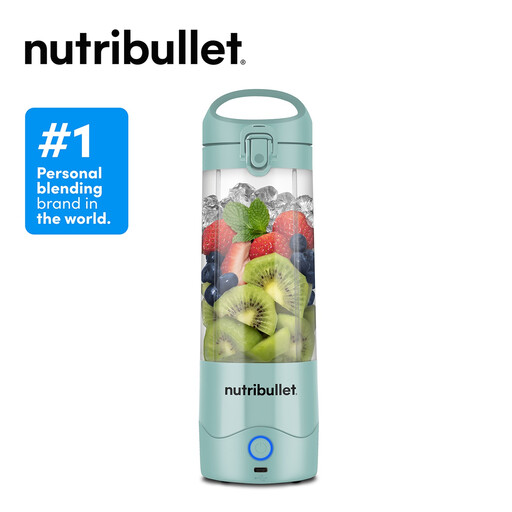
A portable-cup format for a single drink. The product title lists a to-go lid, a USB-C charging cable and 15 or more blending cycles.
If you plan to add ice, check the model’s ice-loading instructions. Confirm what you need to charge it, including whether a suitable wall adapter is supplied.
 No image available
Consider this jug-and-single-serve format if you switch between an individual latte and larger recipes.
Check the personal-cup capacity, the model’s ice-loading instructions and the supplied plug before buying.
A personal blender is the more direct choice if you normally make one drink and want to blend in the cup you will drink from, provided that exact model supports ice crushing. Choose a jug if you also make several drinks or other recipes, and compare its working capacity with the amount you actually prepare.
Do not assume that every blender can crush ice: check the exact model’s stated capability and instructions first. Breville advises adding a little liquid with ice, while Magimix says its Blender Power Crushed Ice programme can process ice cubes without added liquid.
Stop blending and remove the bottle from the motor base before shaking or redistributing its contents. Breville specifically advises against trying to move stuck ingredients while the bottle remains on the motor unit.
Unplug a mains blender before cleaning it, as Electrical Safety First advises. Follow the model’s manual to identify which removable parts are dishwasher-safe, and keep the motor base out of the sink.
For a mains blender intended for use with a UK socket, confirm that the supplied plug is suitable; Electrical Safety First advises a UK three-pin plug with a fuse. Check the exact product documentation and compare model-specific support and spare-parts terms rather than assuming they are the same across brands.