The width-limited iced-latte maker
If the machine must share a narrow worktop with your glass and milk jug, compare its full dimensions and working space. De’Longhi lists the Dedica Style EC685 at 149 mm wide, with a maximum glass height of 12 cm.


Measure the whole machine and your intended glass before choosing: De’Longhi lists the Dedica Style EC685 at 149 mm wide, but its 12 cm glass-height limit and manual frothing still matter. An assisted milk wand may suit frequent milk-drink preparation, while a traditional 58 mm setup calls for more room and hands-on technique.
If the machine must share a narrow worktop with your glass and milk jug, compare its full dimensions and working space. De’Longhi lists the Dedica Style EC685 at 149 mm wide, with a maximum glass height of 12 cm.
If you make milk drinks often but do not want to texture milk entirely by hand, the Sage Bambino Plus listing describes an automatic steam wand with adjustable milk settings. Check whether that workflow suits how you make iced lattes.
If you want to practise a traditional 58 mm portafilter and manual steaming, Gaggia’s Classic setup is a relevant reference. Gaggia also says its traditional 16 g basket needs very finely ground coffee for correct extraction.
Choose when: Worktop width is your tightest constraint and you are happy to froth milk yourself.
Trade-off: A narrow body does not remove the need for portafilter, jug and wand-cleaning space.
Choose when: You make milk drinks regularly and prefer a more guided frothing process; the Sage Bambino Plus listing describes adjustable automatic milk texturing.
Trade-off: That milk feature alone does not establish whether a machine or your glass will fit.
Choose when: You want a hands-on portafilter workflow and can accommodate a larger setup.
Trade-off: Gaggia lists the Classic at 23 × 38 × 24 cm and calls for very finely ground coffee with its traditional basket.
| Concern | What to check | Who this matters to |
|---|---|---|
| Machine and glass fit | Measure width, depth, height and usable glass clearance, allowing room to operate the machine. | If my worktop is narrow, the machine still needs to leave space for my iced-latte glass and milk jug. For roughly 42% of consumers, physical fit is the primary concern. |
| Milk workflow | Check whether frothing is manual or assisted, and whether you would rather add cold milk to espresso over ice. | When I make milk drinks often, I want a preparation routine I can keep up with. Around 33% of consumers put the milk workflow first. |
| Upkeep and placement | Read the model’s cleaning and descaling instructions; identify a stable, dry, heat-resistant position. | I need to reach the machine for cleaning without putting it too close to the worktop edge. Manageable upkeep and placement come first for roughly 25% of consumers. |
A narrow machine may still be too deep for the worktop, too tall beneath cupboards or too restrictive for your glass.
Measure all three machine dimensions and your intended glass, then allow working room for the portafilter and milk jug.
De’Longhi and Gaggia describe manual milk systems for the models discussed here; the Sage Bambino Plus listing describes an automatic steam-wand option.
Choose according to how often you make milk drinks and whether you want to practise manual texturing.
De’Longhi says descaling frequency for its Dedica machines depends on local water hardness.
Read the exact model’s descaling instructions and plan for the routine alongside everyday cleaning.
Descaling also takes time and requires suitable supplies.
Sage’s Bambino instructions call for a stable, level, dry and heat-resistant surface away from the counter edge.
Choose a position that meets the machine’s placement instructions, rather than using a precarious gap to save space.
The Dedica Style EC685 is a slim manual reference point for a width-limited worktop.
The Bambino Plus is a reference for buyers interested in assisted milk preparation.
The Classic represents a traditional manual route for buyers who have room to work with a 58 mm portafilter.
The Linea Micra is a specialist home-espresso comparison point rather than a default choice for a crowded worktop.
These espresso machines offer different manual coffee and milk workflows for an iced-latte setup. Compare each machine’s size and your glass clearance before choosing; the product list alone does not establish which will fit your worktop.
 No image available
Consider this if you want an espresso machine with a steam wand for preparing milk yourself. Its product title specifies a 15 bar rating; check the full footprint and your glass height before choosing it for a tight space.
 No image available
Consider this manual-wand model if espresso and a cold-brew option both interest you. Check its full dimensions, glass clearance and cleaning instructions against your planned setup; do not apply Dedica Style EC685 measurements to this different model.
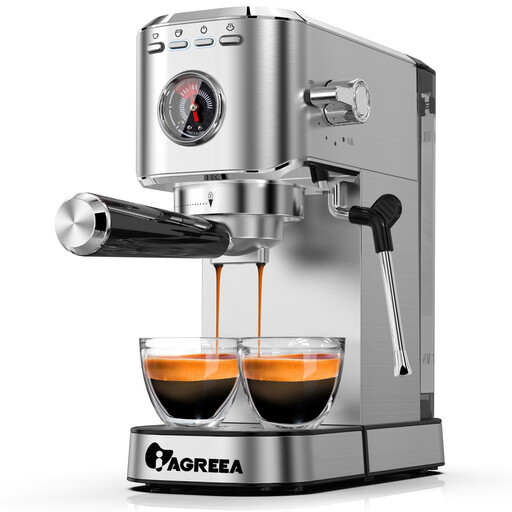 No image available
Its steam wand suits a hands-on milk routine. The title also specifies a pressure gauge, cup-warming tray and single- and double-shot options; confirm that it accepts your intended coffee format and fits your worktop and glass.
 No image available
Consider this semi-automatic espresso machine if manual milk frothing suits your routine. Its title specifies a steam wand, 20 bar rating and 1.5 L water capacity; confirm its dimensions and maximum glass clearance before assigning it a place on a small worktop.
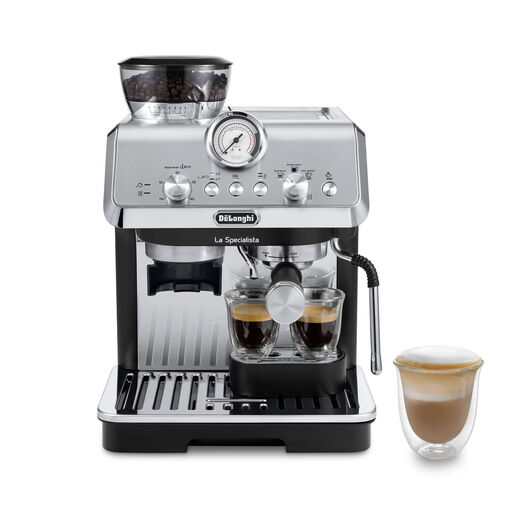 No image available
Consider this manual bean-to-cup model if you want an integrated coffee-preparation workflow and can give it sufficient worktop room. Its title identifies a milk frother; check the full dimensions, overhead space and glass clearance before buying for a cramped kitchen.
Measure the available width, depth and height, then check the height of the glass you intend to use. Leave working room for coffee preparation and a milk jug; as one model-specific reference, De’Longhi lists the Dedica Style EC685 at 149 × 330 × 305 mm with a 12 cm maximum glass height.
No. An automatic wand changes the milk-preparation workflow, not whether a machine fits your space or suits your drink preferences. Check the exact model’s dimensions, glass clearance and cleaning requirements separately.
Follow the descaling instructions for the exact machine. De’Longhi says the frequency for its Dedica machines depends on local water hardness, so account for that routine when choosing a machine you can access and clean easily.
Check that the exact version is intended for the GB market and comes with its applicable safety information and an identifiable seller or manufacturer. The Office for Product Safety & Standards explains that electrical equipment must meet requirements before it is placed on the GB market; a similar-looking product version alone does not establish that it meets them.