
24/7 Customer Support

Free returns

Same-day & Next-day Delivery

Quality Guaranteed

Unlock Your Welcome Offers: FREE Delivery | Up to 80% OFF | Free 30-day JoyPlus trial
Download the APP
Finding the right toy for a three-year-old can feel like a significant challenge. At this age, their imagination is blossoming and you want a gift that is not only fun but also supports their rapid development. Many parents and relatives are also keen to find engaging screen-free activities for kids that can hold their attention. This guide is designed to help you navigate the options and find high-quality, imaginative toys that will be cherished long after the wrapping paper is gone.
As the Joybuy Product Recommendation Officer, my role is to provide clear, practical advice to help you make an informed choice. Here, we will look at what makes a great toy for this age group and highlight a few standout options.
Before diving into specific products, it's helpful to know what to look for. Keeping a few key points in mind can make choosing the perfect birthday gifts for kids or a simple playtime treat much easier.
For children aged three and up, safety remains the top priority. Always check for the UKCA or CE mark, which indicates the toy meets UK and European safety standards. At this age, some smaller components may be included, but it's crucial to adhere to the manufacturer's age guidance. The warning "Not for children under 3 yrs" is there for a reason, as small parts can be a choking hazard.
The most valuable toys are often those that can be used in multiple ways. Creative construction toys like blocks or role play sets for children don't have a single "right" way to be played with. This encourages problem-solving, creativity and independent thought. These types of toys grow with your child, as they will find new and more complex ways to use them as they develop.
Different toys support different skills. For instance, wooden kitchen toys and other pretend-play items are excellent for developing social skills, language and understanding the world around them. Building blocks enhance fine motor skills and spatial awareness. Some toys are specifically designed with learning in mind, drawing on principles from educational approaches like Montessori to foster independence and concentration. Choosing educational toys for preschoolers doesn't mean sacrificing fun; it means the fun is productive.
Here are a few recommendations that align with the principles of imaginative, developmental play for three-year-olds.
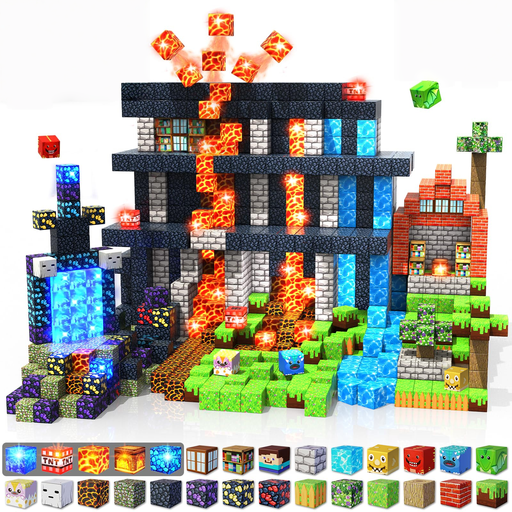
Why It Stands Out: This set takes the classic magnetic tile concept and adds new dimensions. With 150 magnetic cubes, including 24 light-up blocks, it offers a vast canvas for creativity. The inclusion of character pieces and a story-based idea booklet provides a starting point for narrative-driven construction, allowing children to build worlds based on themes like lava, portals and forests.
Pros:
Who is it for? This is an excellent choice for children who enjoy building and creating. It's also a fantastic option for parents seeking a durable, long-lasting toy that encourages both independent and collaborative play.
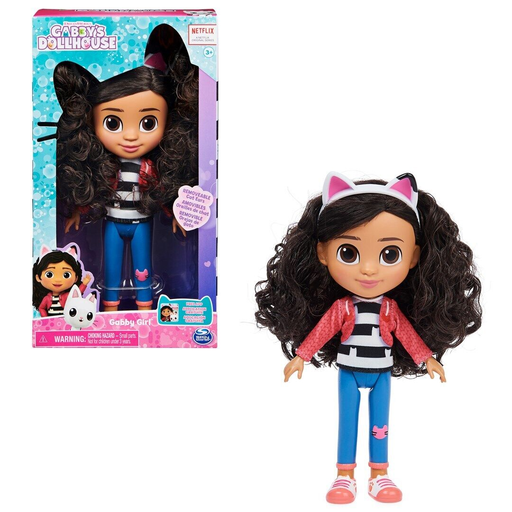
Why It Stands Out: For fans of the popular show, this Gabby Girl doll brings their favourite character to life. At 20.3 cm tall, she is detailed to look just like the character on screen, complete with her signature cat ears headband and outfit. The doll's poseable arms and legs make her more than just a static figure; she becomes a central character in countless imaginative adventures.
Pros:
Who is it for? This is a perfect gift for young fans of Gabby's Dollhouse. As one of the popular character dolls for toddlers, it's a great tool for encouraging narrative play and recreating favourite moments from the series.
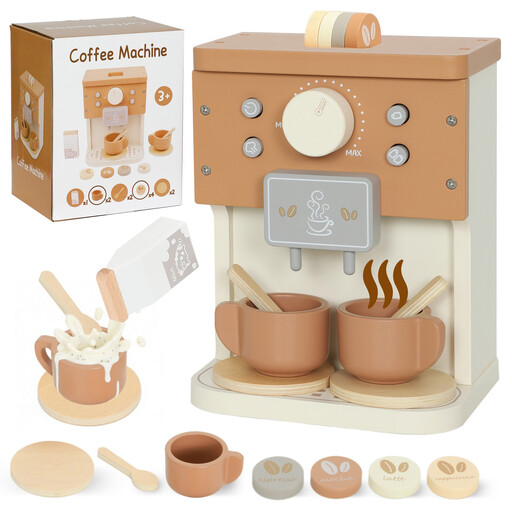
Why It Stands Out: This charming wooden coffee machine set is a wonderful example of a modern role play set for children. It allows little ones to mimic a familiar adult activity—making coffee. The set is comprehensive, including a machine, cups, milk and coffee pods. Its design is inspired by Montessori toys, focusing on realistic activities to help children develop practical life skills through play. The interactive features, like pressable buttons and a clicking knob, make the experience more immersive.
Pros:
Who is it for? This set is ideal for toddlers who love to imitate grown-ups and engage in pretend play. It's a fantastic addition to any play kitchen and serves as a great tool for parents to play alongside their children, taking orders and enjoying a pretend coffee.
These recommendations are just a starting point. Every child is unique, and their interests can vary widely. If you are searching for more options, from dolls and playsets to arts and crafts, you can find a broader selection to spark their imagination.
Explore our full range of girls toys for more inspiration.
Imaginative play is crucial for cognitive and emotional development. It helps children develop problem-solving skills, expand their vocabulary as they create narratives and learn to regulate their emotions by acting out different scenarios. It also fosters creativity and social skills when playing with others.
Start by providing open-ended toys like building blocks or a role-play set. Sit with them initially to get them started, then slowly step back to allow them to take the lead. Creating a dedicated, accessible play space can also help. The key is to provide the tools for imagination without directing the play itself.
A toy is generally considered a Montessori toy if it is made from natural materials (like wood), is rooted in reality (like a child-sized cleaning set or a food-prep toy) and is designed to help a child develop a specific skill in an independent way. These toys are typically simple, without distracting lights or sounds, to help a child focus on the task at hand.