
24/7 Customer Support

Free returns

Same-day & Next-day Delivery

Quality Guaranteed

Unlock Your Welcome Offers: FREE Delivery | Up to 80% OFF | Free 30-day JoyPlus trial
Download the APP
Imitation crab sticks are a convenient way to add seafood flavour to sushi, salads, noodles, hot pots and lunchboxes. However, the colourful crab-like appearance can make products seem more similar than they really are. The important differences are usually hidden in the ingredients, storage instructions and serving format.
Before buying surimi crab sticks, check these common pitfalls:
The percentage of fish or surimi gives a useful indication of what the product is made from, although it does not alone determine taste or texture. For example, KIBUN Sea Stick lists 42% fish meat, while Ocean Deluxe Imitation Surimi Super Snow Crab lists 55.38% surimi. Freshasia Wanjiang Frozen Imitation Snow Crab Legs lists 47% surimi.
For sushi, California rolls and crab sticks for salads, look for strands that separate easily without turning mushy. Products described as shredded, hand-torn or snow crab-style are generally shaped for flaking and pulling apart. For stir-fries, soups and hot pots, a firmer stick can be easier to handle.
Frozen crab sticks commonly require storage at -18°C or below. Once thawed, they should be refrigerated and consumed within the period shown on the packaging. Product instructions vary: some specify 24 hours, some 48 hours and others two to three days. Do not refreeze a product after thawing unless the packaging specifically allows it.
Some ready-to-eat crab sticks and flavoured surimi snacks are sold in shelf-stable or cool, dry formats. After opening, these should generally be consumed promptly or refrigerated according to the label. Check that your freezer has enough room before ordering larger packs.
In the UK, ingredients are presented with relevant allergens emphasised on the label. Common allergens in Japanese crab sticks, kanikama and other seafood sticks include:
A product may contain fish even when its name focuses on crab. Some formulations also include flavour enhancers, preservatives, sweeteners, starches and food colours. These are not automatically a reason to avoid a product, but they should be considered if you have dietary restrictions or prefer a simpler ingredient list.
Always follow the product’s own instructions. A fully cooked item may be suitable for cold dishes after thawing, while a cooking-required item should be heated until thoroughly hot.

Why This Fits Their Persona: The 145g pack gives first-time buyers a manageable quantity for sushi, salads or a small family meal without committing to a larger catering pack.
It is sold as a frozen, ready-to-eat surimi product, with clear thawing and refrigeration guidance rather than leaving preparation requirements unclear.
Contains 42% fish meat and provides 40 individual sticks in a 145g pack. Suitable for cold or cooked dishes.
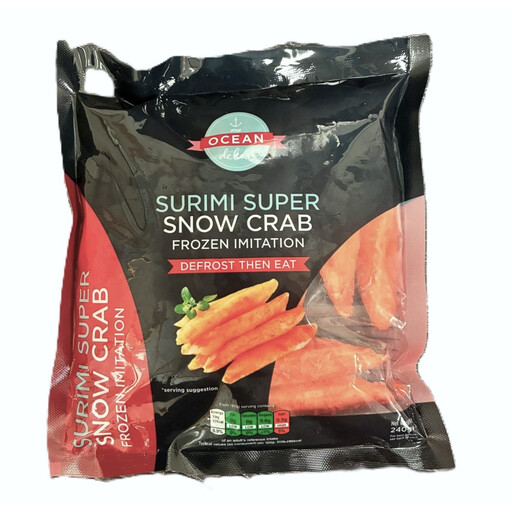
Why This Fits Their Persona: This option suits home cooks who prioritise a flaked, snow crab-style presentation for California rolls, kani salads and seafood platters.
The product description identifies its 55.38% surimi content and fibrous texture, giving shoppers more useful information than appearance alone.
240g net weight, fully cooked once defrosted and designed to pull apart into long strands.
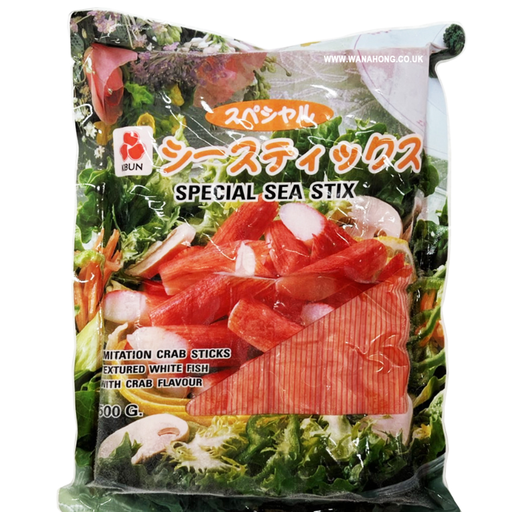
Why This Fits Their Persona: The 500g format is practical for frequent sushi preparation, restaurant-style salads, hot pots and family cooking.
The frozen format is clearly separated from the eating instructions: thaw before serving cold, or use from frozen in cooked dishes.
500g quantity, 42% fish meat and suitability for sushi, salads, stir-fries and hot pots.
We have compiled a complete, real-time list of products that fully satisfy these strict selection criteria and UK safety regulations.
Some are. Fully cooked surimi products can usually be eaten after correct thawing, while certain frozen seafood products require cooking. Always check whether the packaging says “ready to eat” or “cooking required”.
The stated period varies by product, commonly between 24 hours and 48 hours, with some products allowing two to three days in the refrigerator. Use the shortest instruction shown on the packaging if there is any uncertainty and do not refreeze.
Not automatically. They often contain fish, egg or soy, and some include wheat, sesame or crustaceans. Read the bold allergen information every time, particularly when choosing kanikama, imitation snow crab or products with real crab flavouring.