Quiet-library lecture listeners
Listeners who mainly follow spoken astronomy talks and want intelligible voices at a restrained volume while being considerate of nearby readers.


For spoken astronomy talks, choose wired in-ear earphones with tips that seal comfortably and a sound presentation that keeps voices easy to follow. Prioritise passive isolation if small library noises interrupt you, but give long-session comfort more weight if a firm seal becomes intrusive. Before buying, check the connection your playback device needs.
Listeners who mainly follow spoken astronomy talks and want intelligible voices at a restrained volume while being considerate of nearby readers.
Listeners whose concentration is interrupted by nearby conversation, footsteps or other small sounds, and who want to assess how securely ear tips seal.
Listeners who need earphones to remain comfortable and stable through a full talk, rather than choosing by driver count or frequency range alone.
For astronomy talks in a quiet library, assess the ear-tip seal and how clearly you can follow speech, then check comfort over time and the connection to your device.
| Concern | What to check | Who this matters to |
|---|---|---|
| Passive isolation | Try the supplied tip sizes for a secure seal. Treat a maker's attenuation figure as model-specific, not a guarantee of the fit you will achieve. | If nearby movement breaks my concentration, I want to follow the talk without turning up the volume; around 36% of consumers put isolation first. |
| Speech clarity | Look for a voice presentation you find easy to follow; where possible, assess it with a familiar spoken recording rather than relying on a tuning description alone. | When a talk contains unfamiliar terms, I need voices to remain intelligible; roughly 29% of consumers make speech clarity their main concern. |
| Long-session fit | Check the included tips and, where relevant, the ear-hook design. Assess pressure and stability over the length of a talk. | I want to finish a full lecture without an uncomfortable or slipping earpiece; about 21% of consumers place lasting comfort first. |
| Connection and practicality | Match the plug to your device's audio output and confirm any adapter or accessories you need before ordering. | If I listen on a phone or tablet, the earphones need to work with my existing setup; around 14% of consumers prioritise that practical fit. |
Driver count describes construction, not how intelligible speech will sound to you. TRUTHEAR's HEXA, for example, uses one dynamic and three balanced-armature drivers, while the brand also describes differences in sound with different tips.
Put seal, comfort, connection and your preference for spoken voices ahead of driver count.
Passive isolation depends on an effective seal, and a tip that seals firmly may not remain comfortable through a long talk.
Check the seller's applicable returns terms, try the supplied tip sizes and stop using an earpiece that causes pain or persistent discomfort.
Finding a comfortable fit may also require different ear tips.
A 3.5 mm plug, as specified for Shure SE215 and Sennheiser IE 200, will not connect directly to a device without a compatible headphone socket.
Check the device's audio output and, if needed, whether an adapter supports audio playback.
A device without a matching socket may require a compatible audio adapter or DAC.
Long listening sessions deserve attention to volume as well as clarity. Royal Free London advises keeping headphone volume below 60% of maximum and taking regular breaks.
Try a better-fitting tip or a quieter seat before raising the volume, and use only the level needed to follow the talk comfortably.
The wired SE215 is relevant if a secure over-ear fit and stated passive isolation are priorities.
The wired IE 200 is a model to assess if tonal balance and fit options matter more to you than choosing by an isolation figure.
The ER2XR is worth assessing when passive isolation is a leading concern and a deeper-fitting tip is acceptable.
The CHU II is a basic wired model to compare on its connection and included fit options.
The HEXA is relevant to listeners willing to try different tips to find a preferred fit and sound.
These wired in-ear options offer different device connections and fit considerations for listening to talks. Check the seal and speech presentation that matter to you rather than assuming every model provides the same isolation.
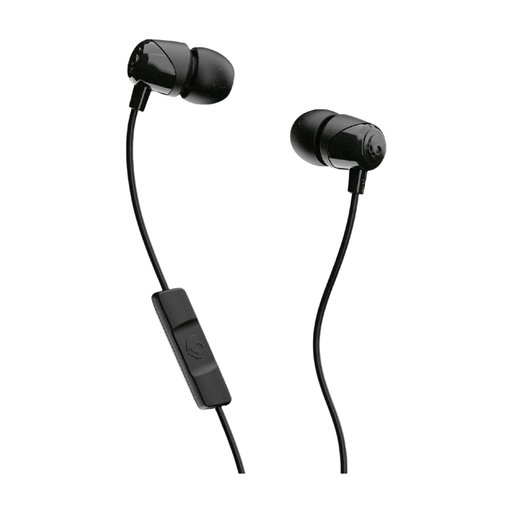 No image available
Consider these for wired talk listening if your device has a compatible 3.5 mm socket. The name specifies a microphone and 3.5 mm jack; assess the tip seal for comfort and distraction reduction rather than assuming a particular level of isolation.
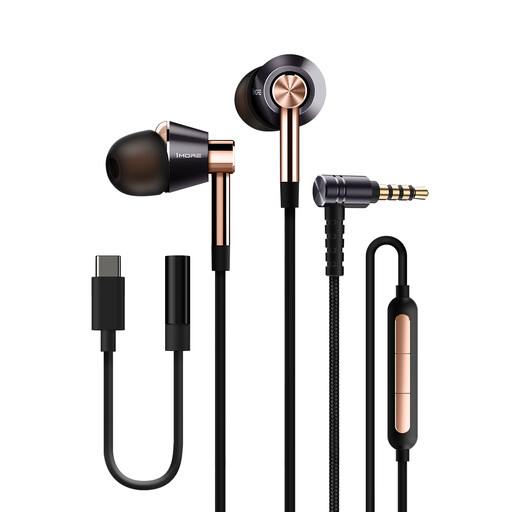 No image available
Consider this wired model if you want to assess fit and spoken-word sound for yourself. The title identifies a triple-driver design and MEMS microphone, but driver count does not establish clearer speech; confirm the connection type works with your device.
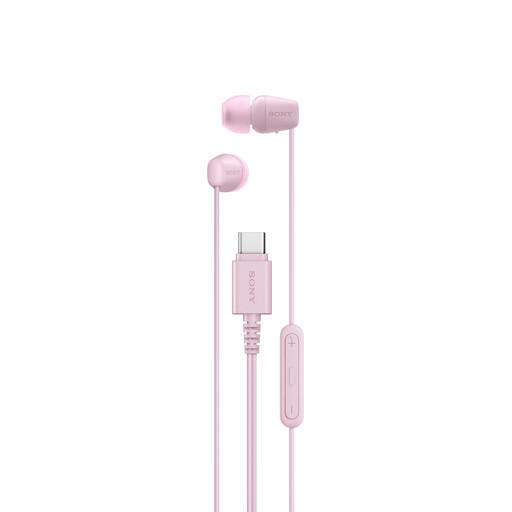 No image available
These suit consideration if your playback device supports audio through USB-C. Confirm that connection with your device, and assess tip fit and distraction reduction before relying on them for a full library talk.
Not necessarily: a comfortably sealed in-ear earphone is a sensible starting point for reducing small distractions. Shure and Etymotic state passive attenuation for the SE215 and ER2XR respectively, but the seal you achieve matters; do not assume that an in-ear model includes active noise cancelling.
Try both if they are supplied, because fit and preferred sound can differ. For the HEXA specifically, TRUTHEAR describes silicone tips as clearer and foam tips as smoothing some upper-range resonance; that description is not a rule for every earphone.
Only if the device has a compatible 3.5 mm headphone socket. For a device without one, check whether a suitable audio adapter is needed and whether the device supports it.
Use the lowest volume at which you can comfortably follow the speech and take breaks. Royal Free London advises staying below 60% of maximum headphone volume, listening for no more than an hour at a time and taking at least a five-minute break each hour.