Quiet spoken-word listeners
If you mainly listen to astronomy narration, interviews or lectures, focus on a comfortable fit and a sound presentation that lets you follow unfamiliar names and technical terms without turning the volume up.


For astronomy talks before bed, start with an in-ear model that fits comfortably and lets you follow speech at a restrained volume, rather than choosing by bass or maximum isolation alone. If background noise makes you turn the volume up, a good seal may help, but check pillow pressure, cable routing and whether you need to hear alarms or other people.
If you mainly listen to astronomy narration, interviews or lectures, focus on a comfortable fit and a sound presentation that lets you follow unfamiliar names and technical terms without turning the volume up.
If household or street noise makes you raise the volume, a well-fitting tip and passive isolation may be useful. Consider whether you still need to hear an alarm or someone nearby.
If in-ear products have caused discomfort or wax-related problems before, pay particular attention to tip choices, cleaning instructions and the retailer’s terms for opened items.
For astronomy talks before sleep, settle fit and listening volume first; then compare sound presentation and how the earphones connect to your bedside device.
| Concern | What to check | Who this matters to |
|---|---|---|
| Comfort when lying down | Check the supplied tip options and whether the shell or cable presses against your ear when your head meets the pillow. | If an earphone presses on my ear when I lie down, I will struggle to use it for a bedtime talk. Around 40% of consumers put a comfortable fit first. |
| Speech clarity | Consider the stated sound presentation and, if possible, try familiar narration at a low volume; a tuning description is not a speech test. | When a talk includes unfamiliar names and numbers, I want to follow them without relying on louder playback. For around 30% of consumers, narration is the primary concern. |
| Listening amid noise | Assess the tip seal without losing awareness of sounds you need to hear, rather than turning the volume up to overcome noise. | If background sound makes me increase the volume, I want a seal that helps me listen more quietly. Keeping volume down despite noise comes first for around 20% of consumers. |
| Connection and cable | Confirm the playback device’s audio connection and whether the cable length and routing work at your bedside. | If I play talks from a phone or tablet, I need the earphones to connect and the cable to stay out of my way. Around 10% of consumers prioritise that practicality. |
The World Health Organization advises that hearing risk increases as sound level and listening time rise. A good seal is useful when it reduces the need to raise playback volume, not when it encourages louder listening.
Begin at the lowest comfortable volume in a quiet room. If outside noise interferes with speech, assess the fit before increasing the level.
Compact and low-profile descriptions cannot tell you how a shell, tip or cable will press on your particular ear when you lie down.
Check the retailer’s terms for opened items before breaking a hygiene seal. Try the fit gently, and stop using the earphones if they cause pain or irritation.
A wired earphone needs a compatible playback connection. Detachable-cable systems also differ: the MMCX connectors listed for Sennheiser IE 200 and Shure SE215 are not interchangeable with the A2DC connector listed for Audio-Technica ATH-E40.
Check your device’s audio output, any adapter it requires and the exact cable connector before ordering.
A device without a compatible wired output may require a separate adapter.
King Edward VII’s Hospital NHS Foundation Trust notes that using in-ear speakers can make wax blockage more likely; putting cotton buds into the canal can push wax further in.
Clean detachable tips as the manufacturer directs. Seek appropriate pharmacy or clinical advice if you develop symptoms of a blocked ear rather than inserting objects into the canal.
These examples illustrate different wired in-ear designs; their stated features do not establish comfort against a pillow or guarantee that a particular sound will suit your hearing.
The IE 200 is a compact wired option for listeners interested in the neutral presentation Sennheiser describes.
The SE215 is a sound-isolating wired option for settings where outside noise interferes with listening.
The ATH-E40 is a monitor-style wired option for buyers comparing tip sizes and detachable-cable designs.
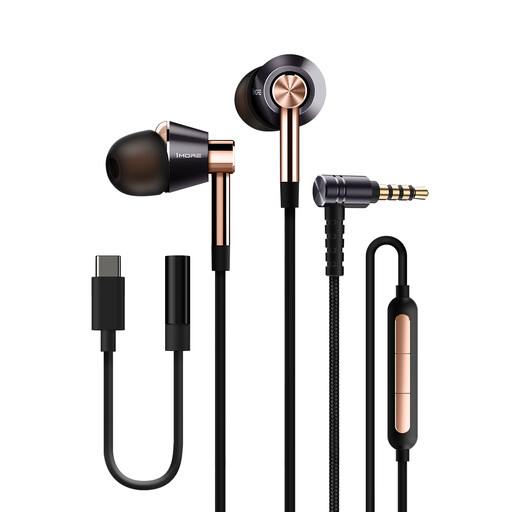
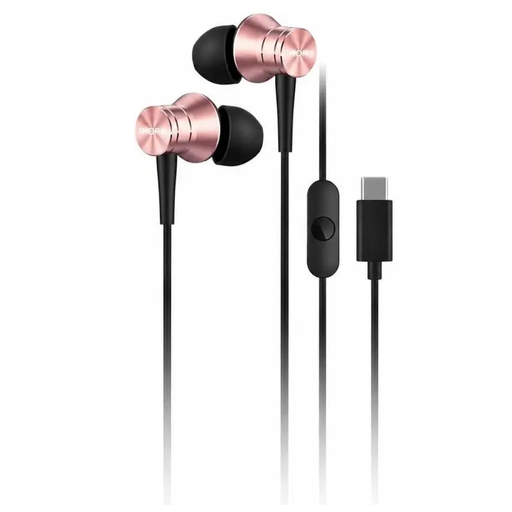
These wired in-ear choices cover a conventional wired option and a Type-C option for listening to bedtime talks. Check fit and sound preference separately: neither product’s listing establishes comfort when lying against a pillow or speech clarity for every listener.
 No image available
Consider these for wired bedtime listening if the cable can be kept comfortable and clear of your pillow.
The product title lists a MEMS microphone and describes a deep-bass sound. If speech is your priority, check whether that presentation suits familiar narration, and confirm the plug works with your playback device.
 No image available
Consider these if you play talks from a device with a compatible Type-C audio connection.
The title identifies a wired Type-C version. Confirm audio compatibility with your particular device, the package contents and whether the fit remains comfortable when you lie down.
Not necessarily: isolation is most useful when background noise would otherwise make you turn the talk up. Consider whether you need to hear alarms or other people, and remember that the World Health Organization links listening risk to both sound level and duration.
Keep it at the lowest level at which you can follow the narration comfortably. The World Health Organization advises keeping device volume at no more than 60% of maximum and, where sound-level monitoring is available, below an 80 dB average; a percentage setting does not indicate the same sound level on every device.
Keep tips clean according to the maker’s instructions and avoid putting cotton buds inside the ear canal. King Edward VII’s Hospital NHS Foundation Trust notes that in-ear speakers can make wax blockage more likely; seek clinical advice for persistent blockage symptoms or ear pain rather than continuing uncomfortable use.
Check the seller’s change-of-mind terms before opening a hygiene seal. GOV.UK explains the cancellation notice period for eligible online purchases, while the UK Consumer Contracts Regulations provide an exception for sealed goods unsuitable for return for health or hygiene reasons once unsealed. That exception to change-of-mind cancellation does not, by itself, remove remedies for goods that are faulty or misdescribed.