For author interviews in a busy office, prioritise an in-ear monitor that seals comfortably and lets you follow speech without simply turning up the volume. Stronger passive isolation is worth considering when nearby conversation is the main distraction, but check insertion comfort, your need to hear colleagues and the connection required by your laptop or phone.
Who these choices suit
Office listeners distracted by nearby conversation
If other voices mask an interview, focus on finding a reliable eartip seal rather than compensating with higher volume. The World Health Organization advises using well-fitted headphones to reduce the need to raise volume in noisy places.
Long-session spoken-word listeners
For a full-length interview, consider whether the tips remain comfortable and whether you can follow voices easily at a comfortable volume. Supplied tip options can give you more ways to adjust the fit, but comfort depends on your ears.
Laptop-and-phone office users
Check the ports on both devices before choosing a wired connection. If you also take calls, confirm that the exact supplied cable has the microphone and controls you need.
What to check before buying
Start with the seal and how clearly you can follow dialogue, then check device connections and whether the fit works for a full interview.
| Concern |
What to check |
Who this matters to |
| Seal against office noise |
Check the supplied eartip choices and whether any isolation claim depends on tip selection or insertion depth. |
When nearby conversations drown out an interview, I want a dependable seal without raising playback volume; around 36% of consumers put isolation first. |
| Audible dialogue |
Look for descriptions of the exact model’s vocal and bass presentation; audition it if possible. |
If I mainly listen to people speaking, I want to follow their words without bass drawing my attention away; around 29% of consumers make dialogue their primary concern. |
| Connection and calls |
Match the plug to your devices and check whether the exact cable includes a microphone. |
Moving between a work laptop and phone, I need the earphones to connect and may need to take calls; around 21% of consumers prioritise that practicality. |
| Comfortable, lower-volume listening |
Consider tip fit over a full interview, and manage both volume and listening duration. |
During a long interview, I want a fit I can tolerate without creeping up the volume; around 14% of consumers place that need first. |
Buying pitfalls
-
Expecting a published isolation figure in every ear
Etymotic says the ER2XR’s claimed attenuation depends on eartips and insertion depth, while Shure describes the SE215’s figure as an upper limit. Neither figure tells you exactly how the seal will feel or perform in your ears.
Look for suitable tip options and assess both the seal and comfort. Check the seller’s applicable return terms before opening or trying the earphones.
-
Overlooking the source device’s port
Shure lists a 3.5 mm cable for the SE215, and Sennheiser specifies a 3.5 mm plug for the IE 200. Neither connects directly to a device without a compatible output.
Check your laptop and phone ports, and confirm that any audio adapter works with the device.
A device without a compatible 3.5 mm output may require a separate USB-C or Lightning audio adapter.
-
Turning up the volume because the earphones isolate noise
The World Health Organization notes that sound level and listening duration both affect hearing risk. A good seal does not make louder or longer listening risk-free.
Use the seal to help keep volume down and take breaks. Seek professional advice if tinnitus or hearing difficulties persist.
-
Assuming every wired cable has a call microphone
An in-ear monitor’s name or detachable connector does not establish what is on the supplied cable. Shure lists the standard SE215 with an audio cable and offers communication-cable options separately.
Check the exact variant’s in-box cable specification if you need to take work calls.
Call use may require a different cable or product variant.
Brands to consider
These model-specific reference points help distinguish fit and connection choices; they are not a measure of every product from each brand.
Shure
The SE215 is a wired option for listeners interested in over-ear cable routing, supplied sleeve choices and a detachable cable.
- Shure says the SE215 includes foam and soft-flex sleeves in several sizes and a detachable 3.5 mm/MMCX cable. Its claimed isolation is up to 37 dB, not a measured result for your office.
- Check compatibility if your device has no 3.5 mm output, and check the exact cable if you need a microphone.
Etymotic
The ER2XR is a passive-isolation option for listeners willing to pay close attention to eartip fit and insertion.
- Etymotic claims 35–42 dB attenuation for the ER2XR, depending on eartips and insertion depth, and describes its mids and highs as flat with added bass.
- Its insertion style may not feel comfortable to everyone, particularly if you frequently need to remove an earpiece to speak with colleagues.
Sennheiser
The IE 200 offers a closed, wired in-ear format for listeners considering a lightweight earpiece.
- Sennheiser specifies a 4 g earphone weight, ear-canal coupling and a 3.5 mm angled plug for the IE 200.
- A closed design and low weight do not establish how much nearby office conversation the IE 200 will block; assess the seal and fit for your use.
Joybuy product choices
These wired in-ear choices are relevant to listening on compatible devices in an office. Check each pair’s fit and connection rather than treating its in-ear shape as proof of isolation from nearby speech.
 No image available
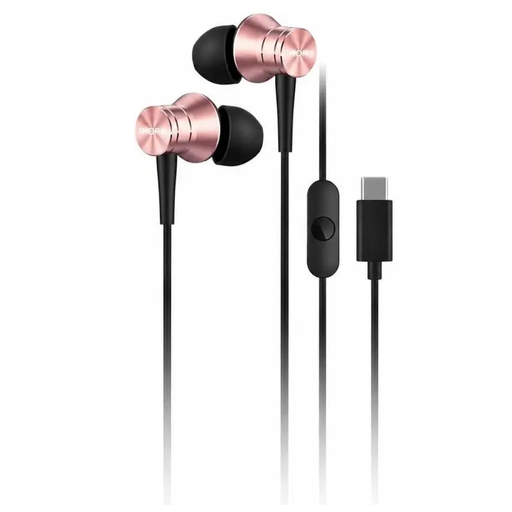
1MORE Piston P10 Type-C Wired Earphones (Pink)
Consider these if you want wired in-ear interview listening from a device that supports USB-C audio.
- Type-C connection; pink variant.
- Check eartip fit before relying on the seal to reduce nearby conversation.
View on Joybuy
 No image available
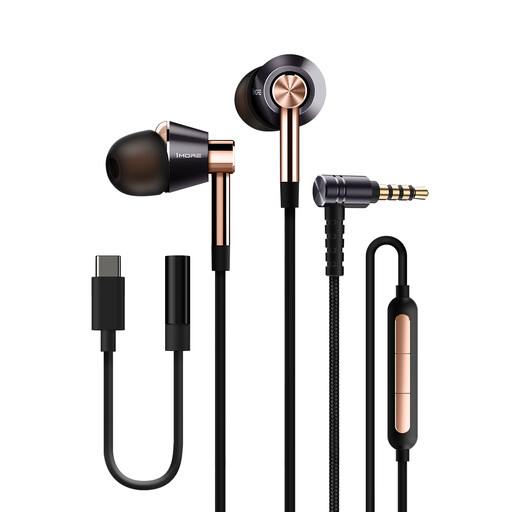
1MORE E1001 Triple Driver In-Ear Earphones (Gold)
Consider these if you want wired in-ear listening and a microphone for calls as well as interviews.
- Triple Driver model with MEMS microphone; gold variant.
- Confirm the plug matches your device and assess the fit for spoken audio in your office.
View on Joybuy
 No image available
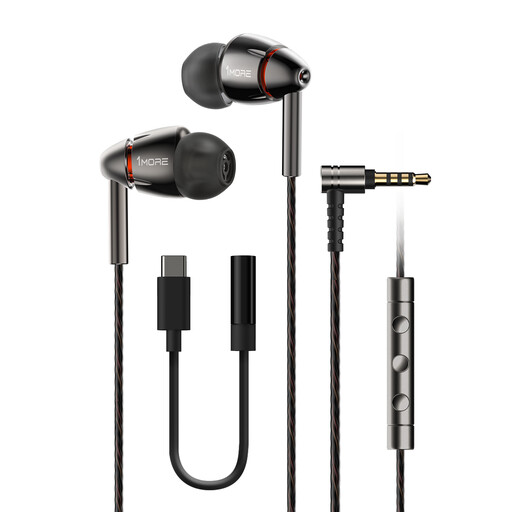
1MORE Quad Driver In-Ear Earphones (Black)
These are another wired in-ear option to consider if interview listening shares time with calls.
- Quad Driver model with MEMS microphone and in-line remote; black variant.
- Confirm the connector, eartip fit and vocal presentation before choosing them for a busy office.
View on Joybuy
 No image available
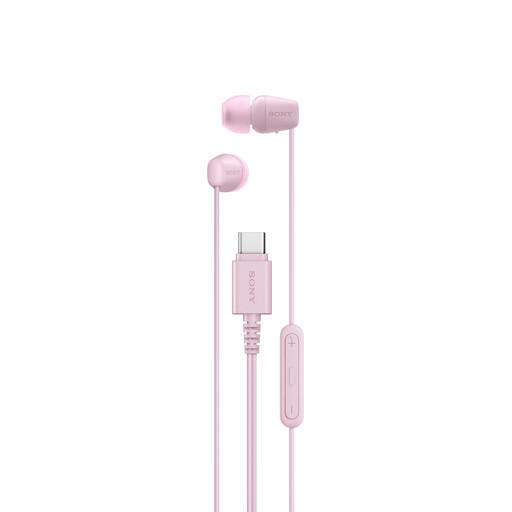
Sony IER-EX15C USB-C Wired Earbuds (Pink)
Consider these for wired interview listening if your laptop or phone supports USB-C audio.
- USB-C connection; pink variant.
- Check how securely they fit before depending on them to reduce office distractions.
View on Joybuy
Common questions
Do I need active noise cancelling for author interviews at work?
Not necessarily: a well-fitted passive-isolating in-ear monitor can be worth considering when office noise masks speech. Shure and Etymotic publish passive-isolation claims for the SE215 and ER2XR respectively, but the seal you achieve matters; do not assume that every in-ear model has active noise cancelling.
How can I hear dialogue without turning the volume too high?
Find a secure, comfortable fit, then keep the volume down and manage how long you listen. The World Health Organization advises well-fitted headphones in noisy settings and notes that both sound level and duration affect hearing risk.
Will a wired in-ear monitor plug straight into my work devices?
Only if its plug matches a compatible audio output on the device. Shure specifies a 3.5 mm cable for the SE215 and Sennheiser a 3.5 mm plug for the IE 200; a device without that output needs a suitable audio adapter. If you take calls, also check the exact cable for a microphone.


