Choose a wired in-ear monitor by its fit and your preferred tonal balance, rather than assuming its driver count will tell you how chamber music sounds. At a campsite, try the supplied tips for a comfortable seal, check that the plug works with your player, and pause listening whenever you need to hear people or hazards nearby.
Who is listening?
Detail-first chamber listener
You want to follow inner string lines, woodwind entries and the space around the instruments, rather than add bass weight. A wired model described as neutral or flat is a useful starting point, though your own tonal preference still matters.
Noise-conscious campsite listener
Nearby voices or activity can compete with quiet passages. You want tips that seal comfortably so you can hear the music without responding to every interruption by raising the volume.
Practical long-stay camper
You want a compact wired setup that remains comfortable through a listening session and connects to the device you are taking. Check the player’s output and any adapter before you leave.
What to check before buying
For chamber music at a campsite, decide which matters most to you: keeping background noise out, preserving your preferred instrumental balance, staying comfortable or connecting reliably to your player. Then check the corresponding fit or hardware detail rather than relying on a single specification.
| Concern |
What to check |
Who this matters to |
| Passive isolation |
Check the supplied tip sizes and the conditions attached to any stated attenuation figure. Try the seal at a comfortable listening level. |
If nearby activity masks quiet passages, I want a secure seal without turning the music up; around 36% of consumers would put isolation first. |
| Tonal balance |
Compare the maker’s flat, neutral or bass-emphasised description with your preference; listen if you can. |
When I am following strings and winds, I care more about their balance than added bass impact. Roughly 29% of consumers would make tonal balance their main concern. |
| Fit and comfort |
Try the included tips over a normal session and consider ear-hook or over-ear cable routing if movement bothers you. |
If pressure or a loosening earpiece interrupts a longer session, comfort comes before tuning for me; about 21% of consumers would prioritise fit. |
| Player connection |
Confirm the plug matches your player or adapter. If cable replacement matters, check the connector type for the exact model. |
When packing one playback device for the trip, I need the earphones and cable to work with it; around 14% of consumers would put connection practicality first. |
Buying mistakes to avoid
-
Treating an isolation figure as a personal guarantee
Shure says isolation varies with ear shape, sleeve, model and fit. A poor seal can let campsite noise compete with the music, regardless of a quoted figure.
Try the supplied tip sizes and materials for both seal and comfort. Before purchase, check the retailer’s terms for assessing the fit of in-ear products.
-
Confusing isolation with hearing protection
An earpiece that reduces ambient sound is not necessarily protective equipment. Shure says its earphones are not intended for use as hearing-protection devices.
Use appropriate hearing protection where it is required, and pause or remove the earphones when you need to stay aware of your surroundings.
-
Choosing a tuning label without considering your taste
Etymotic describes the ER2SE as flat-response and the ER2XR as adding bass emphasis; Shure describes the SE215 as having deep bass. Those descriptions indicate different starting points, not a sound preference everyone will share.
If instrumental balance is your priority, start with a flat or neutral-leaning option. If you enjoy extra bass, consider that preference when comparing models.
-
Forgetting to check the wired connection
The cited Sennheiser IE 200 and Shure SE215 models use 3.5 mm plugs. They need a compatible output or a suitable audio adapter.
Check your player, any adapter and the earphones together before travelling.
If your device lacks a compatible output, you will need a suitable adapter; a damaged detachable cable may also need replacing.
Relevant brands for reference
These model lines illustrate different approaches to tuning, fit and isolation; the brand names alone do not establish which will suit your ears.
Etymotic
The ER2SE is presented by Etymotic as flat-response, while the ER2XR adds bass emphasis. Both are relevant if you are considering a deep in-ear fit for campsite listening.
- Etymotic states 35–42 dB passive attenuation for these models, depending on tips and insertion.
- Try the deep fit yourself: the maker’s attenuation figure does not establish your comfort or the seal you will achieve.
Sennheiser
Sennheiser describes the wired IE 200 as neutral and precise, making it a model to consider if you prefer less bass emphasis when following chamber instruments.
- The IE 200 listing specifies a 3.5 mm plug, selectable tips and adjustable ear hooks.
- A compatible player output or adapter is needed; the maker’s tonal description is not a substitute for hearing how it suits you.
Shure
The SE215 offers an over-ear arrangement and a detachable MMCX cable for listeners who value that wired setup.
- Shure lists multiple sleeves, a carrying case and up to 37 dB isolation for the SE215.
- Shure describes its sound as having deep bass, and says actual isolation depends on the ear, sleeve and fit.
A Joybuy option for wired listening
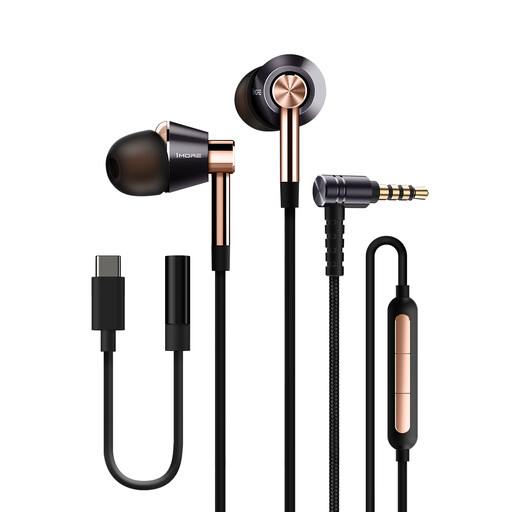
This wired in-ear option is relevant if you prefer a stated deep-bass sound. If a flat or neutral balance is your priority for chamber music, weigh that preference alongside fit and connection.
 No image available
1MORE E1001 Triple Driver In-Ear Earphones with MEMS Mic, Gold
Consider this wired in-ear model if you prefer more bass in your music and have a compatible playback connection.
The product title identifies a MEMS microphone and describes the sound as deep bass; that tonal description may not suit a preference for neutral balance. Check whether the fit is comfortable and seals securely in your ears.
View on Joybuy
Questions about campsite listening
Do I need active noise cancellation for chamber music at a campsite?
Not necessarily: a comfortable passive seal is a sensible first thing to assess in an in-ear monitor. Etymotic states 35–42 dB attenuation for its ER2 models depending on tips and insertion, but that manufacturer figure cannot guarantee the isolation you will experience.
What if campsite noise makes me want to turn up the volume?
Check the tip seal or move somewhere quieter before increasing the volume. Royal Free London NHS Foundation Trust advises setting the volume just high enough to hear music comfortably, and no higher.
Will a wired in-ear monitor work with my phone or tablet?
It will work only with a compatible audio output or a suitable adapter. The cited Sennheiser IE 200 and Shure SE215 use 3.5 mm plugs, so check your device’s connector and any adapter before buying.
Can sound-isolating earphones serve as hearing protection?
Do not rely on them as hearing protection: Shure says its earphones are not intended for that purpose. Use appropriate hearing protection where it is required, and check your campsite’s own conditions for music use.


